
The world comes to the Coast
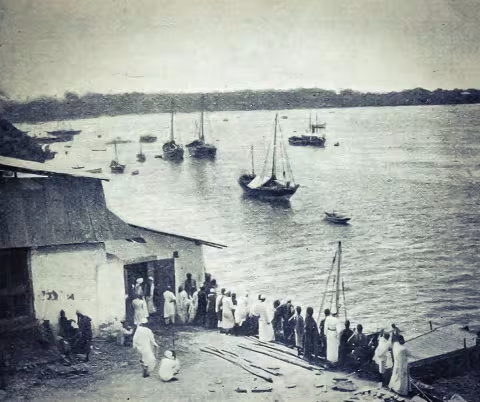
As indigenous communities migrated into Kenya on land, another form of migration was happening across the seas to the larger East African coast.
Driven by seasonal monsoon winds across the Indian Ocean, merchants, sailors and travelers journeyed to the coastline of present-day Kenya from Arabia, Persia, India and later China. They did not arrive as conquerors seeking territory, but as traders navigating the maritime routes that connected Africa to a vast network of continents.
Local communities welcomed the visitors. Small settlements gradually transformed into bustling ports and cosmopolitan towns where people from different cultures met, traded and exchanged ideas.
Trade flourished.
From the African interior came ivory, animal products, iron tools, grains and other valuable resources. In return arrived clothes, beads, ceramics, spices and luxury goods from distant lands. As goods moved across oceans, so did language, architecture, religion and customs.
Over generations, the interactions shaped a unique coastal identity. African traditions blended with influences from overseas, giving rise to the Swahili culture, one of East Africa’s most enduring legacies. Kiswahili, now one of Africa’s most widely spoken languages, emerged through these exchanges, rooted in African Bantu languages while absorbing influences from Arabic and other languages through centuries of contact.
The coastal towns grew into thriving city-states. Areas such as Lamu Old Town, Mombasa Old Town, and Gedi Ruins became centers of commerce, culture and political influence. Coral-stone houses lined narrow streets while mosques, marketplaces and ports reflected communities connected to distant worlds.
Yet, the connections also brought competition and change. By the late 15th Century, foreign powers began arriving along the East African coast seeking influence over trade routes and wealth. Among them were the Portuguese, whose arrival marked the beginning of a chapter that would reshape regional power and set the stage for future transformations.