Portugal lands at the coast
In 1498, Portuguese explorer Vasco da Gama arrived on the East African coast in search of a sea route to India. His arrival was more than just the beginning of contact with Europe; it signaled the start of a struggle for control over trade and influence along the coast.
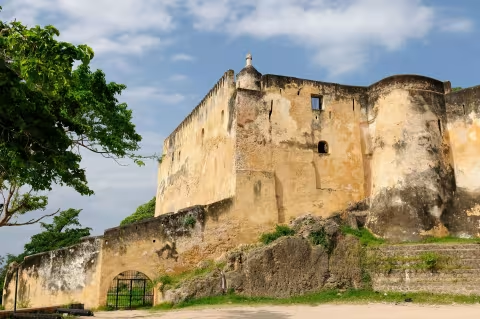
The Portuguese established their presence in several coastal settlements and sought dominance over key trade routes. Forts were built and strategic ports became centers of power. One of the most enduring reminders of this era is Fort Jesus, constructed in Mombasa in the late 16th Century to secure Portuguese influence and protect commercial interests.
Yet control over the coast remained contested. Over time, Portuguese influence weakened as Arab powers, particularly from Oman, challenged their dominance. By the 18th Century, Omani influence had expanded across the coast, ushering in another period of political and commercial change.
For many years, the struggles remained concentrated along coastal regions. Inland communities continued living largely according to their own social, political and economic systems. But during the 19th Century, events unfolding far beyond Africa would begin drawing increasing attention toward the interior.
Across Europe, powerful nations competed for territory, resources and influence. Industrial expansion created a growing demand for raw materials and new markets. Explorers, missionaries and traders began moving deeper into East Africa, documenting landscapes and establishing new routes into the interior.
Then in 1884–1885, European powers gathered at the Berlin Conference to divide spheres of influence across Africa.
It was a major turning point as what had begun as exploration and trade gradually evolved into formal colonial administration, setting the stage for sweeping political, economic and social changes.