Audio file
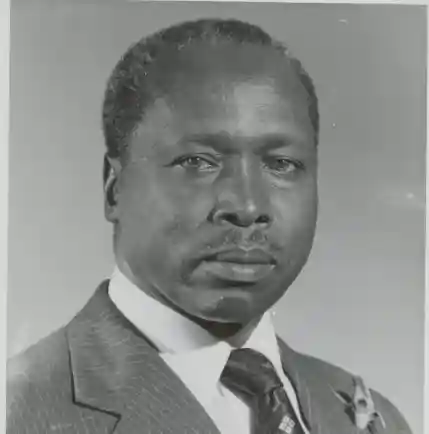
HE Daniel Toroitich arap Moi
1978
–
2002
Daniel Toroitich arap Moi was born on 2 September 1924 in Karieng’wo village, Sacho, Baringo County, to Kimoi arap Chebii and Kabon. Raised in a modest pastoralist family within the Tugen community, Moi spent his early years herding cattle. After his father's death when he was four years old, he was brought up by his mother alongside his elder brother. His early experiences of hardship, responsibility, and rural life helped shape the values and resilience that later defined his leadership.
Overview
Daniel Toroitich arap Moi was born on 2nd September 1924 in Sacho, Baringo County. He was the fifth child of Kimoi arap Chebii and his senior wife, Kabon.
Moi was named after his father, Kimoi, a herdsman from the Sot clan. It is believed that the name “Kimoi,” which he later shortened to Moi, was also linked to his mother, who was similarly known as Kimoi. Some accounts suggest he adopted the name because he was the last-born child or because he was primarily raised by his mother, hence the name “Arap Kimoi.” In the Kalenjin language, “Arap” translates to “son of.” His other name, Toroitich, means “welcome home the cattle,” reflecting the central role cattle played in the life of his community.
Moi was born into a modest pastoralist family within the Tugen subgroup of the Kalenjin community. His father, Kimoi arap Chebii, was a herdsman, and Moi spent his early years herding cattle. After his father died when Moi was only four years old, he was raised by his mother together with his elder brother, William Tuitoek.
It is often said that Moi was not a particularly skilled herdsboy. Whenever it was his turn to graze the family’s cattle, he would reportedly return home with one or two animals missing. The elders were displeased by this, and around the same period, missionaries were seeking children to enroll in formal education. Given his lacklustre herding skills, Moi became a natural choice for schooling.
In 1934, Moi and several other boys from Sacho Location were selected to join the new Africa Inland Mission (AIM) School at Kabartonjo. His elder brother, William Tuitoek, who had taken responsibility for him after their father’s death, took him to school.
The school was later moved from Kabartonjo to Kapsabet. At school, Moi served as a prefect and captain of the football team. To support himself, he undertook manual jobs both within and outside the school environment to meet his basic needs.
In 1936, he was baptised and took the name Daniel. Two years later, in 1938, he joined another Africa Inland Mission school in Kapsabet before proceeding to the Government African School, also in Kapsabet. There too, he distinguished himself as a prefect and football team captain while continuing to take on manual work to sustain himself.
After completing his secondary education at Kapsabet High School, Daniel arap Moi proceeded to Tambach Teachers Training College in Keiyo District between 1945 and 1947. He had initially hoped to join Alliance High School but was unable to secure a place at the prestigious institution.
In 1949, Moi enrolled at Kagumo Teachers College for a short course, upgrading his teaching qualifications to P2 level. In 1950, he undertook further studies at Jeans School, which later became the Kenya Institute of Administration.
Moi taught at the Government African School in Kapsabet and later at Tambach Teachers Training College. He also served as headmaster of the Government African School, Tambach, which later became Tambach Teachers Training College. He remained at Tambach until 1955, when he was elected to the Legislative Council (LegCo) as the African representative for Rift Valley Province.
As a teacher, he was known for instilling strong Christian values and discipline in his students while teaching subjects such as mathematics, English, and religious education. His character and leadership style were greatly shaped by the Christian faith he embraced at an early age.
The British colonial administration, which governed the Kenya Protectorate, established the Legislative Council (LegCo) in 1907 to advise the Chief Commissioner on the administration of the colony. Its membership largely comprised nominees from the colonial administration and representatives of the settler farming community, with the Governor presiding over the council
In 1920, Kenya officially became a British colony, with the Governor serving as the representative of the British Crown. For many years, Africans had no voting rights and were represented in the Legislative Council (LEGCO) only through individuals appointed by the Governor. In 1944, Eliud Mathu became the first African nominated to the council.
Three other African representatives were subsequently appointed:
1. Benaiah Apolo Ohanga – nominated in 1946 and became the second African member of the LEGCO.
2. Walter W. W. Awori – nominated in 1947.
3. Fanuel W. Odede – nominated in 1947/1948, replacing missionary L. J. Beecher, who had previously represented African in terests.
In 1952, John Ole Tameno, one of Kenya’s pioneering Black veterinary surgeons and personal veterinary officer to Jomo Kenyatta, was nominated to represent Rift Valley Province in the Legislative Council. Tameno resigned in 1955 amid allegations related to heavy drinking and suspected links to the independence movement.
Tameno’s resignation would significantly alter the course of Daniel arap Moi’s life, interrupting his career as a school teacher and opening the door to his entry into politics.
The colonial-era electoral college selected Moi from a list of eight nominees to fill the Rift Valley seat in the LegCo,In October 1955, marking the beginning of his political journey. His nomination was strongly supported by influential education officers, among them Moses Mudavadi, who persuaded him to leave the teaching profession and venture into politics. Moi became one of only four Africans representing regional interests in the Legislative Council.
In 1957, Africans were granted limited voting rights based on education and property qualifications, paving the way for the election of the first eight African members to the LEGCO. Moi successfully retained his seat during these elections, strengthening his growing political influence.
While serving in the Legco, Moi joined other prominent leaders, including James Gichuru, Jaramogi Oginga Odinga, Ronald Ngala, and Julius Gikonyo Kiano, in championing the formation of the Kenya Teachers Union. The initiative received support from Walter Coutts, who organized foundational meetings aimed at addressing mounting grievances among African teachers, particularly the stark disparities in salaries and benefits compared to their European counterparts.
Although Daniel arap Moi did not militarily participate in the armed struggle for independence, he remained sympathetic to the African nationalist movement and consistently supported the push for self-rule through political means. As a representative in the Legislative Council (LegCo), he persistently advocated for the release of detained African nationalists and called for greater African representation within the colonial administration.
Although Daniel arap Moi did not militarily participate in the armed struggle for independence, he remained sympathetic to the African nationalist movement and consistently supported the push for self-rule through political means. As a representative in the Legislative Council (LegCo), he persistently advocated for the release of detained African nationalists and called for greater African representation within the colonial administration.
During the height of the Mau Mau Uprising, Moi is said to have sheltered five freedom fighters on his farm for several weeks, demonstrating his quiet but meaningful support for the independence cause.
Colonial authorities repeatedly warned him against associating with Jomo Kenyatta, but Moi ignored the warnings.
Kenyatta had been imprisoned in Kapenguria following the 1953 trial of Mau Mau leaders and remained in detention for several years. After his release from prison in 1959, he was placed under house arrest in Lodwar, where his movements and interactions were closely monitored by colonial authorities. On March 23, 1961, Moi joined other Kenyan leaders in visiting Kenyatta during his detention in Lodwar, signaling growing unity among African political leaders in the final years of colonial rule.
At this point, Moi had already emerged as a significant political figure. In 1960, together with Ronald Ngala, he co-founded the Kenya African Democratic Union (KADU) to counterbalance the influence of the Kenya African National Union (KANU), which was led by Kenyatta. KADU sought to protect the interests of smaller ethnic communities, including the Kalenjin, against domination by larger ethnic groups such as the Kikuyu and Luo, who formed the majority within KANU.
KADU strongly advocated for a Majimbo, or federal, system of government that would grant greater autonomy to regional administrations, while KANU favored a centralized system of governance. However, due to KANU’s stronger political influence and broader national support, the British colonial government eventually removed most federal provisions from the independence constitution.
Between 1960 and 1961, Moi served as Minister of Education, where he played a role in integrating Kenya’s education system and helped lay the foundation for the Kenya National Union of Teachers (KNUT).
In 1962, Moi attended the Second Lancaster House Conference in London as a senior KADU representative. He joined a delegation that included leaders such as Masinde Muliro, Tom Mboya, and Ronald Ngala. At the conference, Moi and the KADU delegation continued to champion a federal structure of government as part of negotiations that would shape Kenya’s constitutional framework and eventual independence from British colonial rule.
Following Kenya’s independence in 1963, Moi and Kenyatta began working together in government as Kenyatta rose first to the position of Prime Minister and later President. In 1964, Kenyatta would convince Moi that KADU and KANU should be merged to complete the process of decolonization. After KADU was dissolved and the parties merged, making Kenya a de facto one-party state, President Jomo Kenyatta appointed Moi to head the Ministry of Home Affairs.
Daniel arap Moi served as Kenya’s third Vice President from 1967 to 1978.
Earlier, in 1963, Moi had been elected to Parliament to represent Baringo North, a seat he retained even as he rose through the ranks of government. Throughout his political ascent, he continued serving as the area’s Member of Parliament while also holding senior positions including Minister for Home Affairs, Vice President, and later President.
Moi’s rise to the position of Vice President followed a period of early post-independence political transitions that were shaped by ideological differences and succession realignments within the young republic.
The first Vice President was Jaramogi Oginga Odinga, who served from independence in 1964 until his resignation in April 1966. His resignation followed ideological disagreements with President Jomo Kenyatta. While Odinga advocated for African socialism and closer ties with China and the Soviet Union, Kenyatta pursued a more capitalist aligned approach and favoured relations with Western partners.
Jaramogi Oginga Odinga was succeeded by Joseph Murumbi, a respected diplomat who served briefly before resigning after less than a year in office. Murumbi later withdrew from active politics and became a prominent figure in cultural preservation, with his legacy becoming more closely associated with art, heritage, and the conservation of African culture than with government.
Amid these transitions, Kenyatta appointed Moi as Minister for Home Affairs in 1964, partly to strengthen political support within the Kalenjin community. This appointment marked the beginning of Moi’s steady rise within Kenya’s post-independence leadership structure.
Joseph Murumbi’s resignation in 1967 paved the way for Daniel arap Moi to assume the position of second-in-command. Despite his appointment as Vice President, Moi also retained his role as Minister for Home Affairs.
Holding both titles simultaneously, allowed him to control the police, prisons, and immigration departments, cementing his political authority.
During his reign as the vice president, Moi played a significant role in strengthening national stability and governance, with several notable achievements, including:
- Skilfully navigating the intense succession politics of the 1970s, overcoming resistance from powerful political factions that sought to block his constitutional path to the presidency.
- With the Kalenjin community considered a smaller ethnic group during this period, Daniel arap Moi’s representation of the community in government supported efforts aimed at bridging ethnic divisions and integrating minority communities into the political mainstream.
- While serving concurrently as Minister for Home Affairs, he reorganized and strengthened internal security structures as well as the provincial administration system.
- He frequently represented President Kenyatta in regional and international engagements, experiences that later shaped his diplomatic influence as Head of State.
As President Kenyatta advanced in age, Moi increasingly faced opposition from influential members of the Kikuyu political elite, popularly referred to as the “Kiambu Mafia,” who preferred one of their own to succeed the founding President. Their resistance culminated in an infamous campaign to amend the Constitution in order to prevent the Vice President from automatically assuming office upon the President’s death.
The succession debate threatened to plunge the country into political uncertainty. However, despite mounting pressure from sections of his inner circle, Kenyatta stood firm and protected Moi’s constitutional position, ultimately ensuring a smooth transition of power.
When President Kenyatta died on August 22, 1978, the constitutional provision that the Vice President becomes acting president allowed Moi to take the helm, eventually paving the way for his 24-year
Moi retired from representing Baringo Constituency in parliament in 2002, following his retirement from politics.
Following the death of President Jomo Kenyatta on 22 August 1978, Vice-President Daniel Toroitich arap Moi assumed office in accordance with the Constitution, which provided that the Vice-President would serve as Acting President while the ruling party organized a presidential election within 90 days.
Within hours of Kenyatta's death, Chief Justice James Wicks administered the oath of office to Moi at Parliament Buildings in Nairobi, making him Kenya's Acting President.
In the weeks that followed, influential political leaders and the entire Cabinet rallied behind Moi's candidacy. With no challenger emerging within the ruling party, he was declared the sole candidate for the presidency.
Rather than waiting for the full 90-day transition period to lapse, the government organized a national inauguration ceremony. On 14 October 1978, Moi was formally sworn in at Parliament Buildings as Kenya's second President, marking the beginning of a presidency that would last for 24 years.
Consolidating Power
Upon assuming office, Moi moved swiftly to consolidate his authority. He maintained many of the domestic and foreign policies established during the Kenyatta era, particularly Kenya's pro-Western orientation during the Cold War. This approach ensured continued international support and development assistance while helping preserve Kenya's position as one of Africa's more stable economies.
His administration also cultivated strong ties with the military and security services, whose loyalty proved crucial during the attempted coup of August 1982. Following the failed coup, Moi strengthened state control and tightened restrictions on political dissent, effectively reinforcing Kenya's status as a one-party state under the Kenya African National Union (KANU).
By the early 1990s, however, growing domestic pressure and demands from international partners for democratic reforms prompted significant political changes. In 1991, Moi oversaw the repeal of constitutional provisions that had entrenched one-party rule, paving the way for multiparty democracy.
He subsequently won the country's first multiparty presidential election in 1992 and was re-elected in 1997, although both elections were accompanied by allegations of electoral irregularities and episodes of political violence.
Throughout his later years in office, Moi pledged to strengthen democratic institutions and tackle corruption. In 1999, he appointed renowned conservationist and public servant Richard Leakey as Head of the Civil Service and Permanent Secretary to the Cabinet, a move widely viewed as part of broader efforts to improve governance and public sector accountabilities.
Following his accession to the presidency in 1978, Daniel arap Moi pledged continuity with the policies and leadership philosophy of his predecessor, President Jomo Kenyatta. He encapsulated this commitment in the rallying call "Fuata Nyayo" Swahili for "Follow the Footsteps." The slogan soon evolved into a governing philosophy, emphasizing the values that had underpinned political success during the Kenyatta era: strong ethnic networks, unwavering loyalty to the ruling party, KANU, and longstanding personal, religious, or political relationships within the state establishment.
Moi himself became widely known as "Nyayo," a reflection of his promise to follow in Kenyatta's footsteps while charting his own course as Kenya's second president.
Despite the pledge of continuity, Moi's leadership style differed markedly from that of his predecessor. Whereas Kenyatta often delegated authority and allowed ministers significant room to operate independently, Moi preferred a more hands-on approach. He maintained close oversight of government affairs, monitored the activities of his ministers, and expected loyalty from those serving in his administration.
President Daniel arap Moi was among few world leaders who ran his country on what is popularly referred to as a philosophy of peace, love and unity. Such leadership aimed to bridge tribal differences and is an African phenomenon that has deep roots in culture and tradition.
One of the most enduring symbols of this approach to leadership was his use of a Volkswagen Kombi during some of his early nationwide tours. The vehicle's ability to navigate rough roads and difficult terrain became emblematic of Moi's determination to reach communities regardless of their location.
A frequently cited example occurred during a journey from Kisumu to Nakuru. Despite warnings from aides that the route through Sondu, Sigowet, and Kericho was virtually impassable, Moi insisted on taking it. When informed of the poor road conditions, he reportedly asked whether people lived along that route. Upon being told that they did, he replied that he had to use the road regardless of its condition. The incident illustrated his conviction that government leaders should remain visible and accessible to all citizens, especially those living in remote areas.
Over time, Moi also acquired the sobriquet "Professor of Politics," a tribute to his political longevity, strategic instincts, and ability to navigate Kenya's often complex and shifting political landscape.
Numerous anecdotes from former ministers and close associates shed light on how he wielded presidential authority . One such story concerns a former government minister who served in the Office of the President during the late 1990s. At the time, the minister became convinced that his dismissal was imminent. Reports suggested that the president had begun holding regular meetings with a principal political rival, whom the minister had previously replaced in the Cabinet. The meetings were widely interpreted as efforts to reconcile with the rival and possibly pave the way for his political rehabilitation.
Determined to avoid the embarrassment of being publicly relieved, Kones reportedly decided to surrender the emblems of his office before the President could act. While travelling along the Nakuru–Eldoret highway, he stopped at the Mau Summit General Unit [Service] (GSU) station intending to leave behind his ministerial flag and official government limousine.
However, the plan did not proceed as intended. The station commander reportedly declined to receive either item, arguing that he was neither the appointing authority nor the custodian of State House property. Other accounts suggest that during consultations , Kones received advice from his close friend Franklin Bett, then a State House official , who warned him against the move. Bett is said to have reminded him that the ministerial flag belonged to the President in whose administration he held office and that abandoning it at a roadside police station would be viewed as disrespectful.
Whether persuaded by this advice or by the station commander's refusal, Kones ultimately left with both the flag and the vehicle. The episode, however, underscored the uncertainty that often surrounded appointments and departures in Moi's administration. Less than a year later, Kones was removed from the Cabinet without warning, learning firsthand that under Moi, presidential decisions were rarely predictable and often revealed only when the moment arrived.
President Daniel arap Moi's influence extended far beyond Kenya's borders. Throughout his presidency, he championed peace, dialogue, and regional cooperation, earning recognition as one of Africa's leading voices for conflict resolution and diplomacy.
Guided by a philosophy rooted in peace, love, and unity, Moi consistently advocated for negotiated solutions to conflicts across the continent. He maintained that Kenya's role in international affairs should be that of a mediator and stabilizing force rather than a participant in regional rivalries. This approach earned him considerable respect among African leaders and strengthened Kenya's reputation as a trusted broker in peace processes.
His involvement in peacekeeping efforts began shortly after assuming the presidency. In 1979, Kenya contributed troops to the Commonwealth Monitoring Force in Zimbabwe, helping to oversee the country's transition to independence. This marked the beginning of Kenya's increasingly active participation in regional and international peace support operations.
Under Moi's leadership, Kenya expanded its contribution to international peacekeeping, participating in more than twenty missions across Africa and beyond. Kenyan personnel served in United Nations observer and peacekeeping operations in countries such as Mozambique, Angola, Liberia, Namibia, Sierra Leone, the Democratic Republic of Congo, and Uganda. Outside Africa, Kenya contributed personnel to missions in regions including the Gulf, the Balkans, and East Timor.
Among Moi's most significant diplomatic achievements were his contributions to peace efforts in Sudan and Somalia. In Sudan, Kenya hosted and facilitated negotiations that eventually culminated in the Comprehensive Peace Agreement, paving the way for the 2011 referendum that led to the independence of South Sudan. The peace process reinforced Kenya's standing as a respected mediator in complex regional conflicts.
In Somalia, Moi's administration initiated and supported dialogue among rival factions at a time when the country faced prolonged instability. These efforts laid important groundwork for later reconciliation initiatives and the eventual establishment of internationally recognized governance structures.
Moi’s continental leadership was defined by diplomacy, peacebuilding, and regional cooperation. As OAU Chairman from 1981 to 1983, he promoted dialogue in conflict-affected countries including Chad, Libya, Ethiopia, and Uganda, while strongly opposing apartheid and condemning South Africa’s aggression and human rights abuses.
He also supported peace efforts in Chad and advanced regional economic integration through his leadership of the Preferential Trade Area and COMESA. Through these diplomatic and regional initiatives, Moi strengthened Kenya’s role in African affairs and established a lasting legacy as a continental statesman.
President Daniel arap Moi's tenure as Kenya's second Head of State came to an end on December 30, 2002, after 24 years in office.
The transition followed the December 27, 2002 General Election, which saw the opposition National Rainbow Coalition (NARC) secure a decisive victory ending not only Moi’s own administration but also KANU's uninterrupted 39-year rule since independence.
The 2002 election marked a watershed moment in Kenya's political history, as a broad coalition of opposition leaders and former KANU members united behind Mwai Kibaki to form a new government.
The official handover ceremony took place at Uhuru Park in Nairobi on December 30, 2002. The event was both historic and emotionally charged, symbolizing Kenya's commitment to constitutionalism and the peaceful transfer of power. Thousands of Kenyans gathered to witness the occasion, celebrating the beginning of a new political era after nearly four decades of KANU rule.
Despite the tense atmosphere, the transition proceeded peacefully and according to constitutional procedures. Moi formally handed over the instruments of power to President-elect Mwai Kibaki, who had previously served as his Vice President for more than a decade before joining the opposition.
In his farewell remarks, Moi urged Kenyans to embrace national unity and responsible leadership. Reflecting on his departure from public office, he stated:
"I will be leaving to be an ordinary citizen. But those who will assume leadership of this country, I appeal to you not to bring Kenya to shame. Do not anchor your politics on hate. If there is anyone who insulted me, I forgive him. If I said something that hurt you, forgive me."
Despite having being one of the longest serving Presidents in Africa, after leaving office, the former President avoided getting entangled in politics. In 2007, President Kibaki appointed his predecessor special peace envoy to Sudan, describing President Moi as an elder statesman with vast experience and knowledge of African affairs.
On February 4, 2020, Kenya woke up to the news that former President Daniel Toroitich arap Moi had passed away at Nairobi Hospital after a prolonged period of ill health. He was 95 years old. The passing of Kenya's second President marked the end of an era and brought to a close the life of a leader who had shaped the nation's political, social, and economic landscape for more than two decades.
In recognition of his service to the nation, the Government accorded him a State Funeral, one of the highest honours bestowed upon a former Head of State. For three days, the former President’s body lay in state at Parliament Buildings, where thousands of mourners queued patiently for hours to pay their last respects.
On February 11, 2020, a national holiday was declared as Kenyans gathered at Nyayo National Stadium to bid farewell to the man who had led the nation for 24 years. The State Funeral was marked by full military honours, a church service, and tributes from leaders, family members, and citizens.
The following day, February 12, 2020, Moi was laid to rest at his Kabarak home, the place he had called home for decades. The burial service, conducted by the African Inland Church (AIC) and presided over by retired AIC Bishop Silas Yego, Moi's longtime clergyman, was attended by more than 30,000 mourners. Led by President Uhuru Kenyatta, the ceremony brought together serving and former heads of state, diplomats, religious leaders, and citizens from across Kenya and the wider African continent.
As the sun set behind the Great Rift Valley escarpments and final prayers were offered, the nation bid farewell to one of its most consequential leaders, the “Professor of Politics,” champion of the Nyayo philosophy, humble traveler who connected with ordinary citizens, and statesman who championed peace, love, and unity across Africa. His burial marked the close of a significant chapter in the nation’s history.
Legacy & Achievements
One of President Moi's major priorities during the 1980s was expanding access to healthcare across the country. His administration spearheaded the construction of Nyayo Wards in district hospitals nationwide, significantly increasing the capacity of public health facilities to serve growing populations.
Recognizing the limitations of government resources, Moi mobilized communities through Harambee initiatives to supplement public funding for the construction of health facilities. This approach enabled many hospitals to establish new wards, laboratories, radiology units, and other essential services.
A major milestone during this period was the establishment of Moi Referral Hospital in Eldoret, which helped ease the burden on Kenyatta National Hospital, then Kenya's sole national referral facility. The hospital served patients referred from health facilities across western Kenya, including Kapenguria, Kitale, Nandi Hills, Kapsowar, Kapsabet, Tambach, and surrounding districts, while also functioning as a regional referral centre for parts of the Rift Valley and Western Kenya.
However, the health sector encountered increasing financial pressures in the late 1980s and 1990s. Reduced public spending and economic challenges affected service delivery, while structural adjustment programmes supported by the World Bank and the International Monetary Fund led to the introduction of cost-sharing in public hospitals, ending the era of heavily subsidized healthcare.
Among the most memorable social programmes introduced by the Moi administration was the Free School Milk Programme, launched in 1979. Alongside the introduction of the 8-4-4 education system, the initiative became one of the government's most visible investments in basic education.
Kenya became the first African country to implement such a programme on a national scale. At its peak, nearly four million primary school pupils benefited annually from the initiative, which continued until 1998.
The programme contributed significantly to increased school attendance, particularly in rural and arid areas where access to nutrition was limited. Beyond its educational impact, it stimulated growth in the dairy sector by creating sustained demand for milk and supporting farmers through the Kenya Co-operative Creameries (KCC).
The Government allocated KSh169 million to the programme during the 1979/80 financial year. Funding increased steadily, reaching approximately KSh600 million by the 1987/88 financial year. However, economic constraints and shifting national priorities led to a gradual decline in support, and by the 1998/99 financial year only KSh20 million had been allocated to the programme.
When Moi assumed office in 1978, Kenya had only one fully-fledged public university, the University of Nairobi, while Kenyatta University College operated as a constituent college.
Recognizing the growing demand for higher education, his administration embarked on an ambitious programme to expand university education throughout the country.
A major breakthrough came on October 1, 1984, with the establishment of Moi University in Eldoret, Kenya's second public university. The institution initially admitted students pursuing forestry studies transferred from the University of Nairobi and later expanded into a comprehensive university offering diverse academic programmes.
The expansion continued in August 1985 when Kenyatta University College was elevated to full university status following the enactment of the Kenyatta University Act, becoming Kenya's third public university.
The Jomo Kenyatta College of Agriculture and Technology (JKUAT), established in 1978, became a constituent college of Kenyatta University in 1988 before attaining full university status in 1994.
Additional institutions established or elevated during the Moi era included Maseno University and Masinde Muliro University of Science and Technology. His administration also facilitated the growth of private higher education, creating an enabling environment for institutions such as Daystar University, Methodist University, Kabarak University, and the expansion of the United States International University (USIU).
These developments significantly increased access to university education and helped produce the skilled workforce that has supported Kenya's economic transformation in subsequent decades.
Tourism experienced considerable growth during the Moi years, becoming one of Kenya's leading sources of foreign exchange earnings. The country's coastal beaches, wildlife reserves, and national parks continued to attract visitors, particularly from Europe.
To strengthen the sector, President Moi introduced several institutional reforms and conservation initiatives. One of the most significant was the establishment of the Kenya Tourist Board (KTB) in 1997 to market Kenya as a premier tourist destination both locally and internationally.
His administration also established the Tourism Police Unit to enhance visitor safety and launched targeted marketing campaigns in key tourism source markets.
Recognizing the importance of wildlife conservation to the tourism sector, Moi's government created the Kenya Wildlife Service (KWS) in 1990. The agency was tasked with protecting Kenya's wildlife heritage and combating poaching, which had become a major threat to conservation efforts.
Today, KWS manages national parks, reserves, sanctuaries, and marine protected areas that continue to form the backbone of Kenya's globally recognized tourism industry.
Jomo Kenyatta International Airport
One of the earliest infrastructure milestones of Moi's presidency was the opening of the new Jomo Kenyatta International Airport (JKIA) on December 8, 1978.
Built at a cost of approximately £30 million, the modern airport complex was designed to accommodate Kenya's growing international air traffic and support the expansion of tourism, trade, agriculture, and industry. The facility provided parking space for up to ten Boeing 747 aircraft and was capable of serving more than thirty international airlines.
The airport also included facilities for domestic operations, helping reduce pressure on Wilson Airport and strengthening Nairobi's position as a regional aviation hub.
At the inauguration, President Moi emphasized the strategic role of aviation in promoting economic growth and enhancing Kenya's connectivity with the rest of the world.
Moi International Airport, Eldoret
Another landmark aviation project undertaken during Moi's administration was the construction of Moi International Airport in Eldoret between 1995 and 1997.
The airport was conceived as a catalyst for economic development in the Rift Valley and Western Kenya regions, particularly by facilitating the export of agricultural produce to international markets.
Equipped with modern air traffic control systems and cargo-handling facilities, the airport significantly enhanced the region's connectivity and commercial potential. Its cargo infrastructure enabled it to handle substantial volumes of exports, strengthening Kenya's position as a leading agricultural exporter and opening new opportunities for farmers and businesses in the region.
President Moi’s government is credited for many other initiatives including the expansion of electricity production, notable projects in this sector included the Turkwel Gorge Dam which was constructed at a cost of Ksh8 billion.
The second President is also credited for the formation of the Kenya Revenue Authority in 1995, marking a significant development in the collection of taxes and duties.
President Moi assumed office shortly after the collapse of the original East African Community in 1977, at a time when relations among Kenya, Uganda and Tanzania remained strained.
In January 1980, he initiated renewed dialogue with Presidents Julius Nyerere of Tanzania and Godfrey Binaisa of Uganda, marking the first summit involving the three countries in nearly a decade.
These efforts culminated in the signing of the Agreement for the Establishment of the Permanent Tripartite Commission for East African Cooperation in 1993. Continued negotiations led to the revival of the East African Community, with the Secretariat launched in Arusha in 1996, the East African Passport introduced in 1999, and the Community formally re-established the same year.
President Moi consistently championed deeper regional integration, improved infrastructure connectivity and expanded intra-African trade. He also played an important role in strengthening regional organisations such as IGAD and COMESA, institutions that continue to promote economic cooperation and regional integration.
While President Moi's administration recorded notable achievements, it also faced significant criticism from both domestic and international observers.
Political Consolidation of Power
Following his accession to the presidency, Moi steadily consolidated executive authority, reducing the influence of political rivals and overseeing constitutional changes that entrenched Kenya as a de jure one-party state under KANU. His 1986 declaration that the ruling party was supreme over Parliament and the judiciary became widely viewed as emblematic of the growing concentration of political power during his administration.
Suppression of Political Dissent
The government frequently clashed with academics, pro-democracy activists, civil society organisations and underground movements such as Mwakenya. Critics accused the administration of restricting political freedoms, limiting freedom of expression and using detention without trial and other state security measures against opponents. Human rights organisations, including Amnesty International, documented allegations of torture and other abuses during this period.
Economic Difficulties and Corruption
By the 1990s, Kenya was experiencing serious economic challenges, driven by declining commodity prices, mounting debt and structural adjustment programmes that reduced public expenditure on essential services.
The period was further overshadowed by high-profile corruption scandals, most notably the Goldenberg Affair, which resulted in substantial financial losses to the Kenyan economy. Allegations of corruption and concerns over governance and human rights contributed to the temporary suspension of portions of donor support by several Western countries. By the end of Moi's presidency, poverty levels had risen and economic growth had slowed considerably.
Return to Multi-Party Politics
Facing sustained domestic agitation and growing international pressure, President Moi repealed Section 2A of the Constitution in 1991, restoring multi-party democracy after nearly a decade of one-party rule.
Although he won the 1992 and 1997 general elections, both contests were disputed by opposition parties and election observers, who alleged electoral irregularities, state advantage and the manipulation of ethnic political divisions. Supporters, however, maintained that his victories reflected his political skill and KANU's extensive national organisation.
Constitutional Legacy
Perhaps one of the most enduring aspects of President Moi's legacy came at the conclusion of his presidency in 2002. Having served the constitutional two-term limit introduced under the amended Constitution, he accepted the electoral defeat of his preferred successor and peacefully handed over power to President Mwai Kibaki.
The orderly transfer marked Kenya's first peaceful constitutional transition between elected presidents and established an important democratic precedent that has shaped subsequent presidential transitions.
Daniel arap Moi remains one of Kenya's most consequential and polarising leaders. To many, he was a unifying statesman who maintained national cohesion during a period of regional instability and expanded access to education, healthcare and infrastructure. To others, his presidency symbolised political repression, weakened democratic institutions and missed economic opportunities. Together, these contrasting perspectives form the complex legacy of a leader whose impact on Kenya continues to shape national debate decades after he left office.
Video Gallery
Up Next
Video file
1
Return of multiparty democracy (1991)_President Daniel arap Moi agrees to Constitutional Reforms and return of Multiparty democracy_3.12.1991
Now Playing
Video file
2
Death of Kenyatta (1978)_Founding President Mzee Jomo Kenyatta death and funeral in August 1978
Video file
3
President Daniel Arap Moi handing over instruments of power to the Third President of Kenya Mwai Kibaki at Uhuru Park_30.12.2002
Video file
4
President Daniel Arap farewell ceremony honour as CIC by The Kenya Armed Forces at Langata Barracks Nairobi_24.12.2002
Video file
5
President Daniel Arap Moi casting his vote in Baringo Central during the General Election of December 1997_28.12.1997
Video file
6
President Daniel Arap Moi during Moi Day Celebrations at Nyayo National Stadium_10.10.1996
Video file
7
President Daniel Arap Moi speaking after the 1982 Coup Attempt_1.8.1982
Video file
8
President Daniel Arap Moi addressed the United Nations General Assembly UNGA in New York USA_24.9.1981
Video file
9
President Daniel Arap Moi Welcoming Queen Elizabeth II and Prince Phillip at JKIA Nairobi during her Visit to Kenya_10.11.1983
Video file
10
President Daniel Arap Moi officially welcoming Zambian President Kenneth Kaunda at JKIA Nairobi_28.3.1980
Video file
11
President Daniel Arap Moi at the UN General Assembly Summit UNGA in New York USA Sep 1999
Video file
12
President Daniel Arap Moi Touring Bomb Blast site in Nairobi after the tragedy on 7th August 1998
Video file
13
President Daniel Arap Moi Swearing in at Parliament as Baringo Central MP after the General Election in December 1997
Video file
14
President Daniel Arap Moi Inauguration after winning the General Election in December 1997
Video file
15
Inauguration of President Daniel Moi
Audio Gallery
Audio file
Audio file
Audio file
Audio file
Audio file
Audio file
Audio file
Photo Gallery
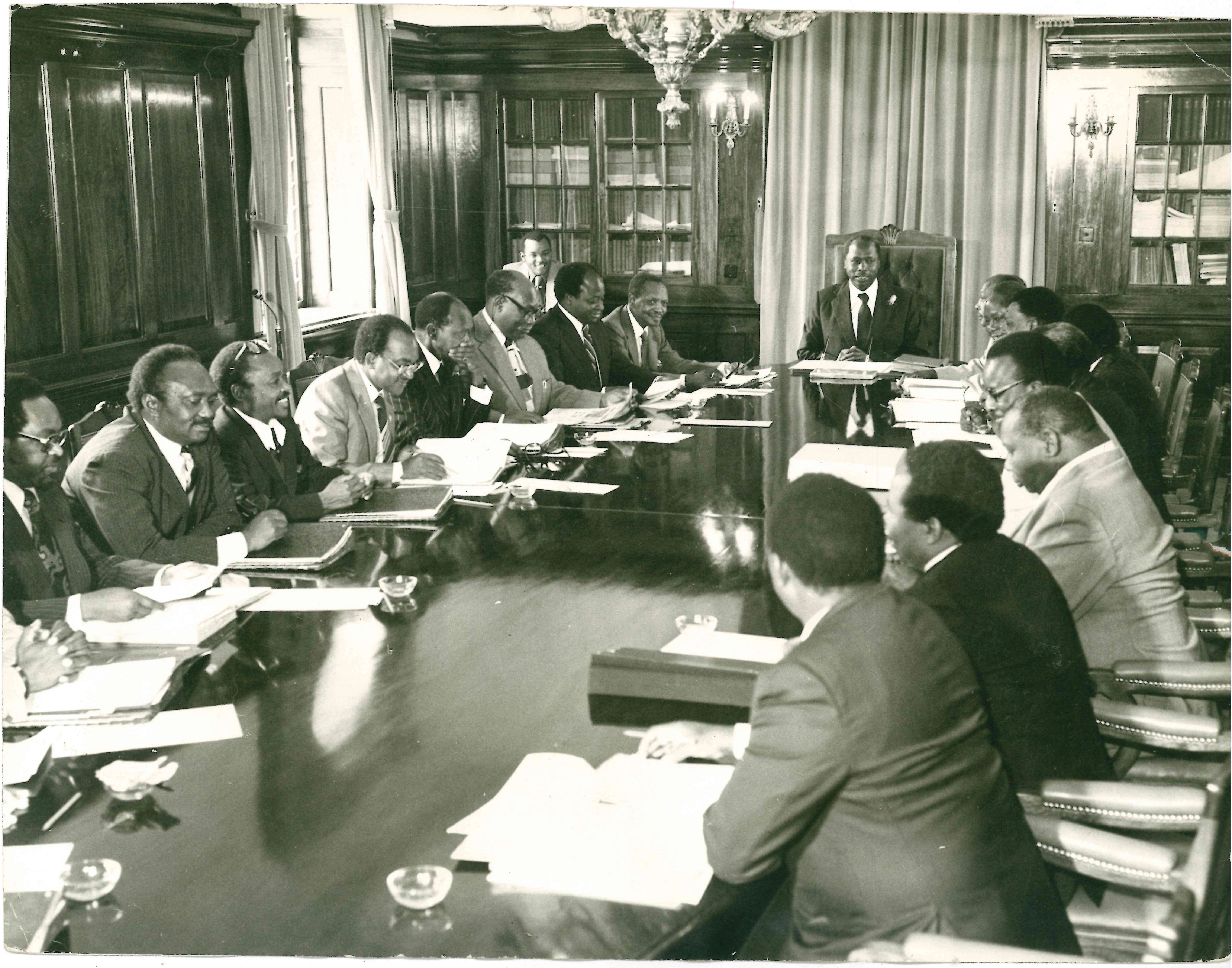
President Daniel arap Moi chairing a Cabinet Meeting at State House Nairobi_8.9.1978
President Daniel arap Moi chairing a Cabinet Meeting at State House Nairobi_8.9.1978
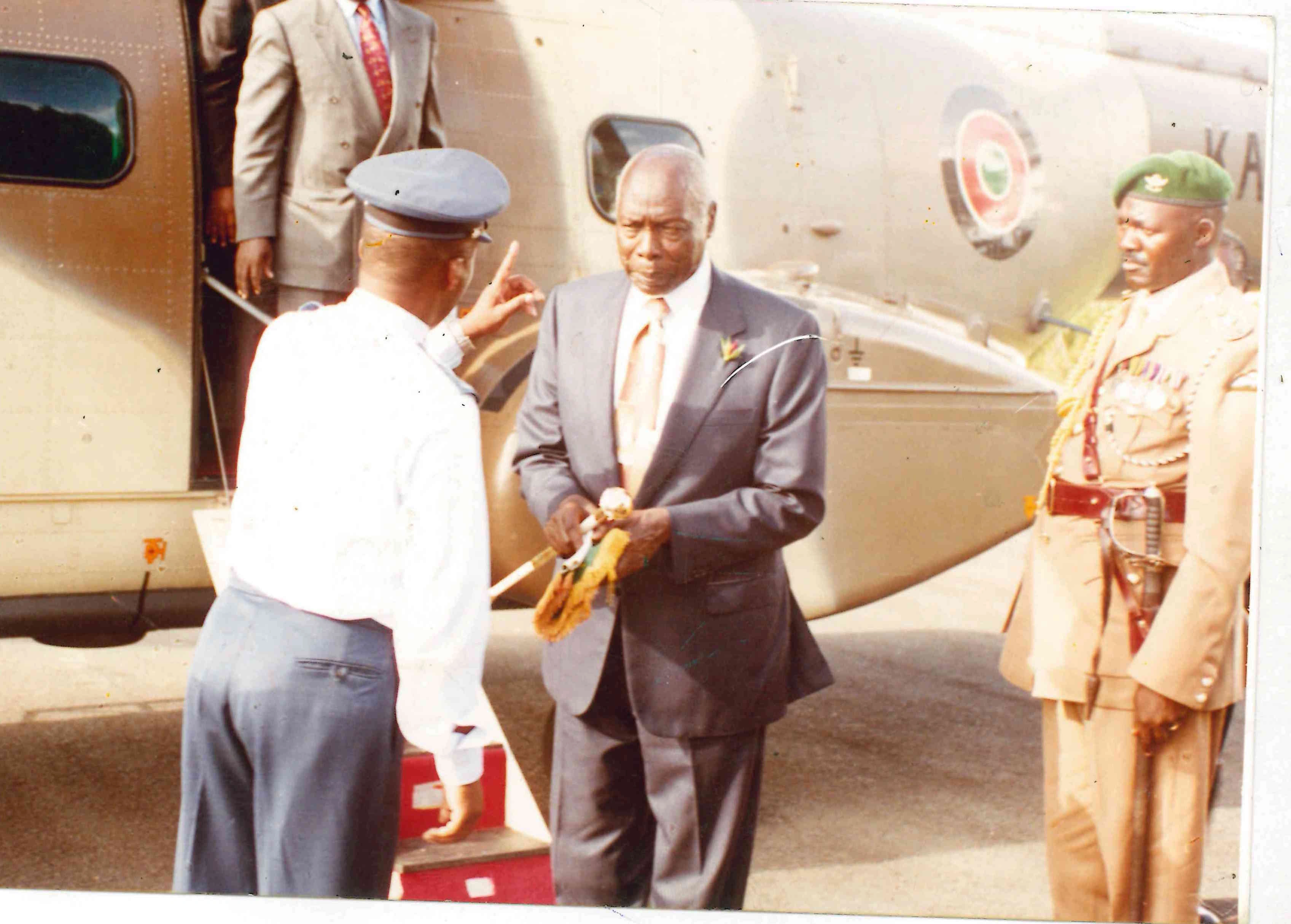
Immediate former President Daniel Arap Moi receives his presidential standard as he returned to his Kabarak home after handing over power to President Mwai Kibaki_30.12.2002
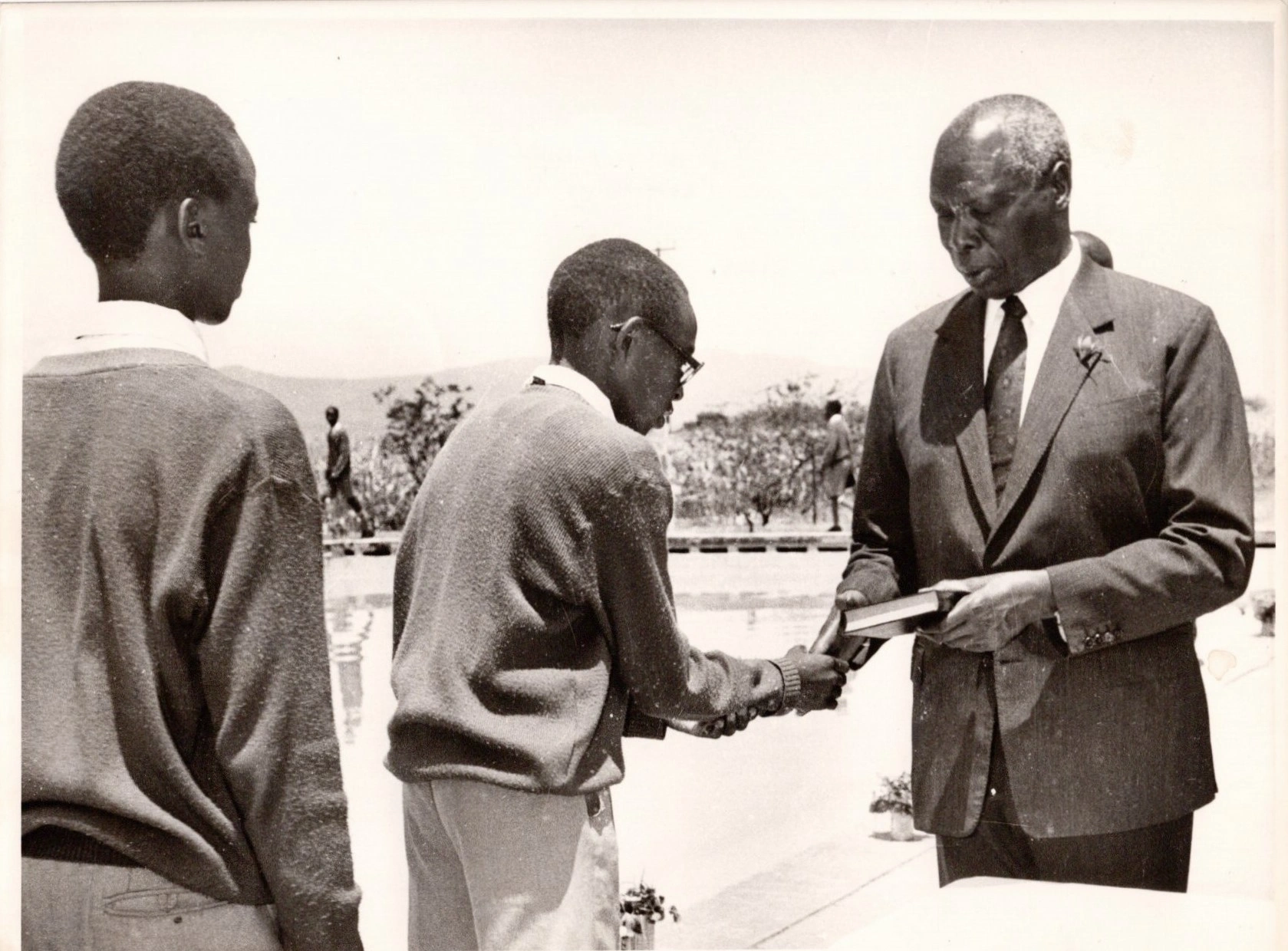
President Daniel Arap Moi with students and staff of Moi High School Kabarak during a church service_12.7.1992
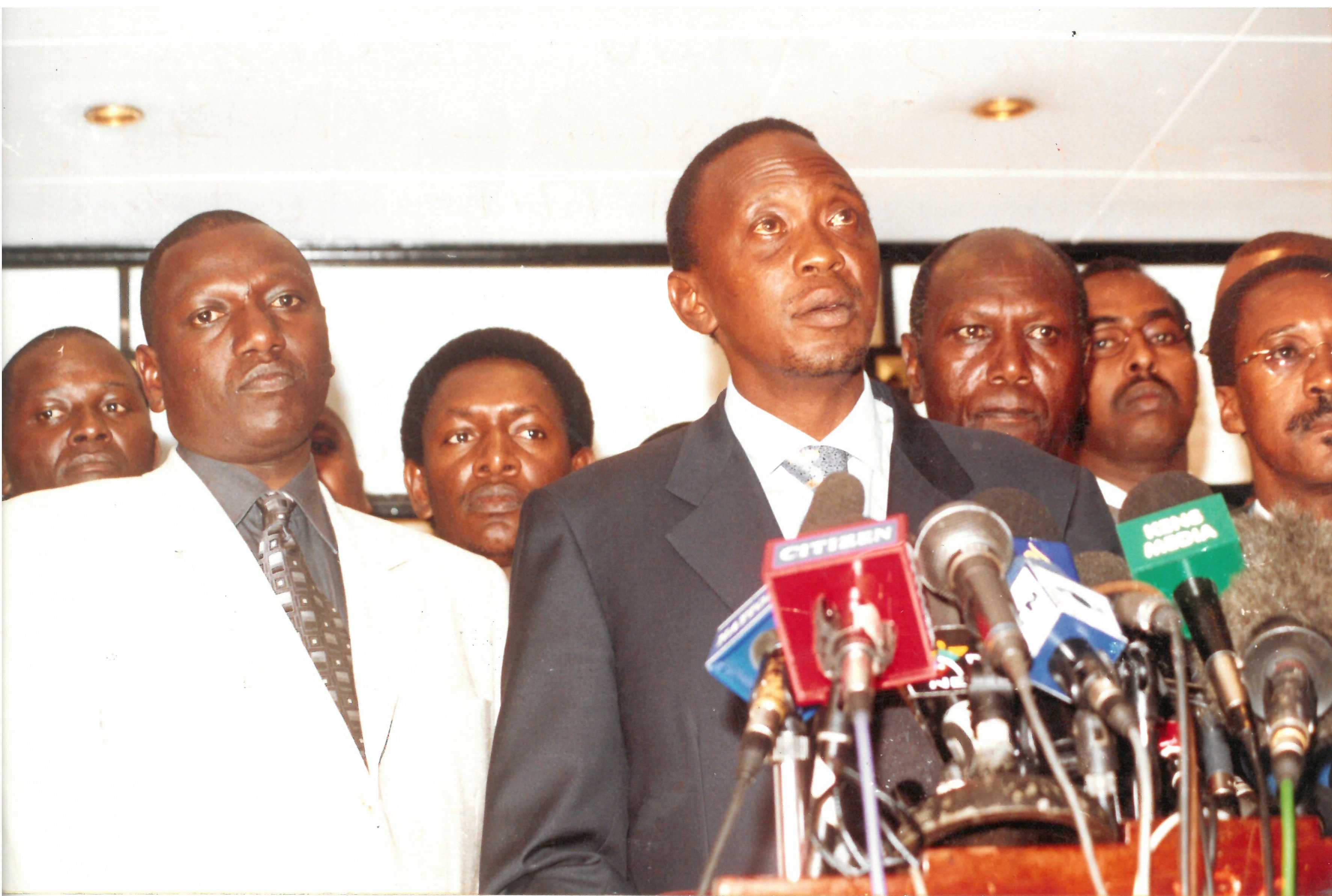
KANU Presidential Candidate Uhuru Kenyatta Concedes Defeat in the Presidential Election flanked by Eldoret North MP William Ruto_29.12.2002
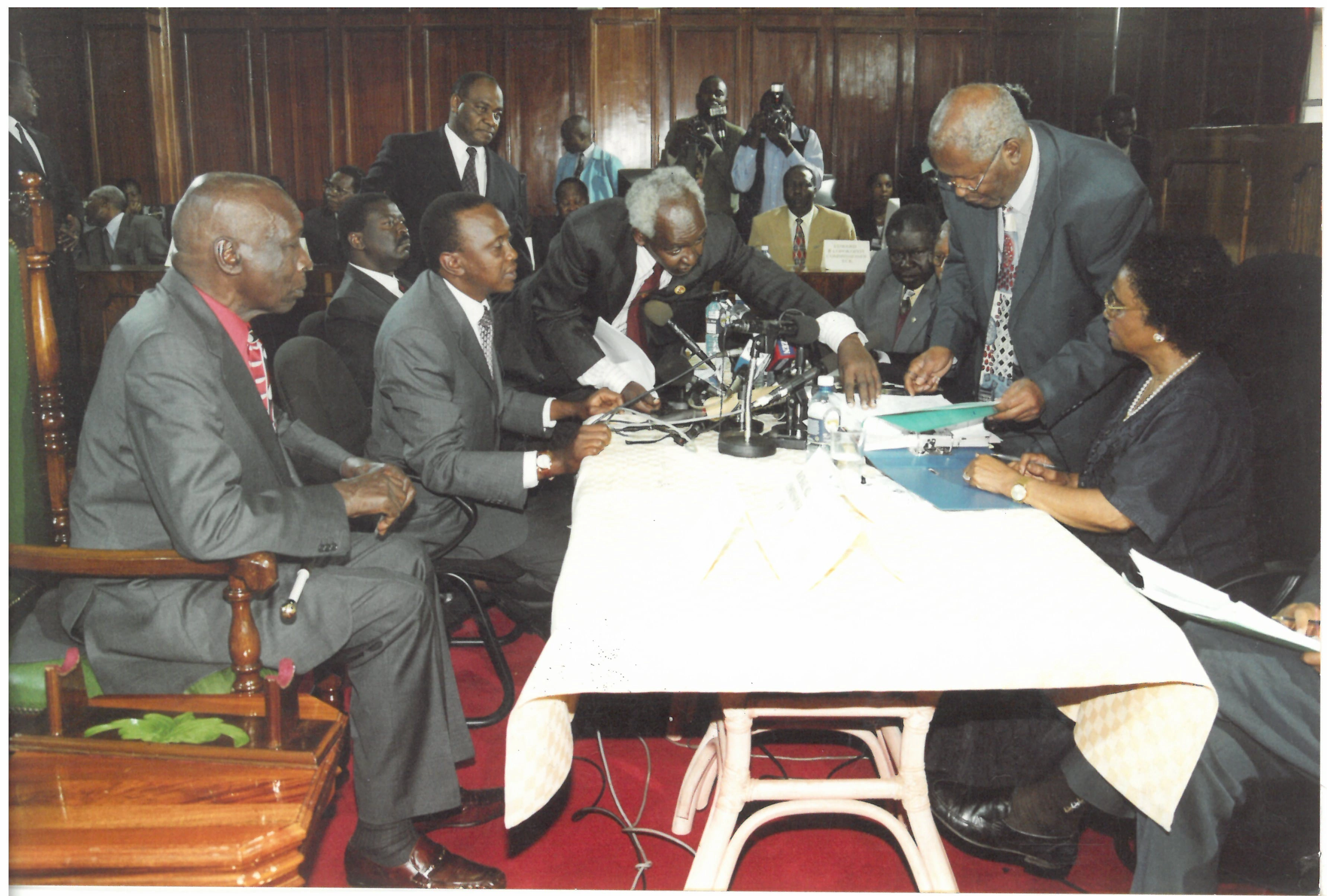
KANU Presidential Candidate Uhuru Kenyatta presenting nomination papers to ECK Chairman Samuel Kivuitu accompanied by President Moi and VP Musalia Mudavadi at KICC Nairobi_18.11.2002
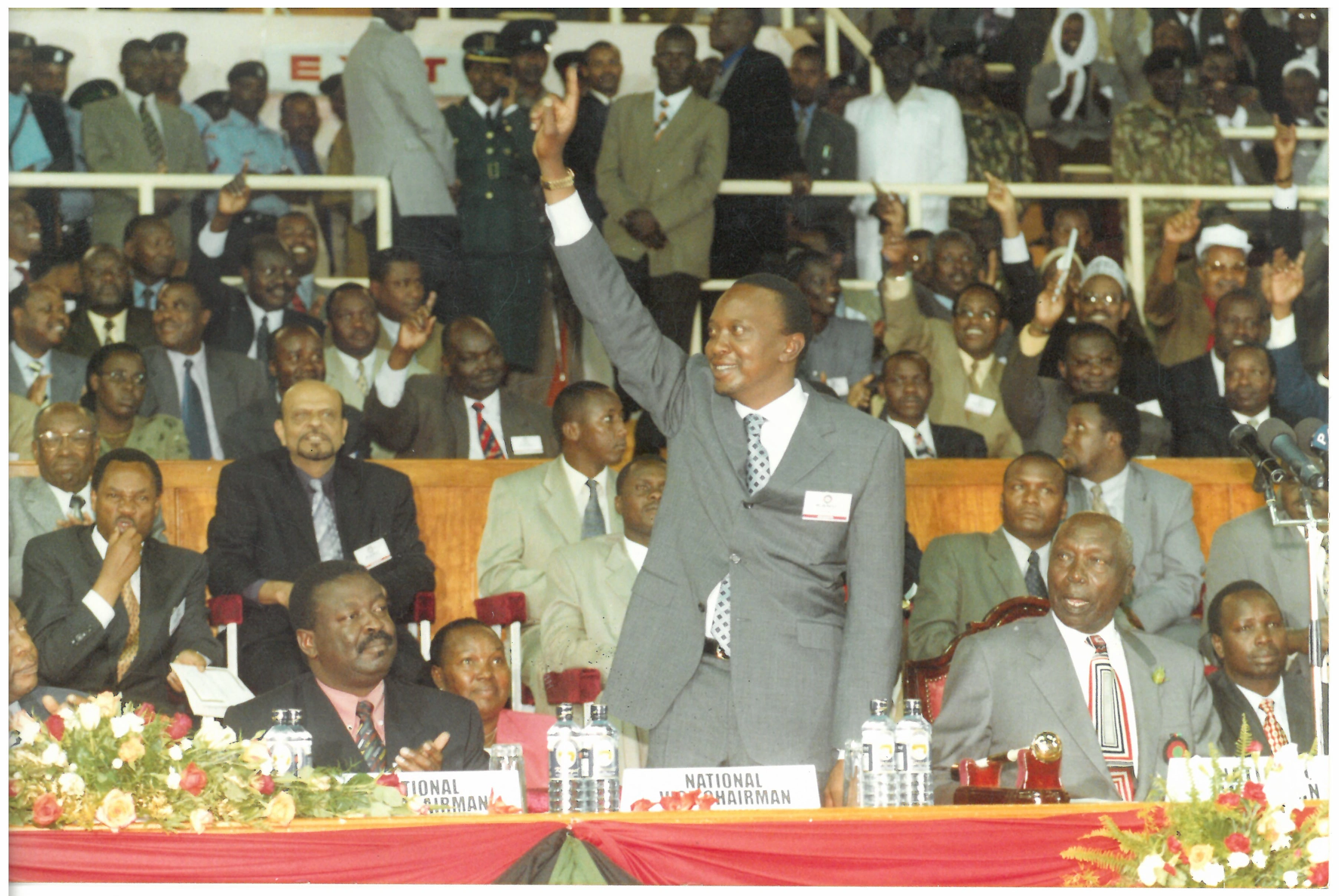
KANU Presidential Candidate Uhuru Kenyatta acknowledges cheers from delegates during his nomination at Kasarani Gymnasium Nairobi_14.10.2002
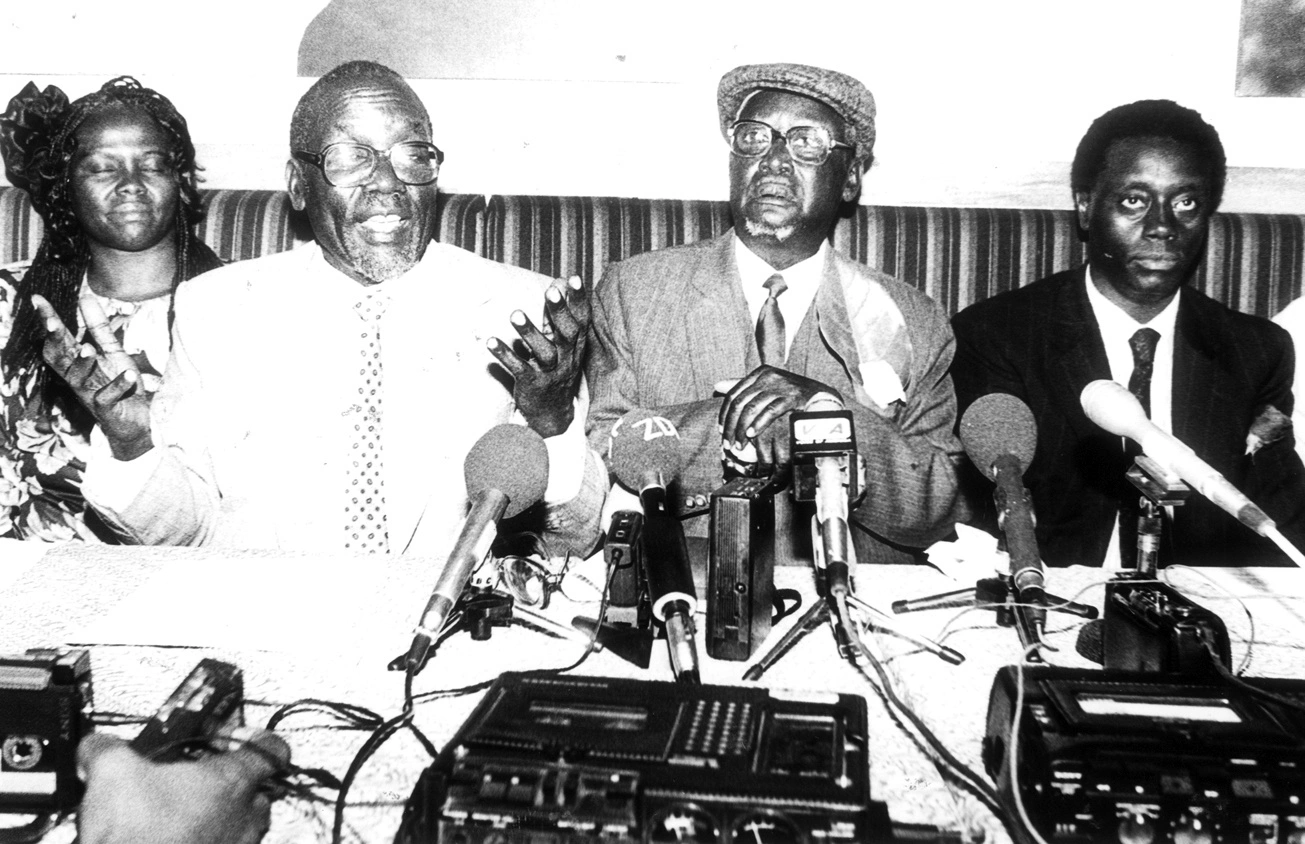
Opposition Leaders Jaramogi Oginga Odinga,Masinde Muliro,Wangari Maathai and Paul Muite address a press conference at Chester House Nairobi_1991
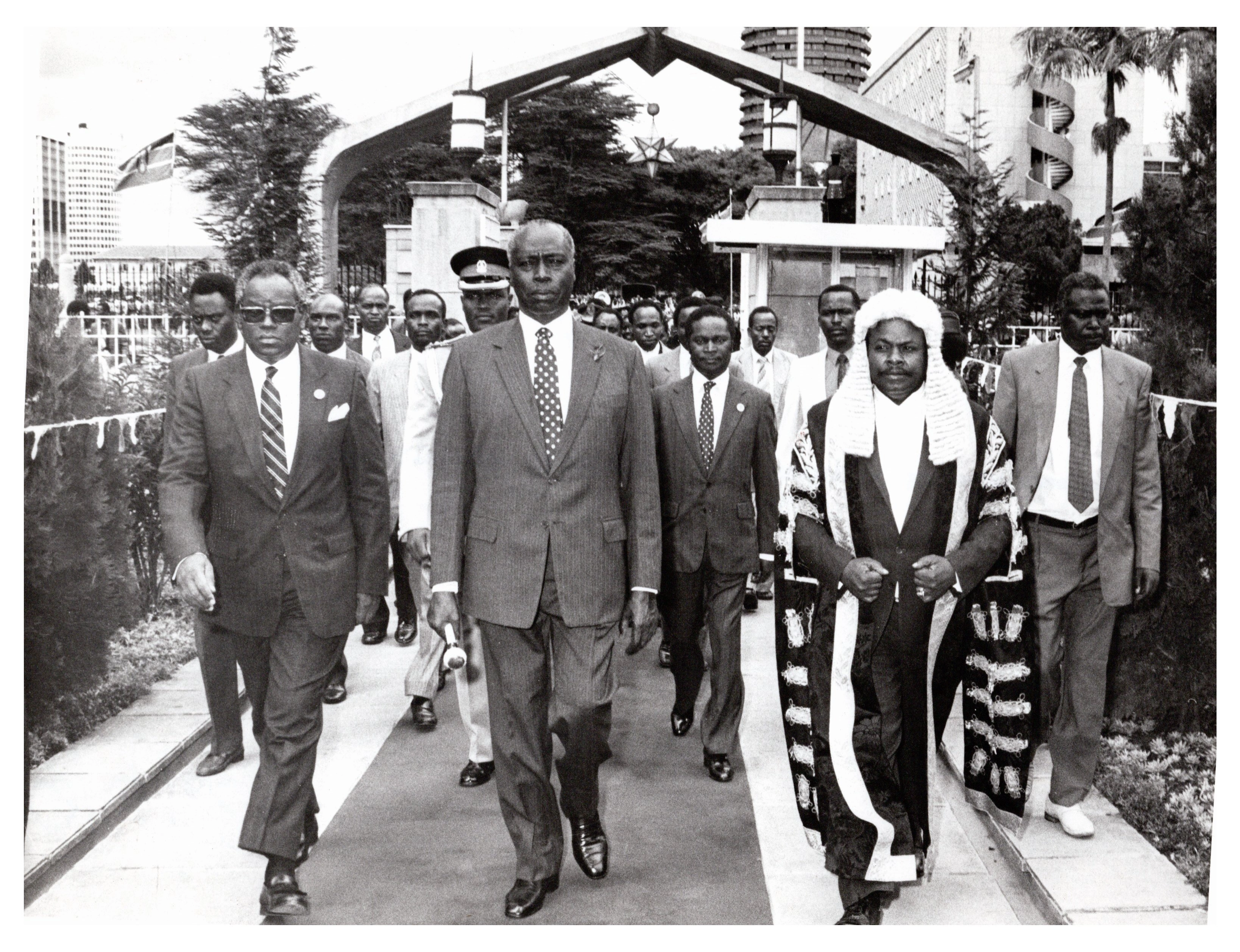
President Daniel Arap Moi arriving at Parliament buildings when he officially opened the 6th National Assembly_8.4.1988
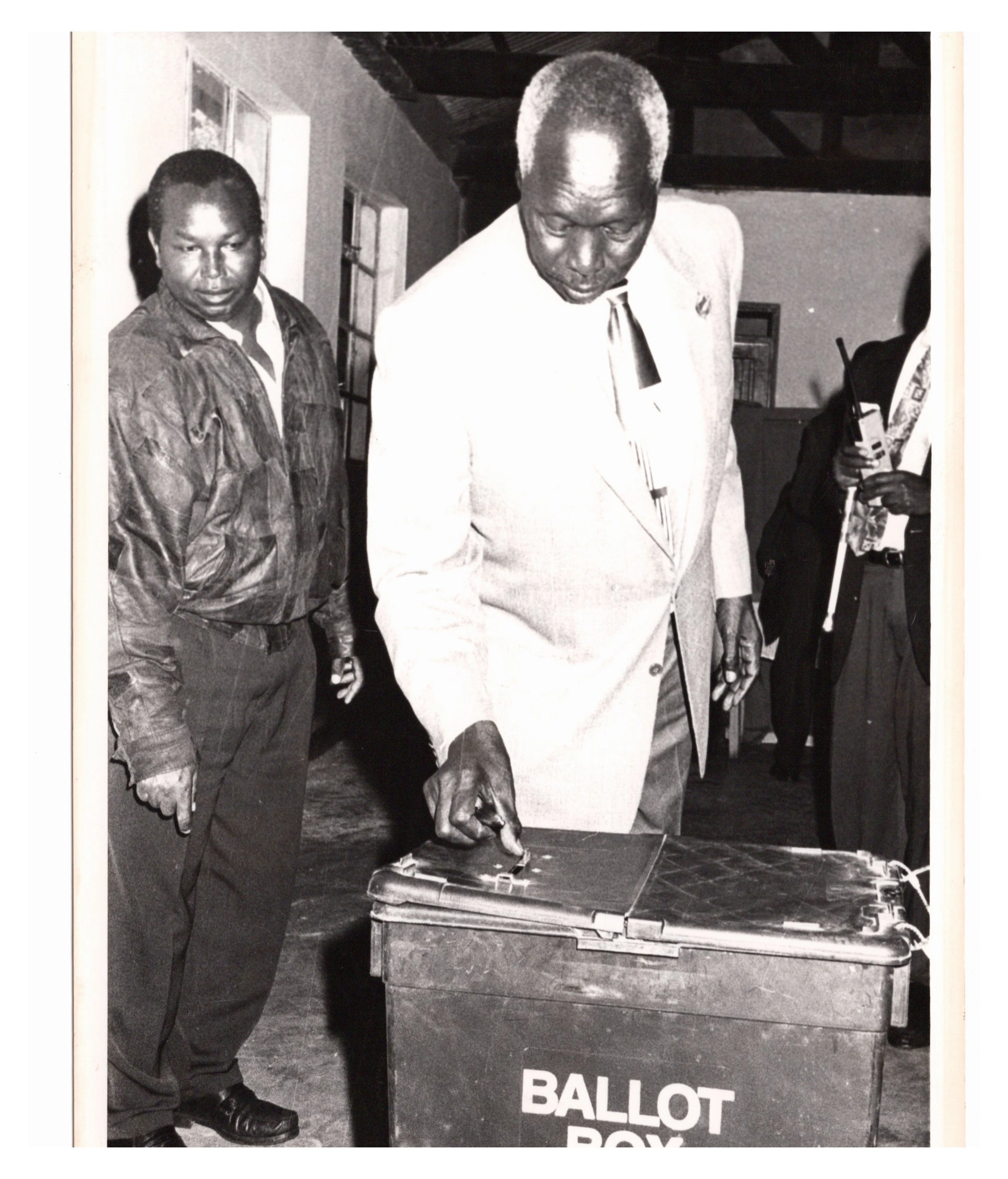
President Daniel Arap Moi casting his vote at Tandui Primary school polling station in Baringo central constituency_29.12.1997
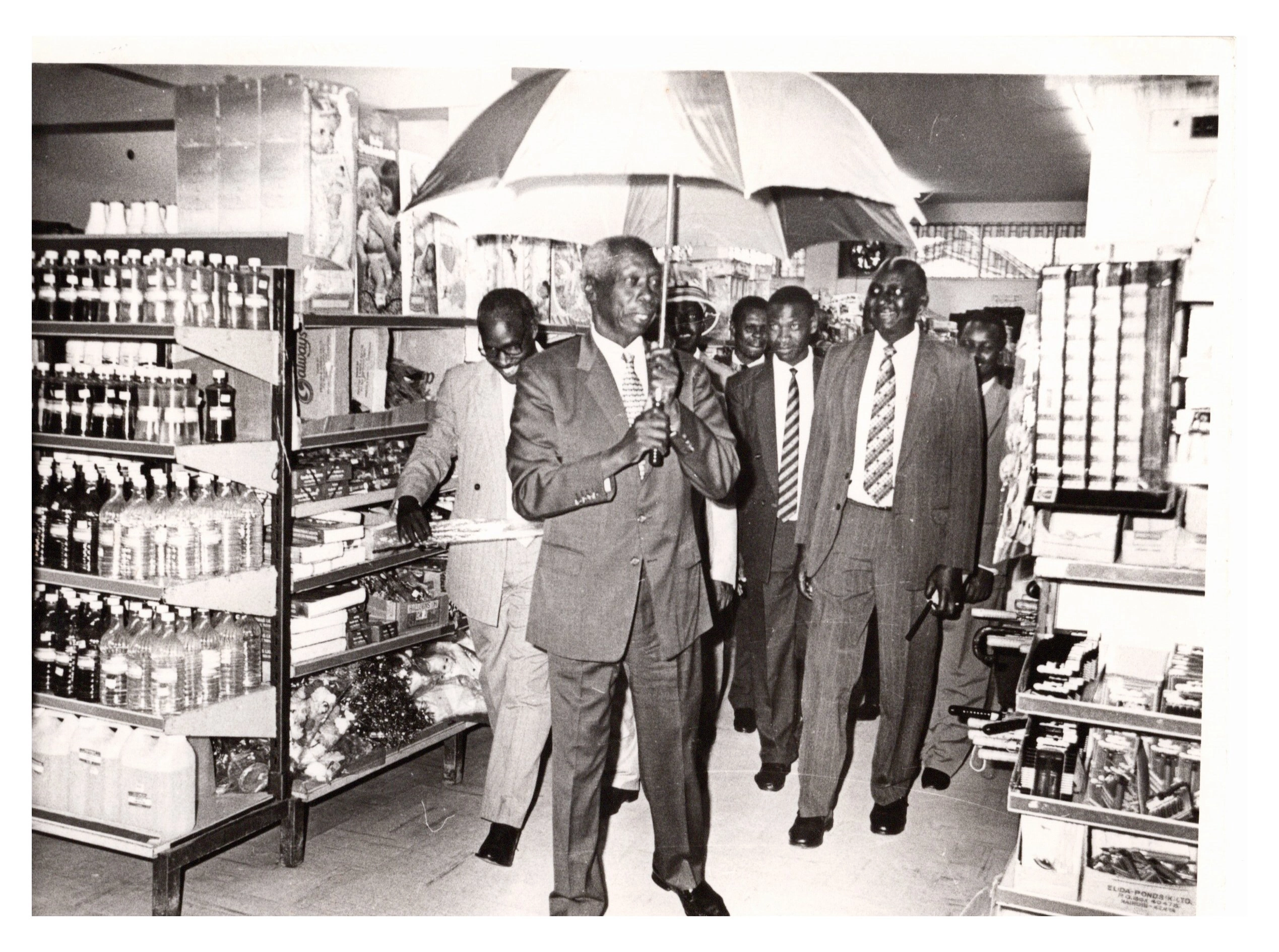
President Daniel Arap Moi in Eldoret when he got into one shop and bought an umbrella during a tour in Uasin Gishu_10.1.1996
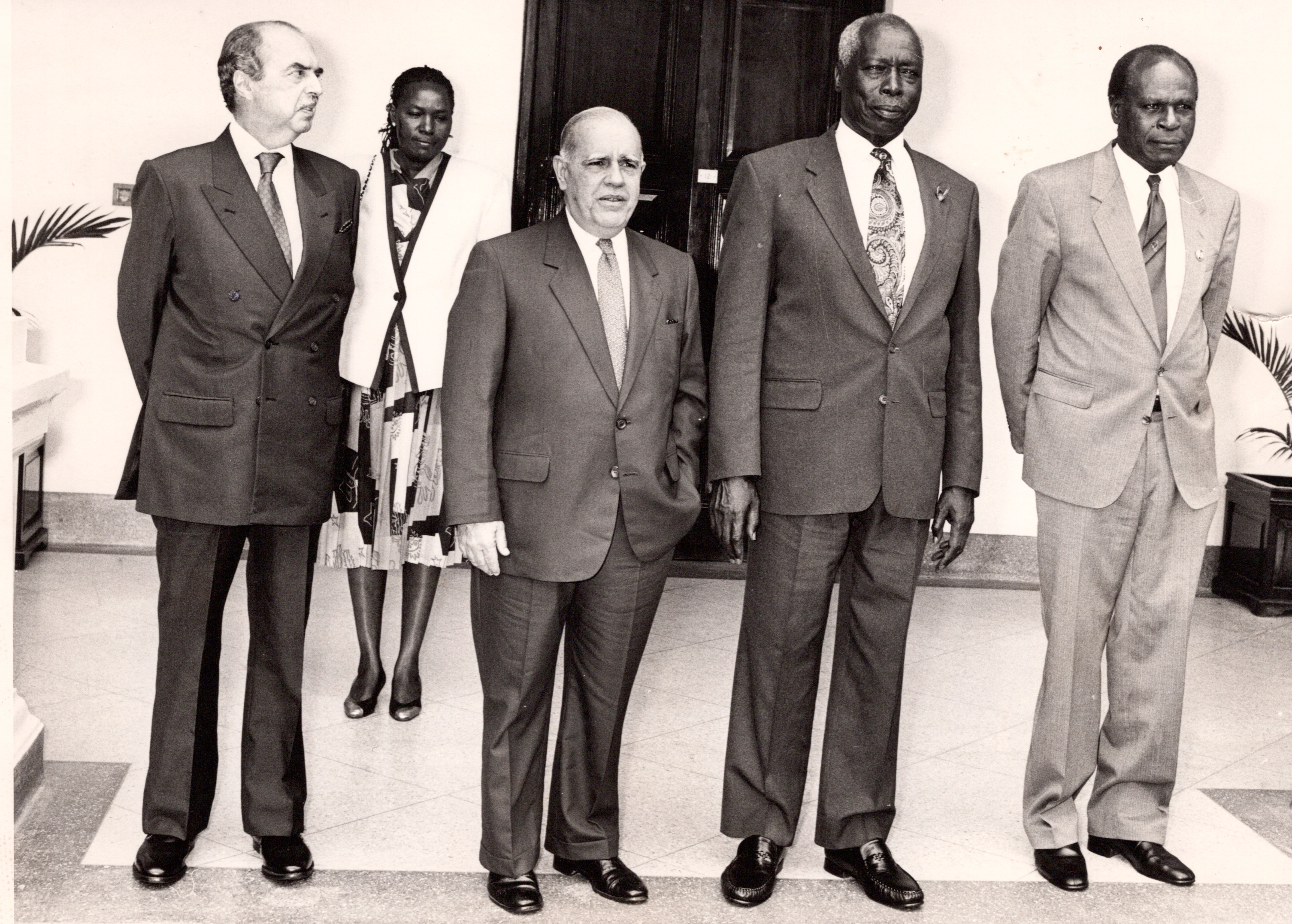
President Daniel Arap Moi with Special envoy Ambassador Marcos Azabuja who delivered a special Message from Brazil President Fenardo Collaro at State House Nairobi_12.5.1992
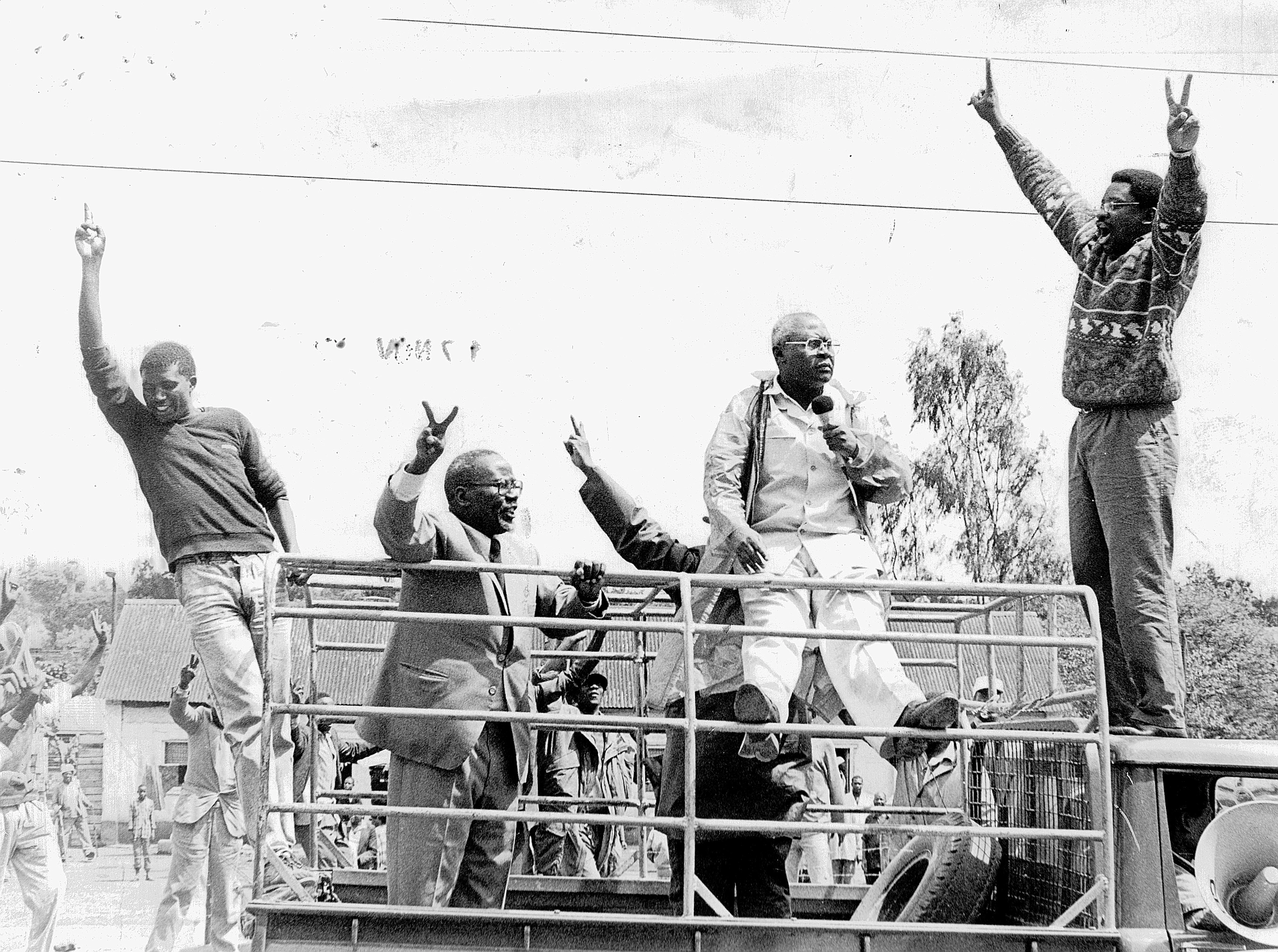
FORD Members Masinde Muliro Martin Shikuku and James Orengo addressing a Rally at Kamukunji Grounds Nairobi on top of a Pick Up_7.7.1992
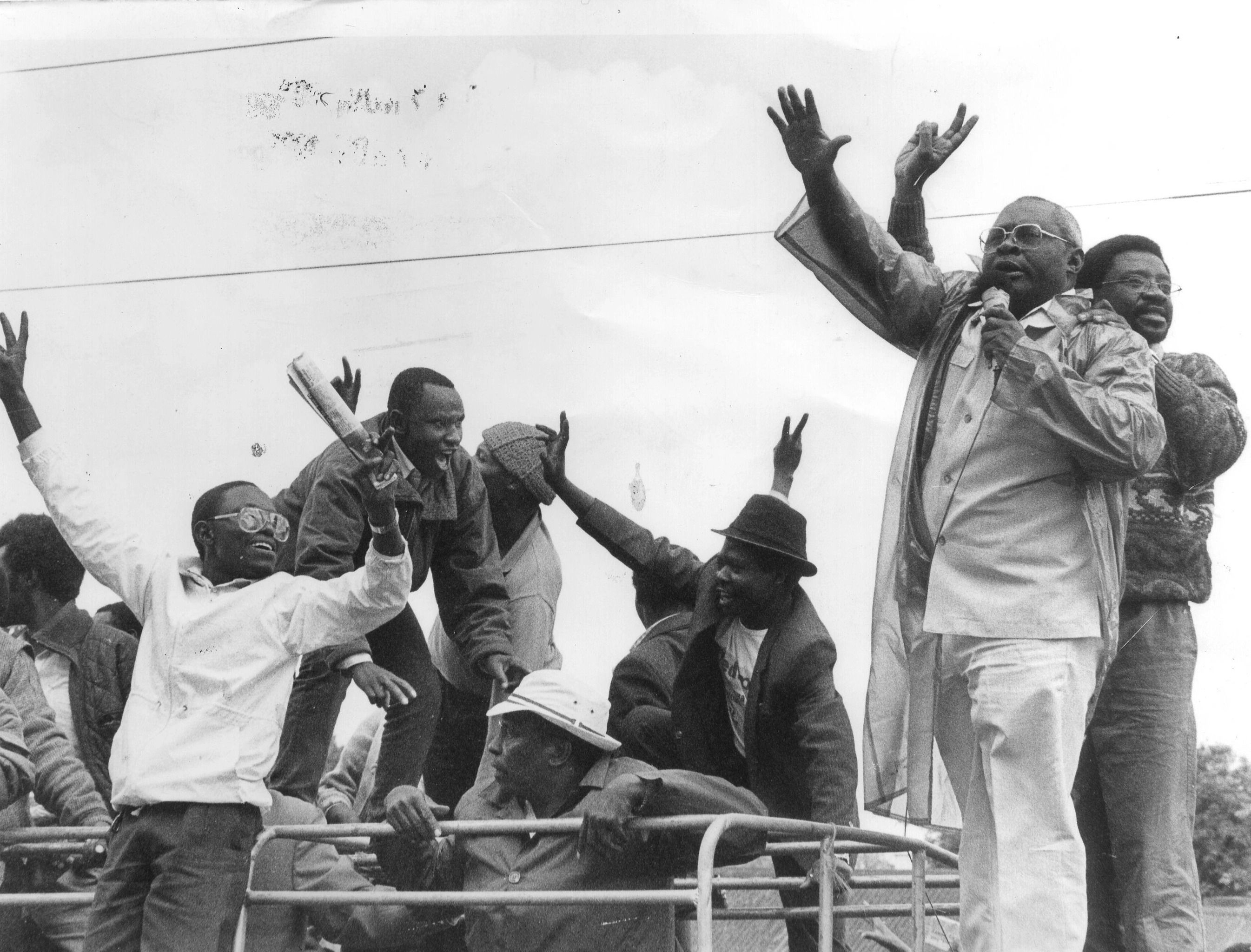
FORD Members Martin Shikuku and James Orengo addressing a Rally at Kamukunji Grounds Nairobi on top of a Pick Up in 1991
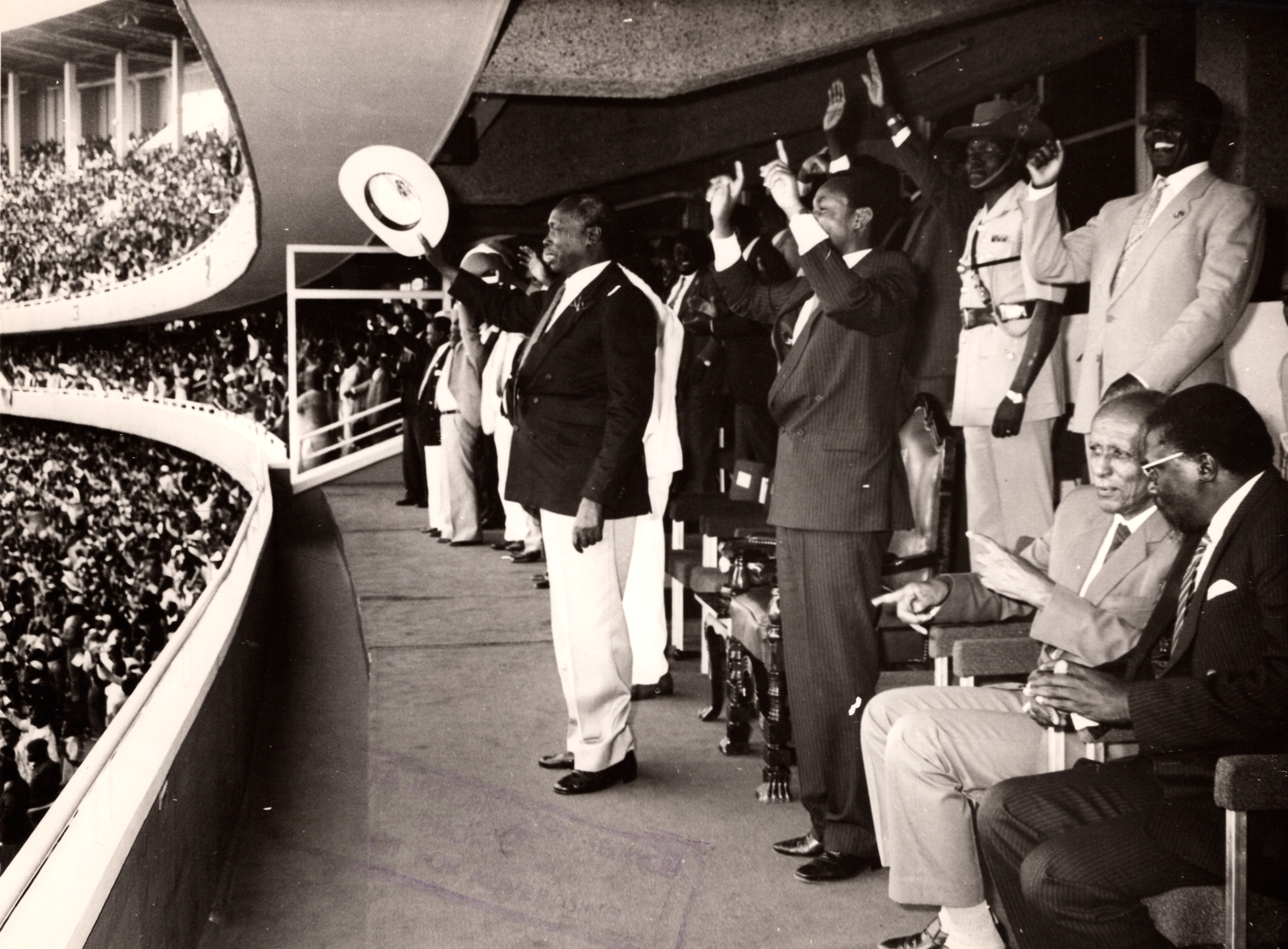
President Daniel Arap Moi waving to celebrate Gor Mahia's goal during the African Cup Winners Cup against Espereance at Kasarani Stadium_5.12.1987
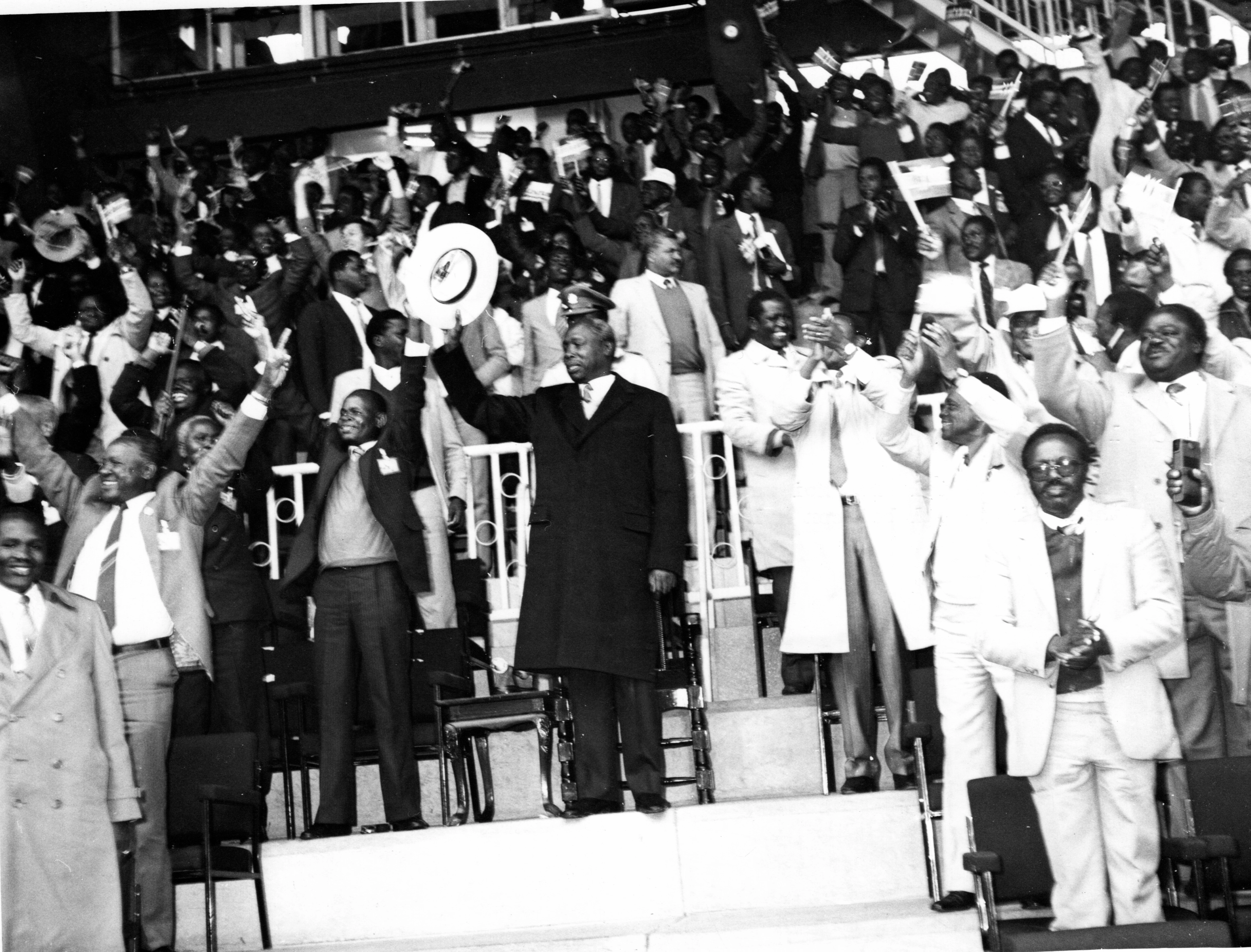
President Daniel Arap Moi waving his hat to cheer Harambee stars after scoring their first goal against Malawi National Team at Nyayo Stadium_11.8.1987
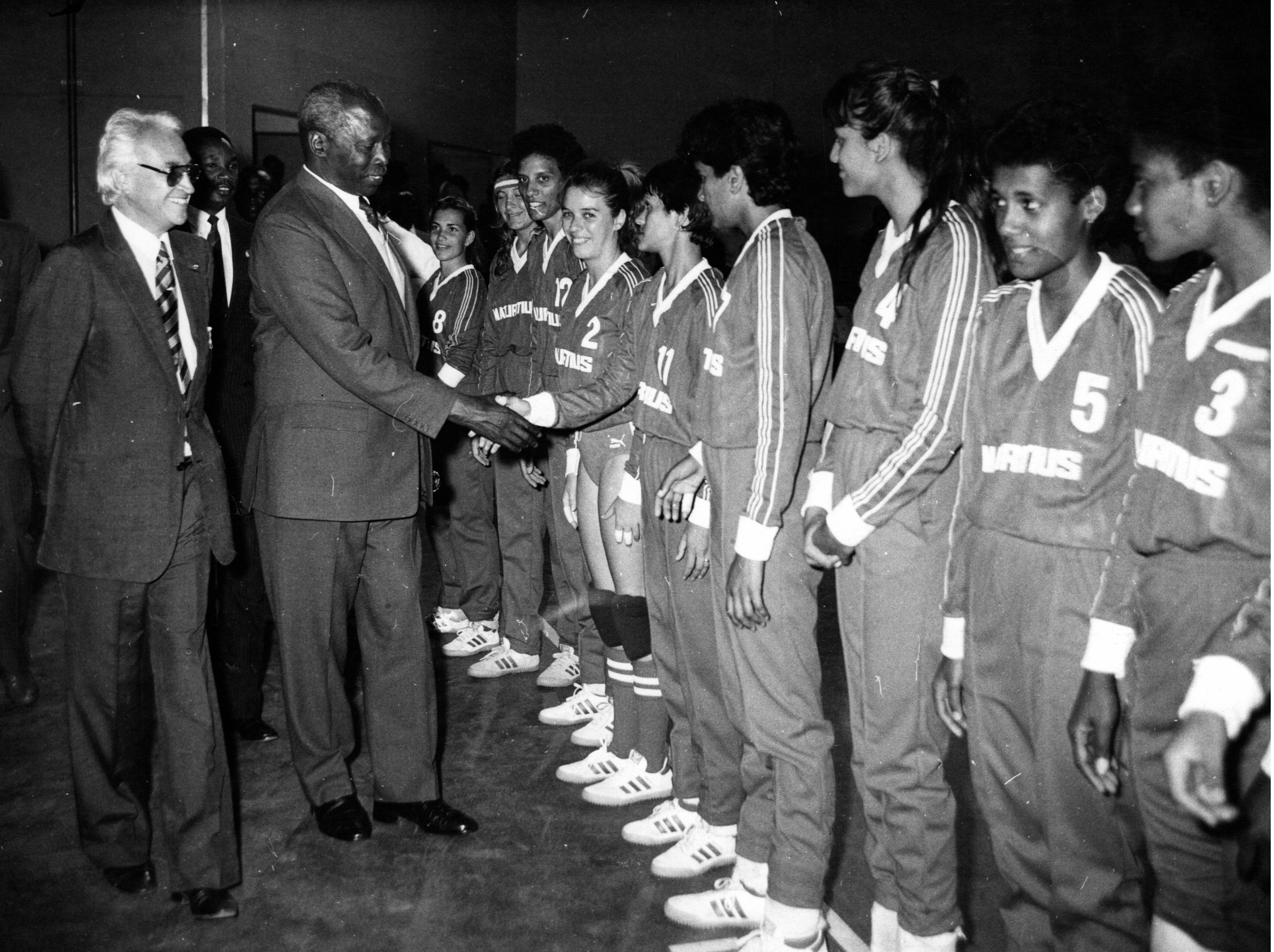
President Daniel Arap Moi being introduced to Mauritius team during the Volleyball tournament for the 4th All African games held at Bomas of Kenya_3.8.1987
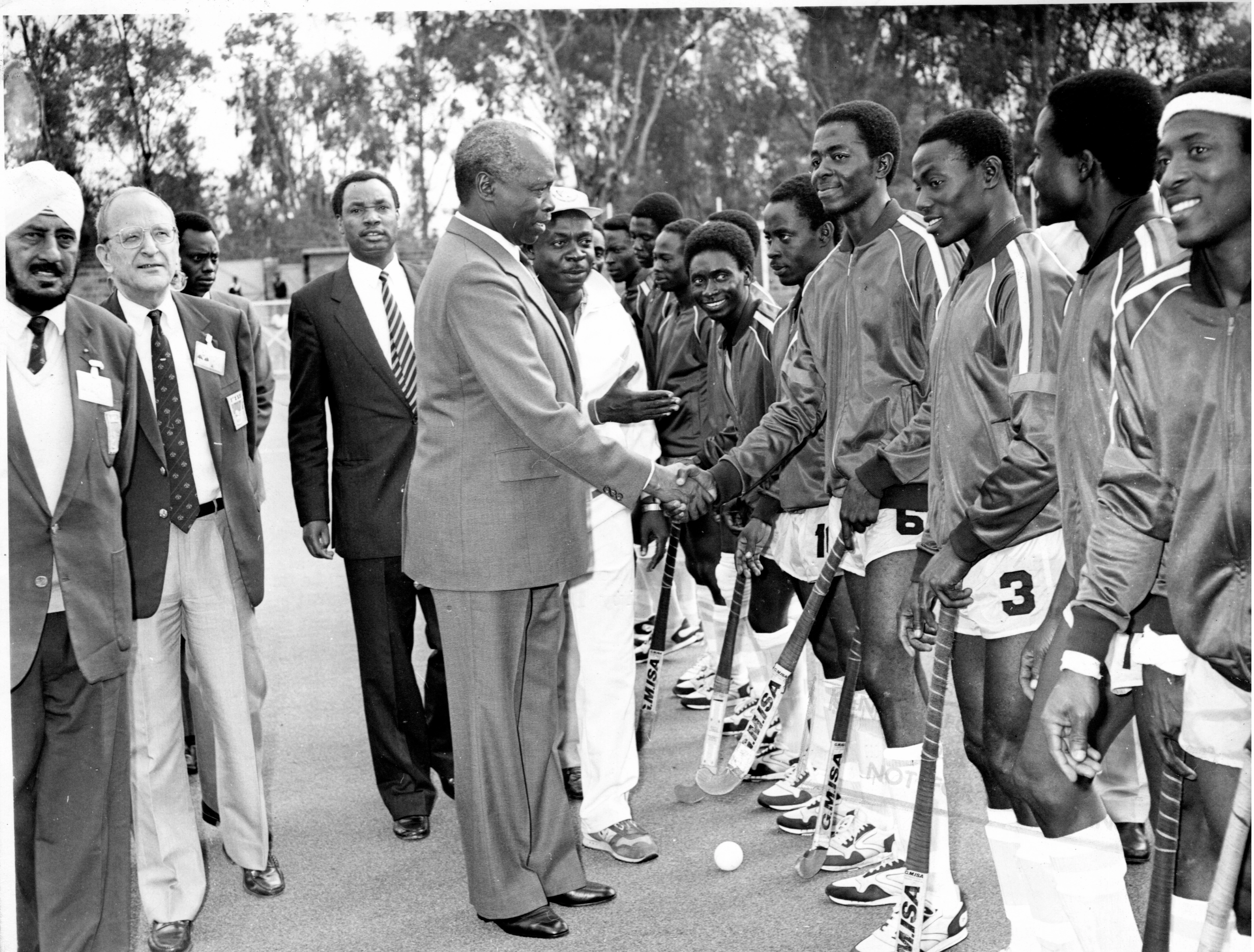
President Daniel Arap Moi being introduced to the Kenya Hockey team before their Match vs Ghana at City Park Nairobi_2.8.1987
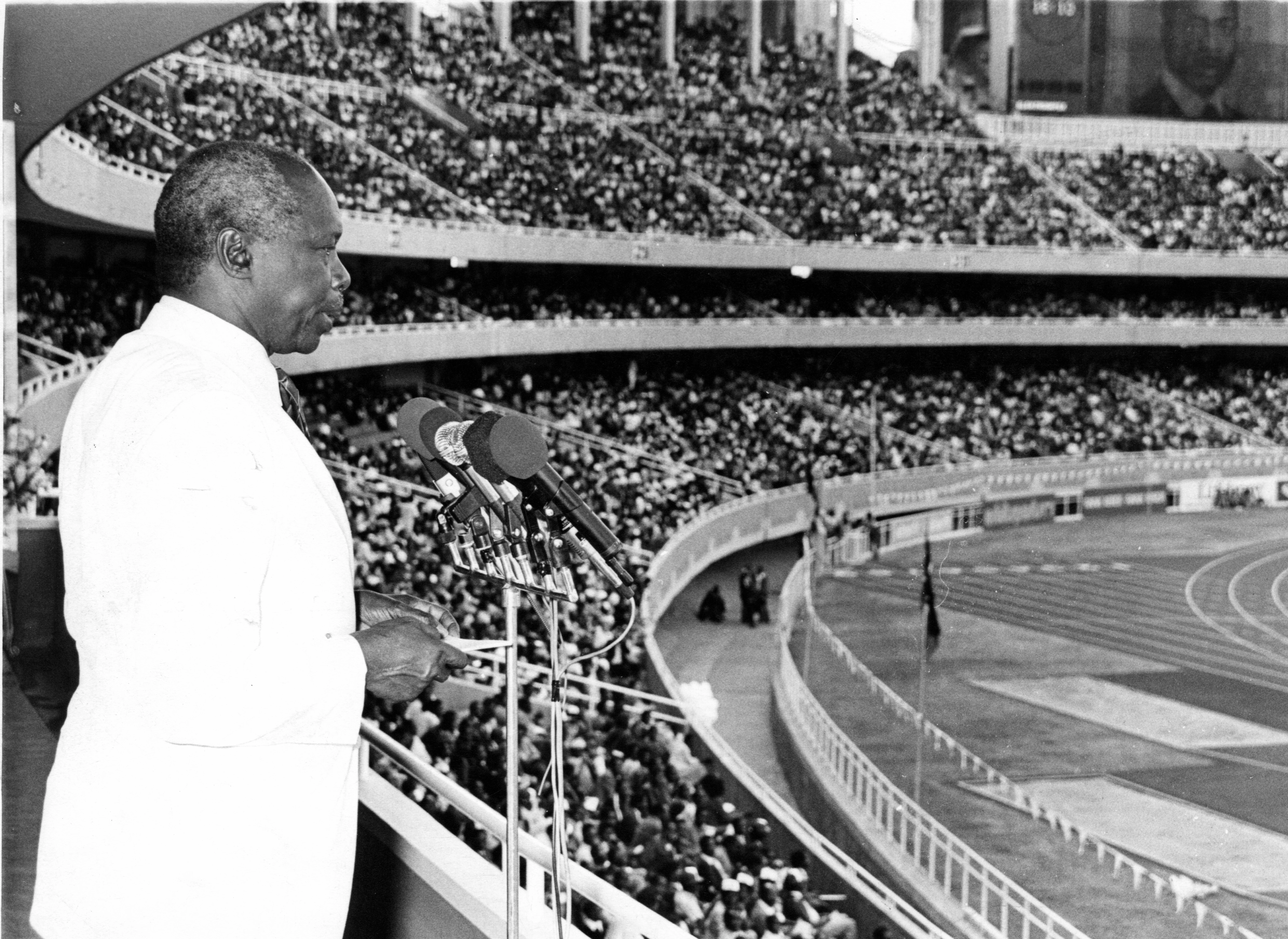
President Daniel Arap Moi addressing Wananchi and Sportsmen during the official Opening of 4th All African Games at the Moi International Centre Kasarani_1.8.1987
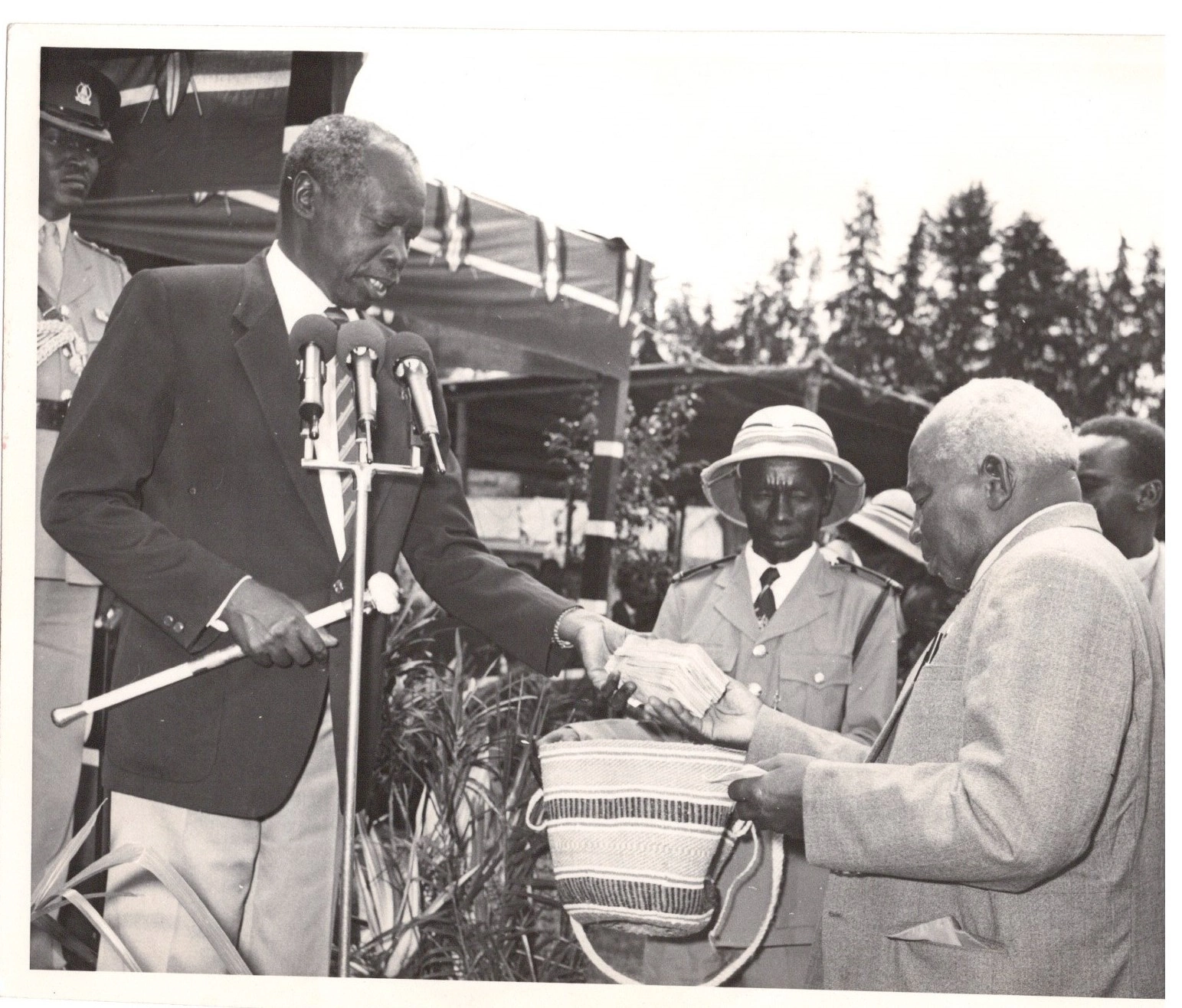
President Daniel Arap Moi conducting a fund drive in aid of Karatina Nyayo wards in Nyeri District_9.12.1987
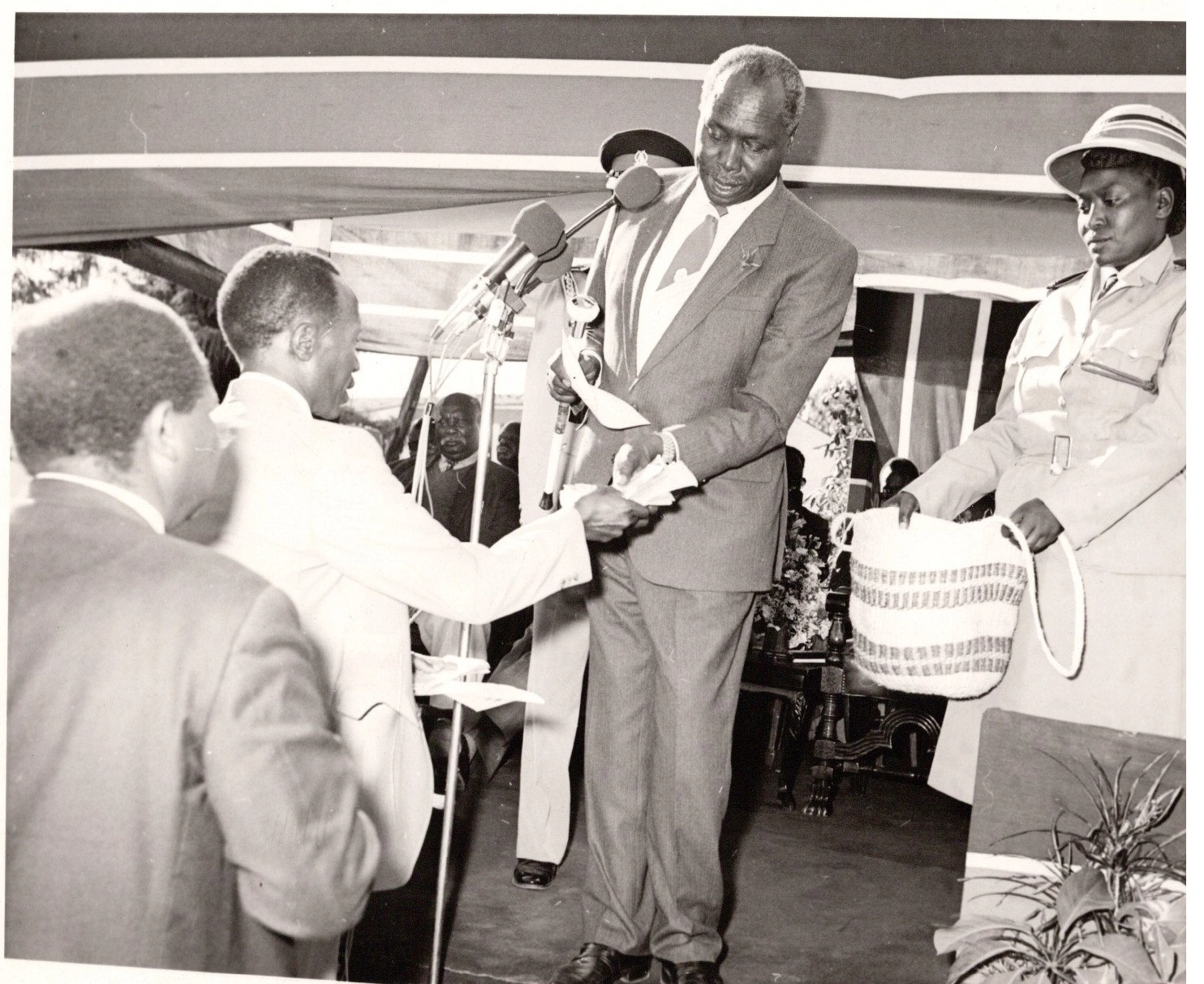
President Daniel Arap Moi conducting a funds drive in aid of the church of God sanctuary Buru Buru at the Church Compound_3.4.1987
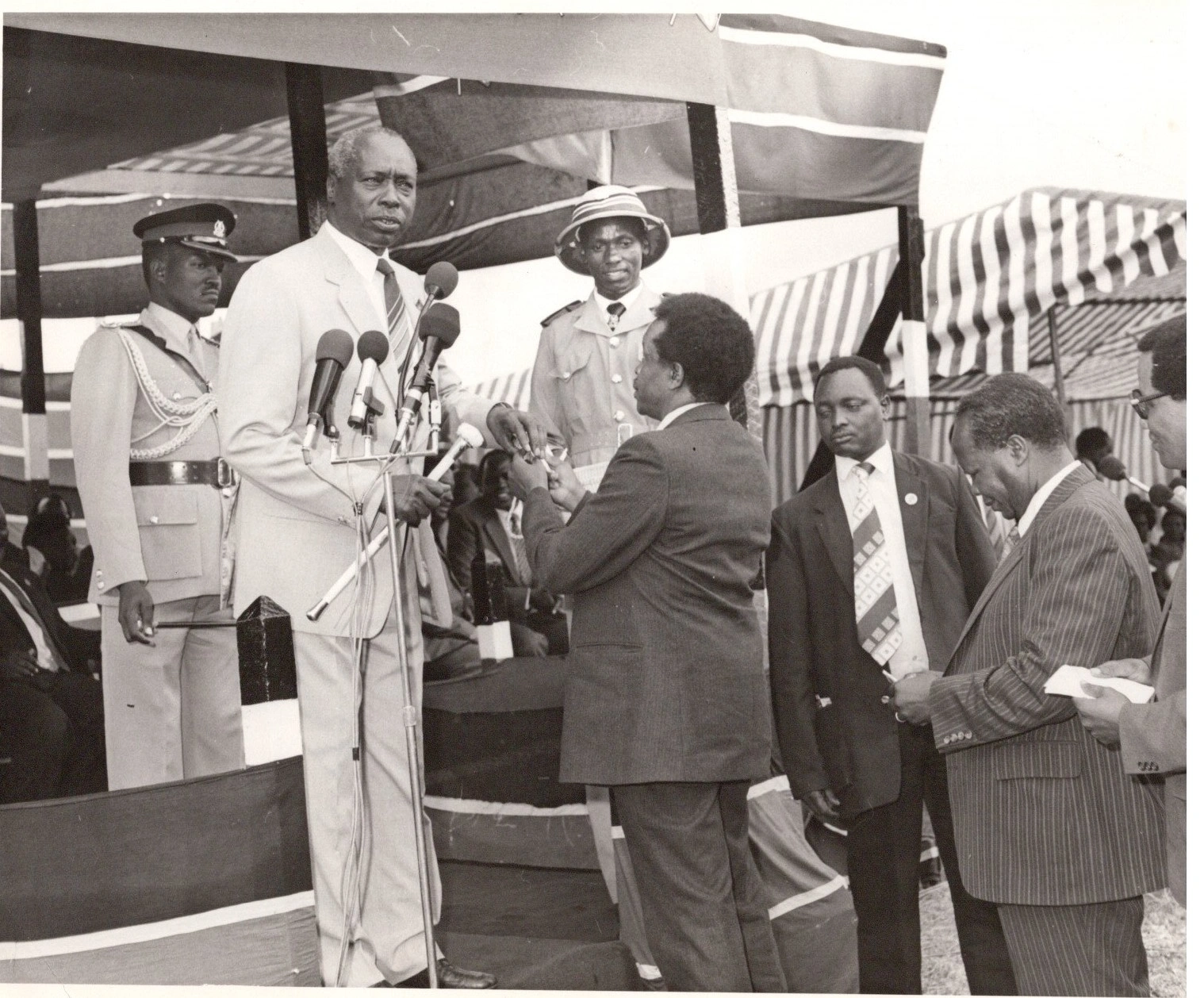
President Daniel Arap Moi conducting a Fundraiser in aid of development Projects in Kijabe Kiambu District_20.3.1987
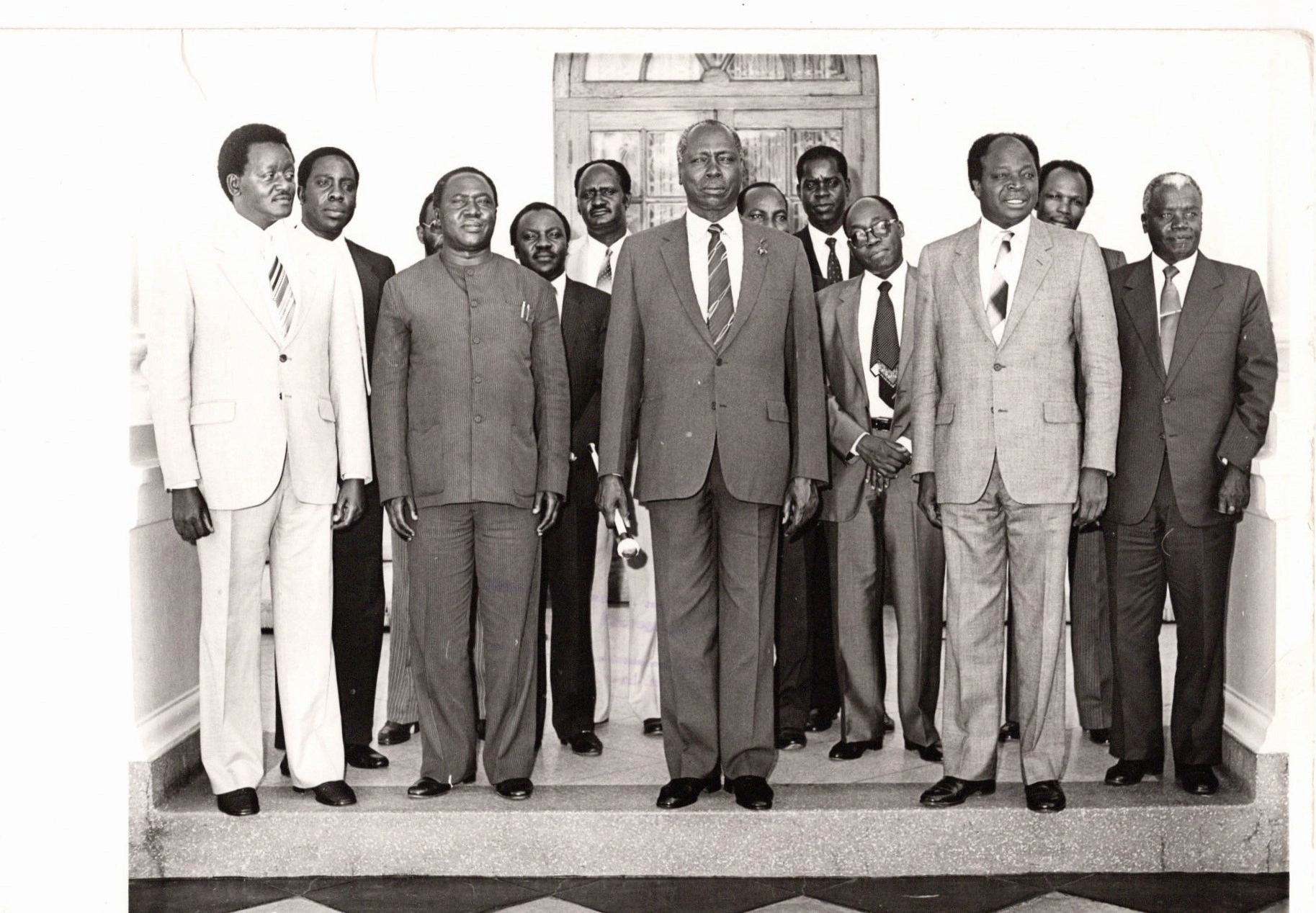
President Daniel Arap Moi with Vice President Mwai Kibaki meeting Tanzania Minister Dr John Malecela at State House Nairobi_16.1.1985
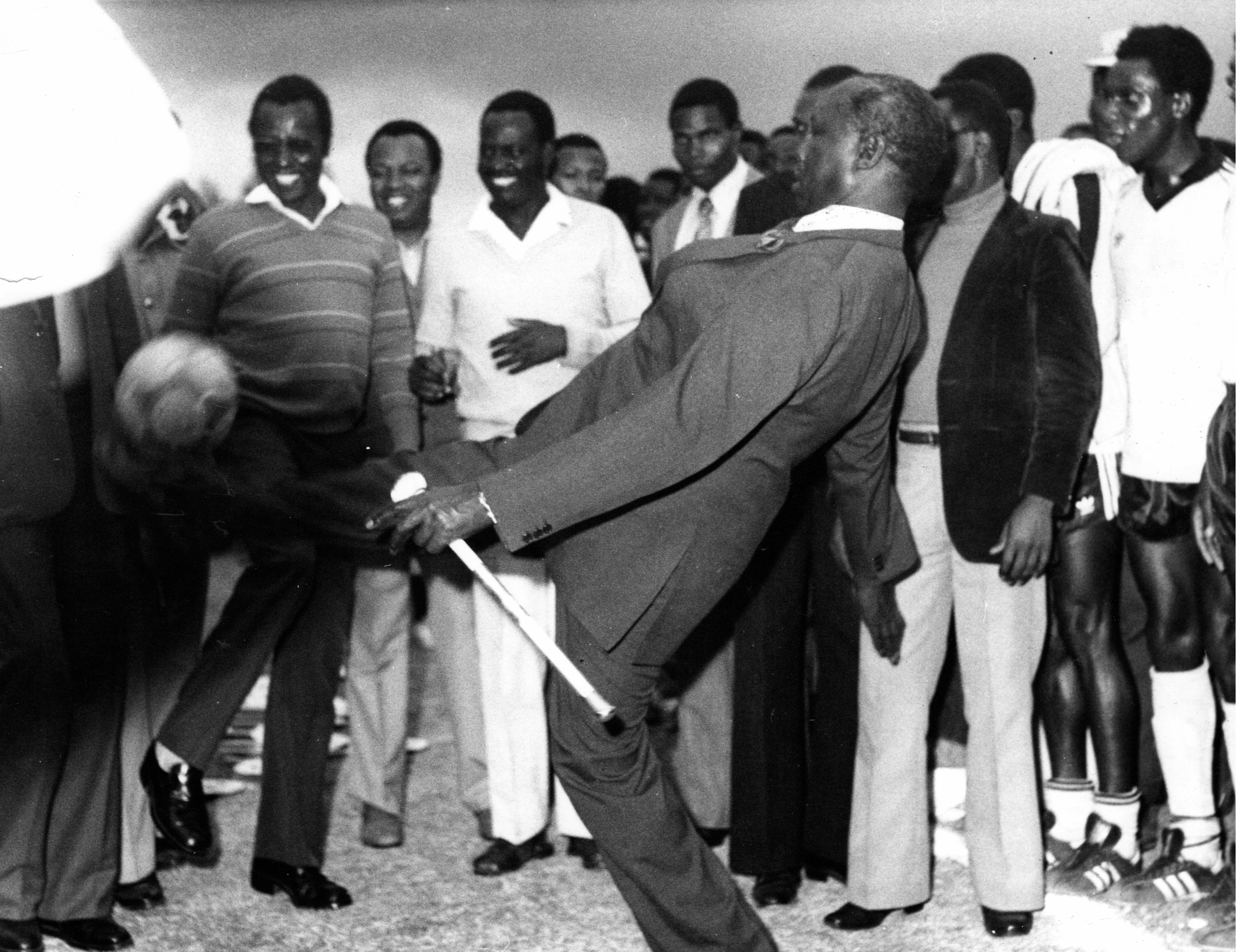
President Daniel Arap Moi showcasing ball handling skills during a Match between Kenya Breweries and AFC Leopards at Nyayo National Stadium_22.7.1984
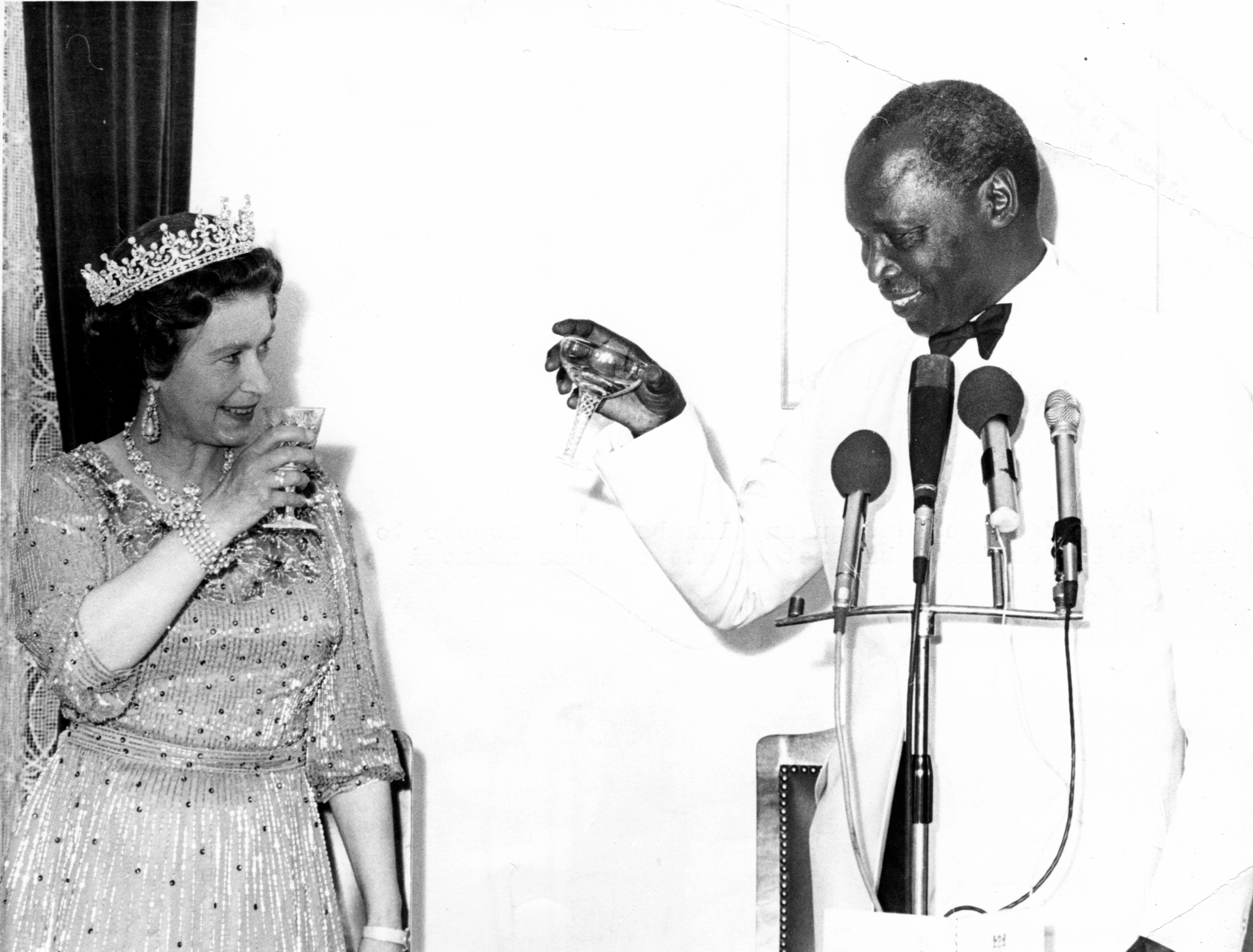
President Daniel Arap Moi hosting Queen Elizabeth II during a Dinner Banquet at State House Nairobi_10.11.1983
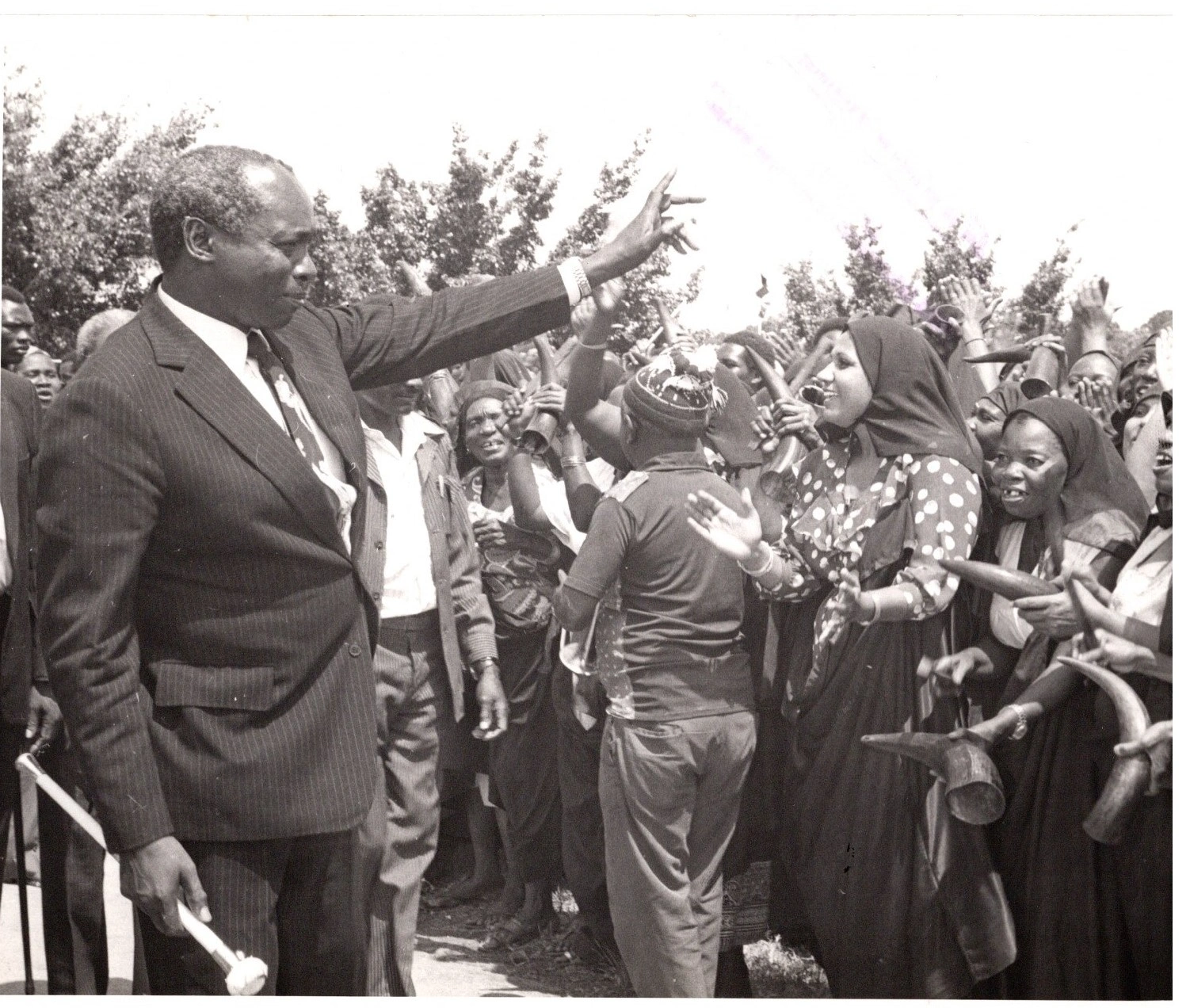
President Daniel Arap Moi waving to traditional dancers at the Moi Airport Mombasa before leaving for Nairobi_4.9.1983
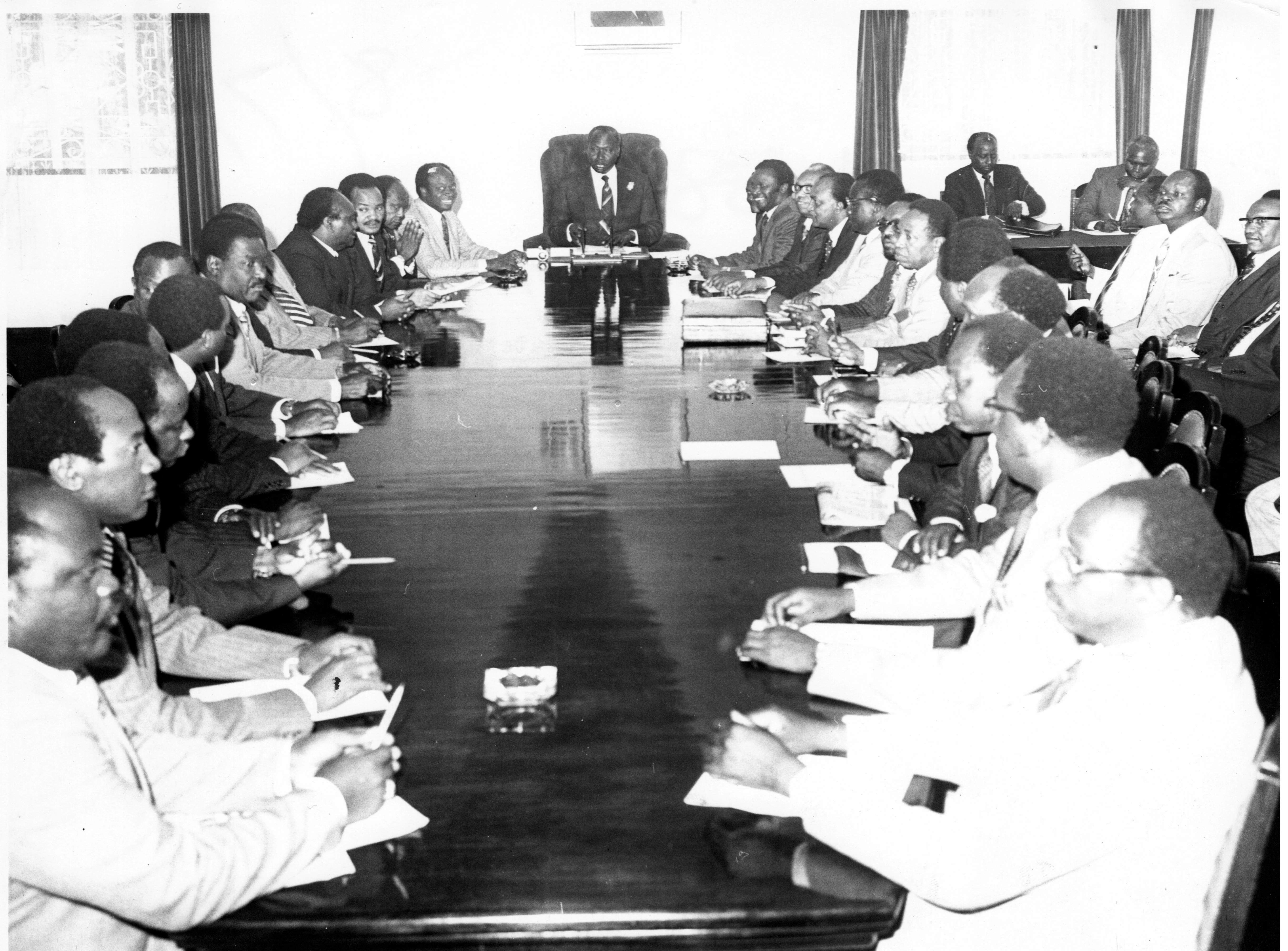
President Daniel Arap Moi chairing a Cabinet Meeting flanked by Vice President Mwai Kibaki at State House Nakuru_8.7.1981
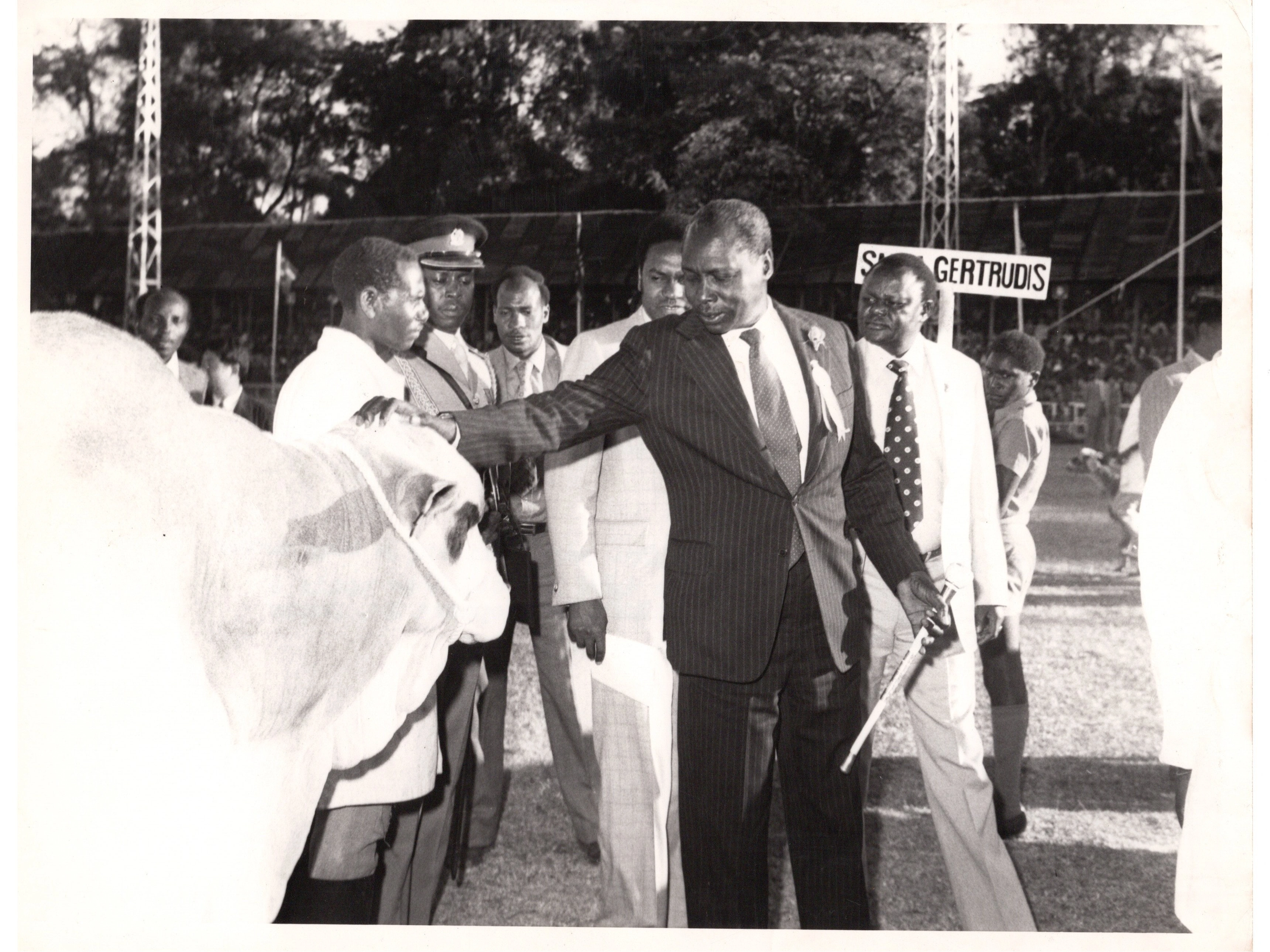
President Daniel Arap Moi admiring a bull after he officially opened the 1980 Nairobi Agricultural Show_30.9.1980
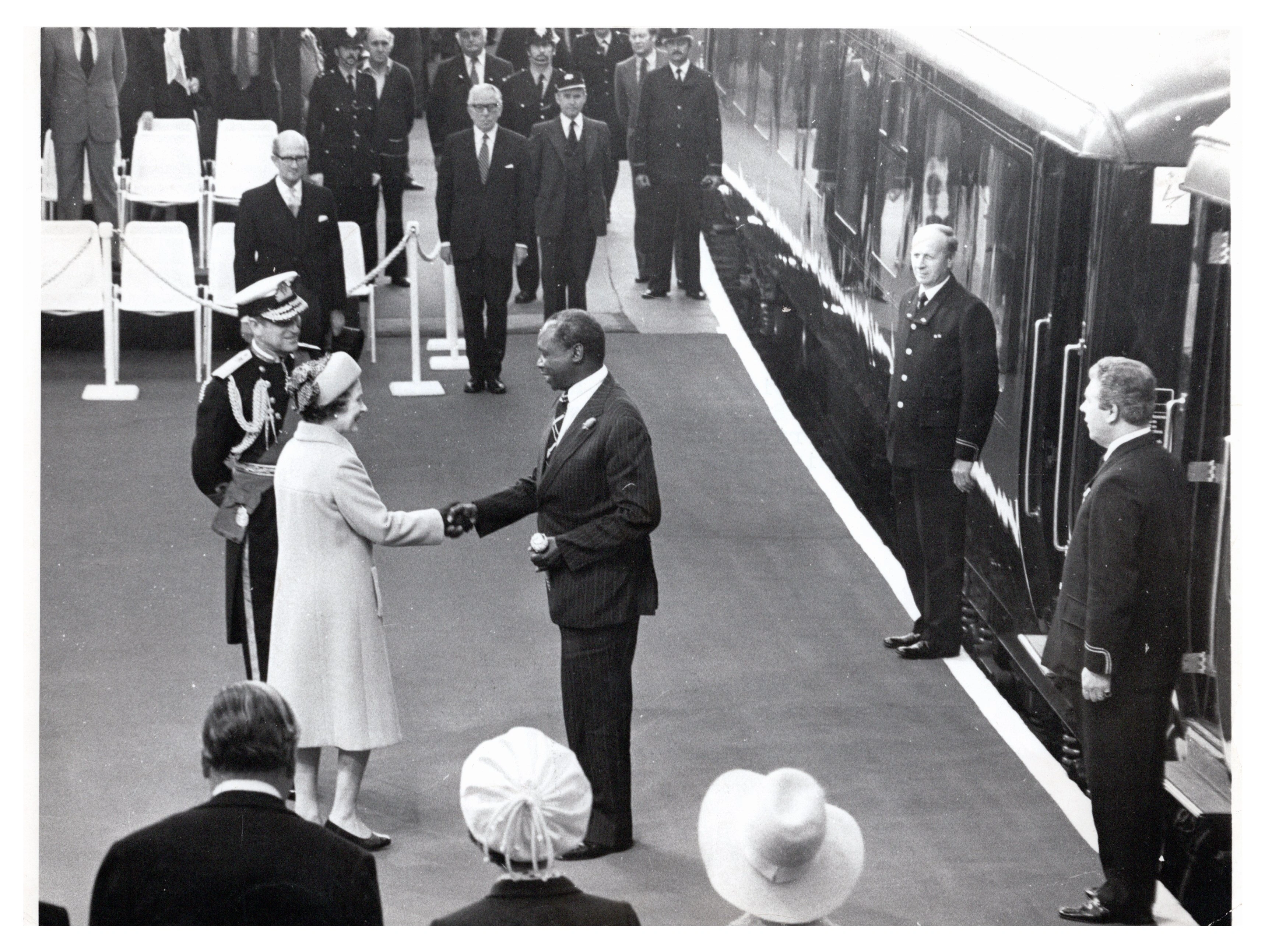
President Daniel Arap Moi being welcomed by Queen Elizabeth II on arrival at Victoria Station during the State visit to the United Kingdom_12.6.1979
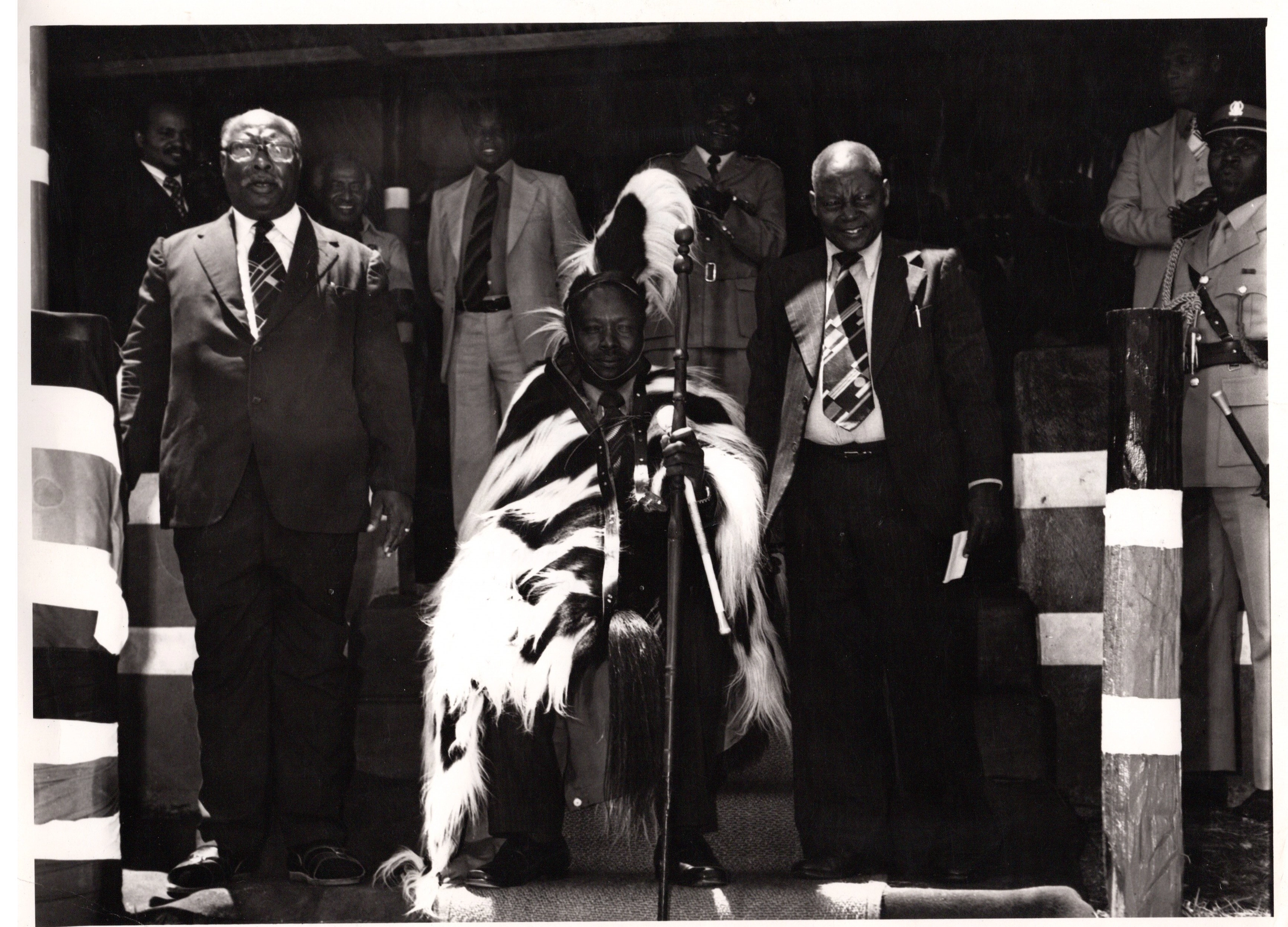
President Daniel Arap Moi being installed as a Meru Elder by the Minister for Lands and Settlement Mr Jackson Angaine_27.2.1979
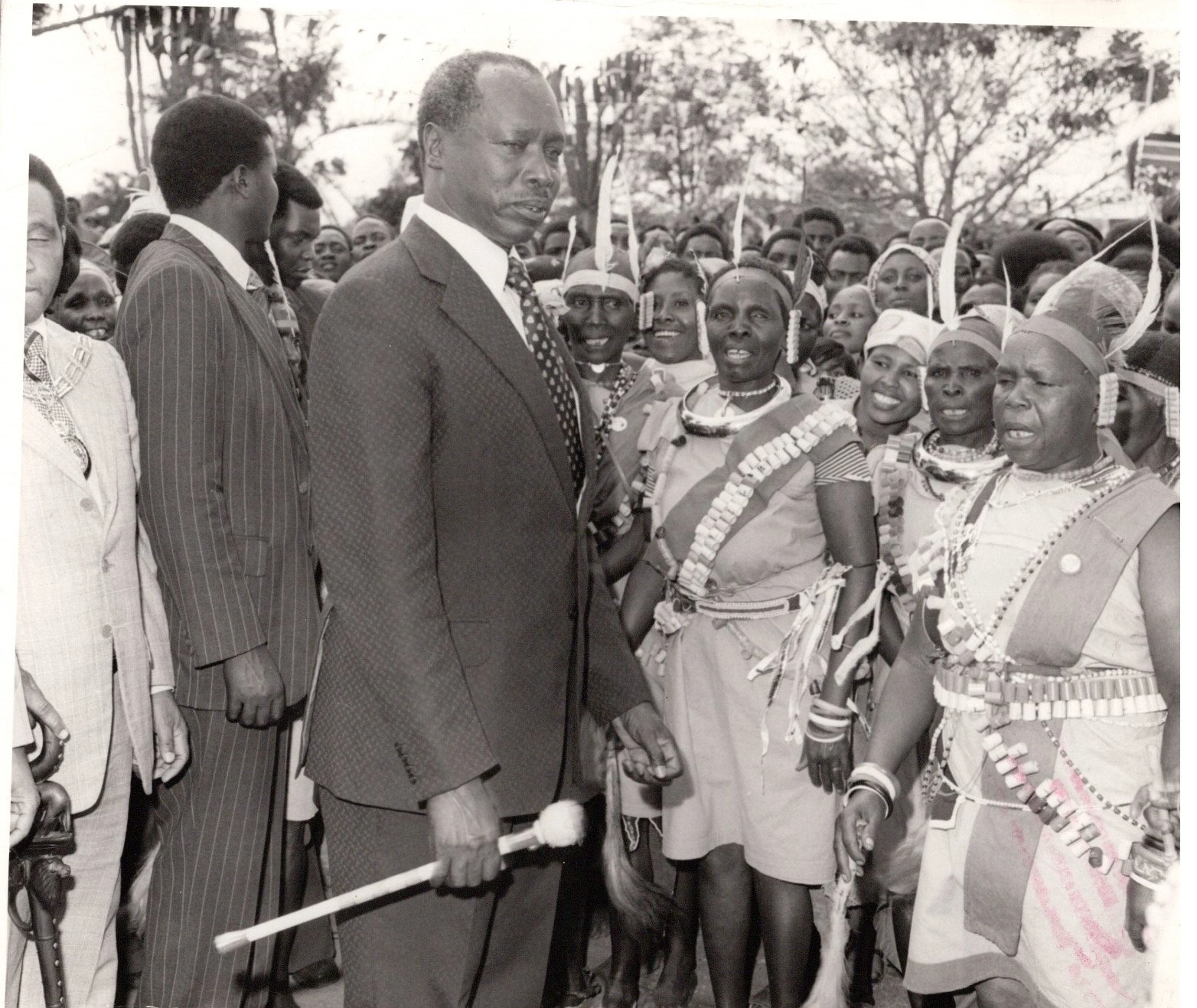
President Daniel Arap Moi entertained by traditional dancers after addressing Wananchi at the Ruringu stadium in Nyeri_22.10.1978
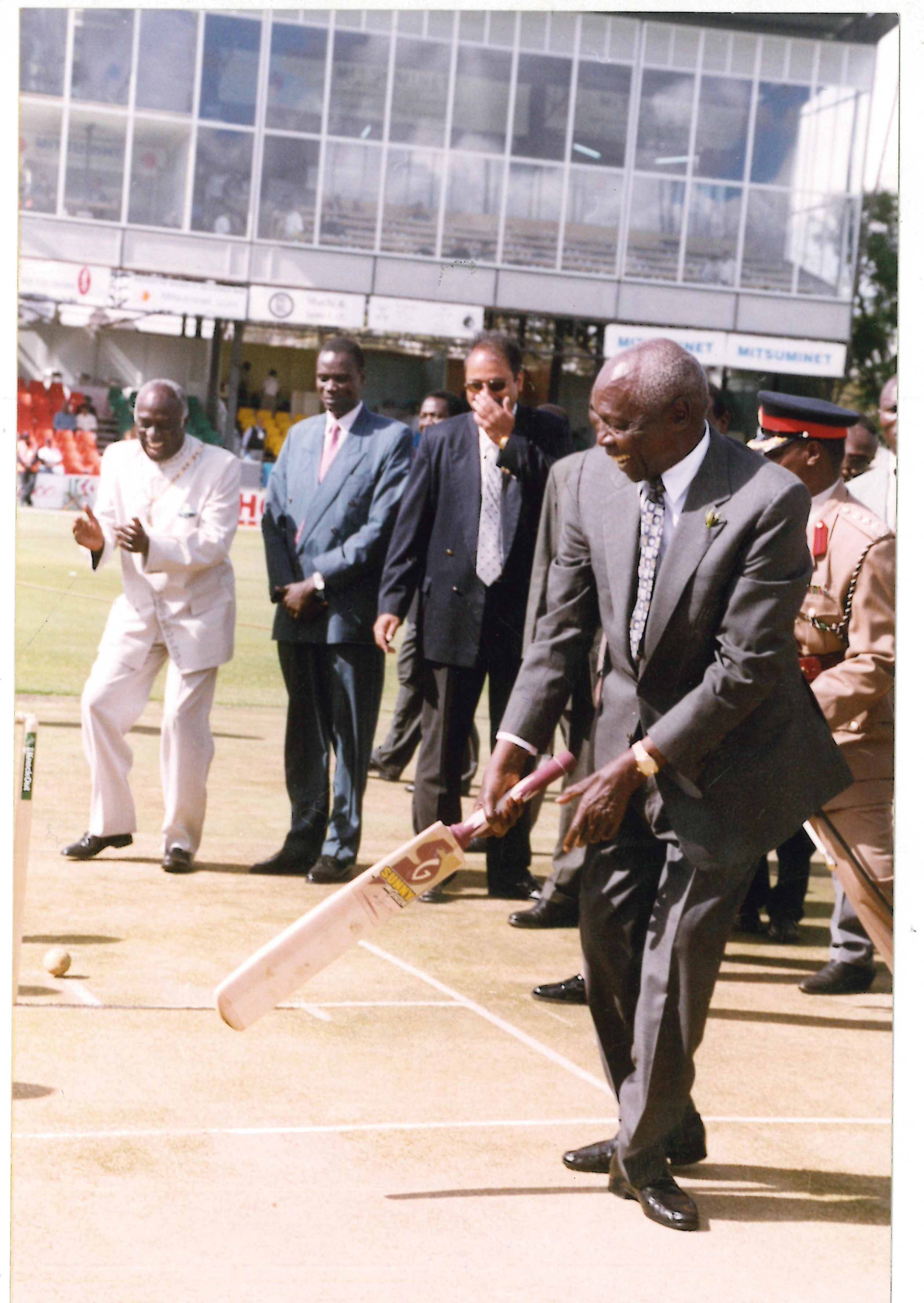
President Daniel Arap Moi tries his hand in cricket as he is cheered by leaders at Gymkhana Club in Nairobi
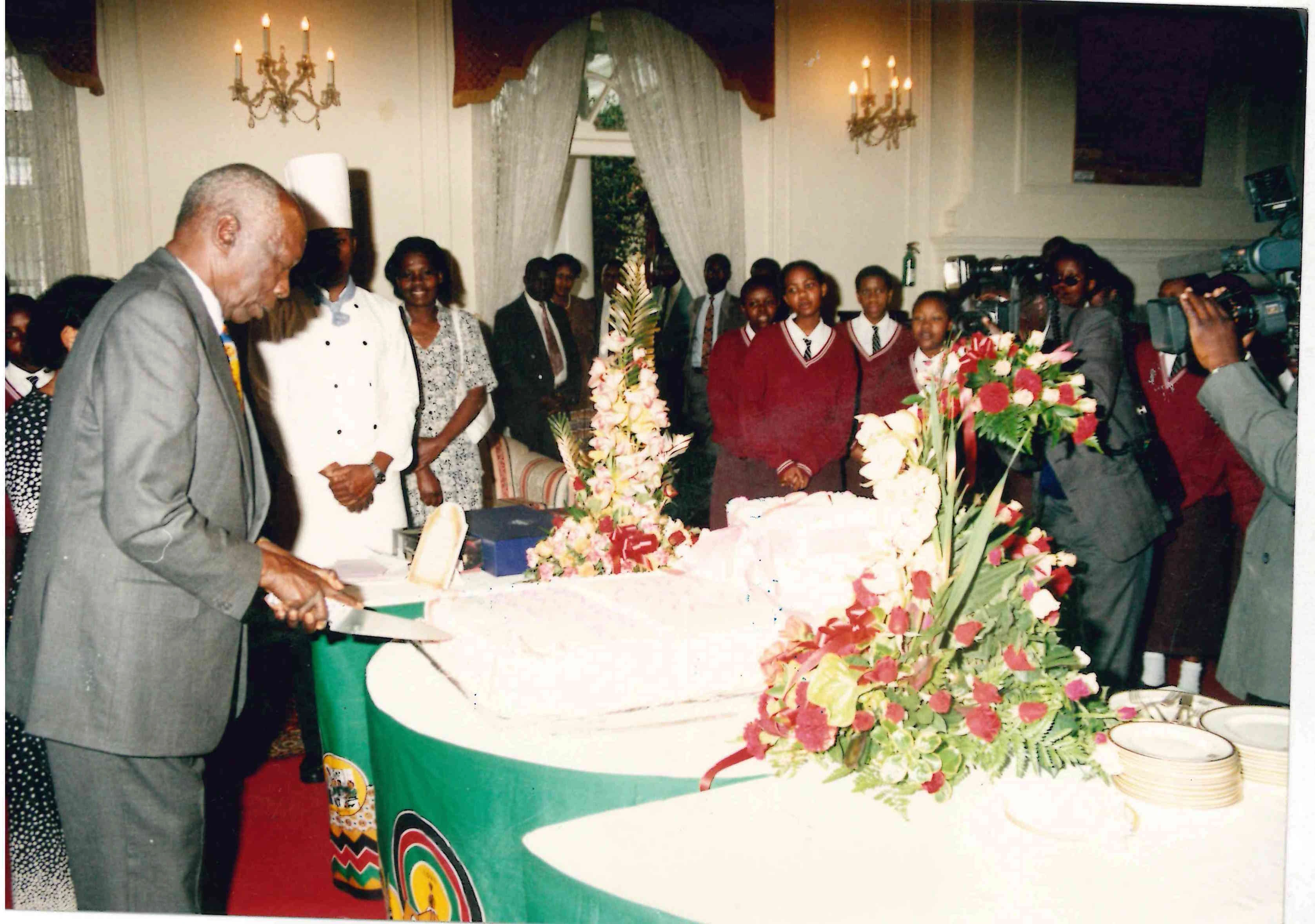
President Daniel Arap Moi cuts a cake made by Alliance Girls High School students to mark his 74th birthday at a ceremony in State House Nairobi
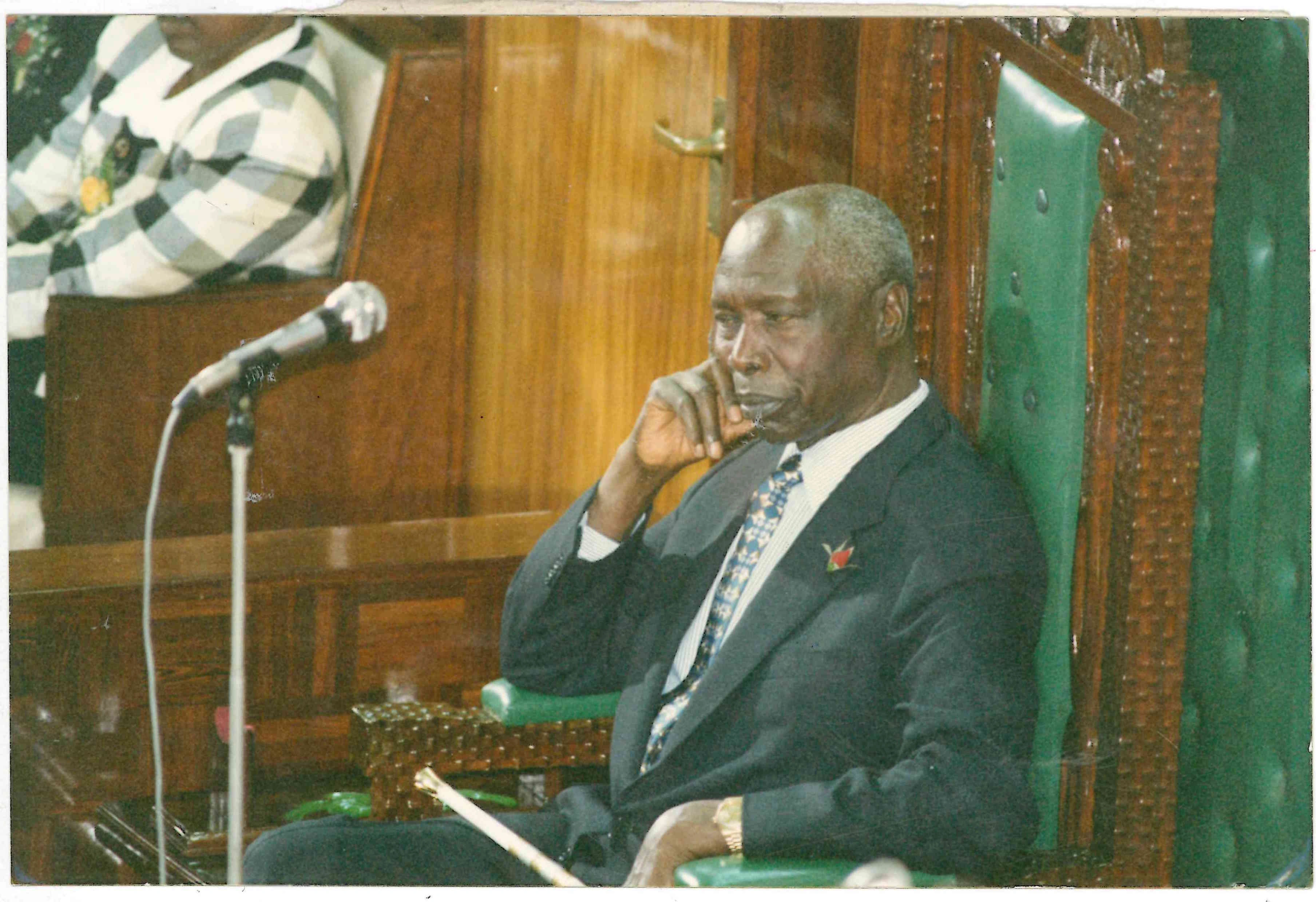
President Daniel Arap Moi and Baringo Central MP listening to the Budget speech presented by Finance Minister Simeon Nyachae at Parliament Buildings
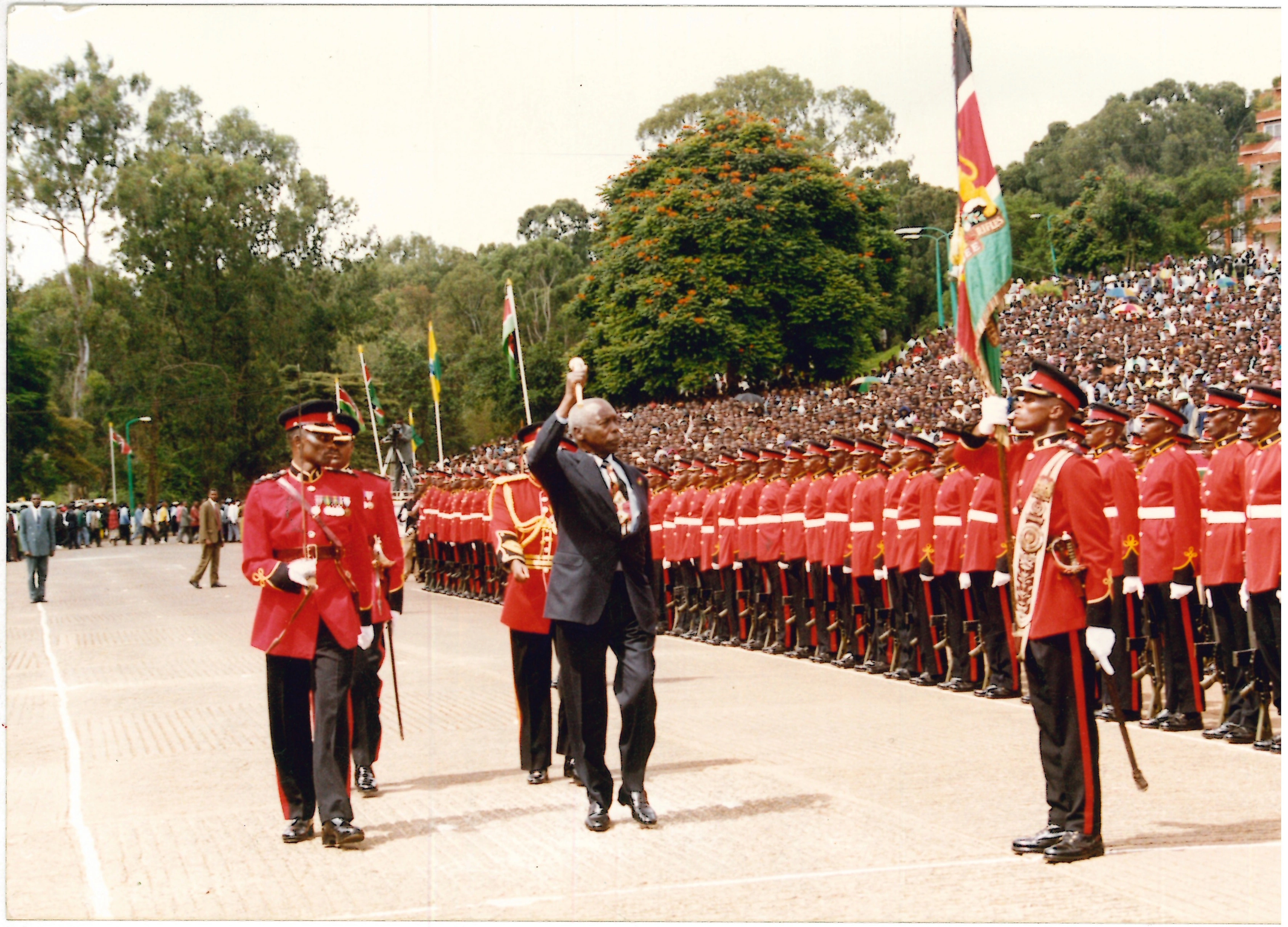
President Daniel Arap Moi salutes the Kenya Armed Forces flag during a guard of honour mounted on Madaraka Day Celebrations at Uhuru Park Nairobi
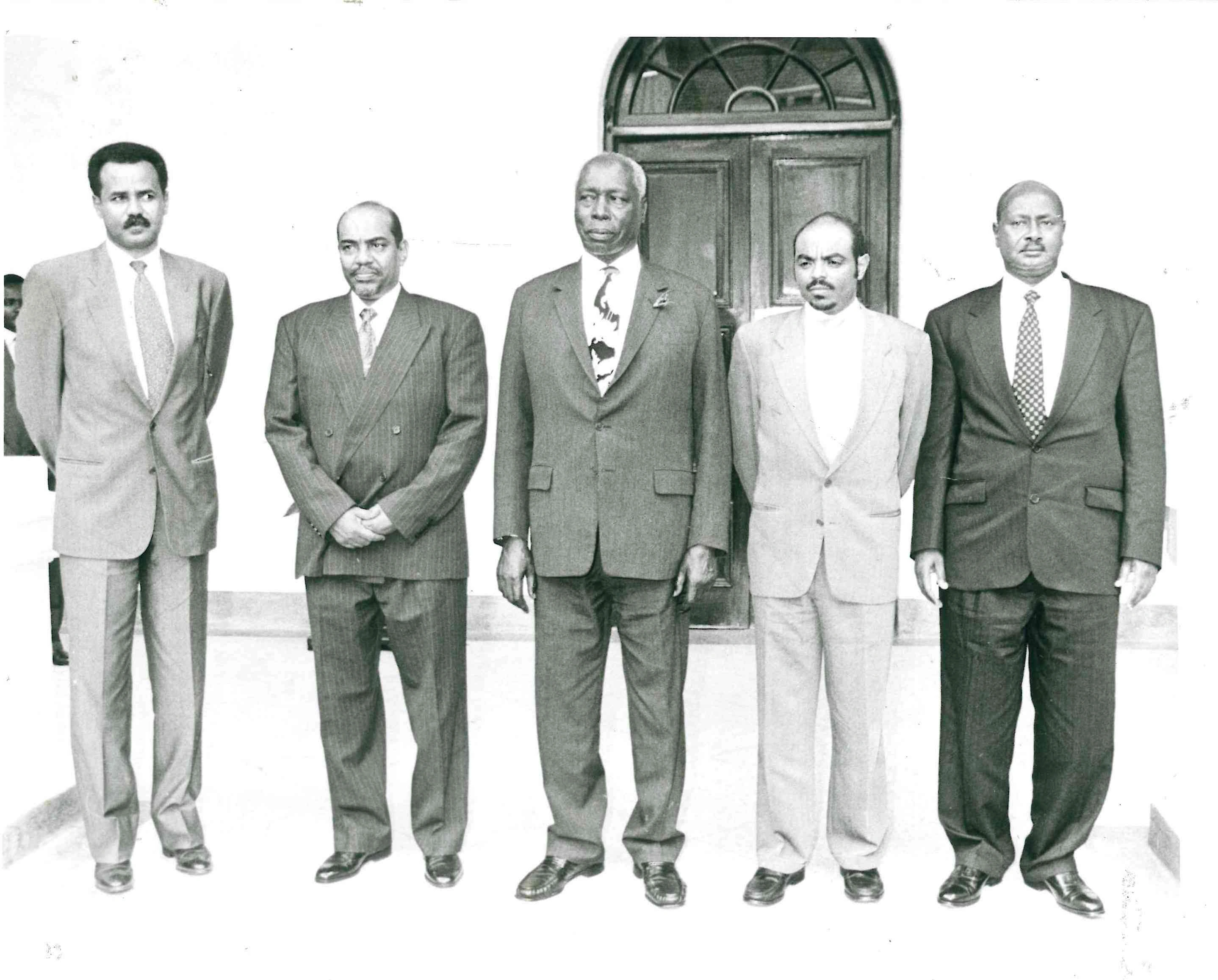
President Daniel Arap Moi hosting IGAD Leaders Afeworki Bashir Zenawi and Museveni who attended Sudan Peace Talks at State House Nairobi
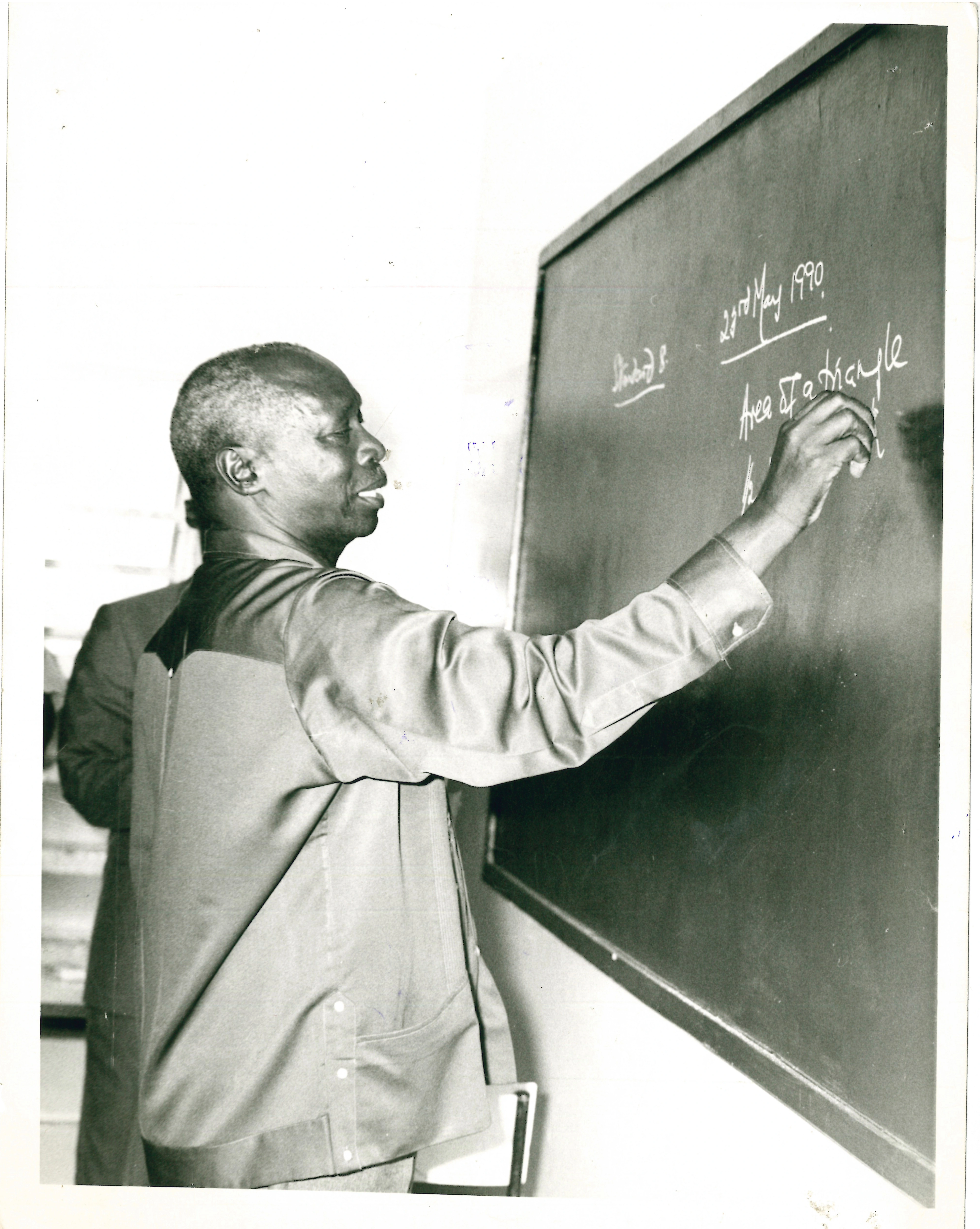
President Daniel Arap Moi a former teacher practices his skills on a black board during a school visit in Nakuru
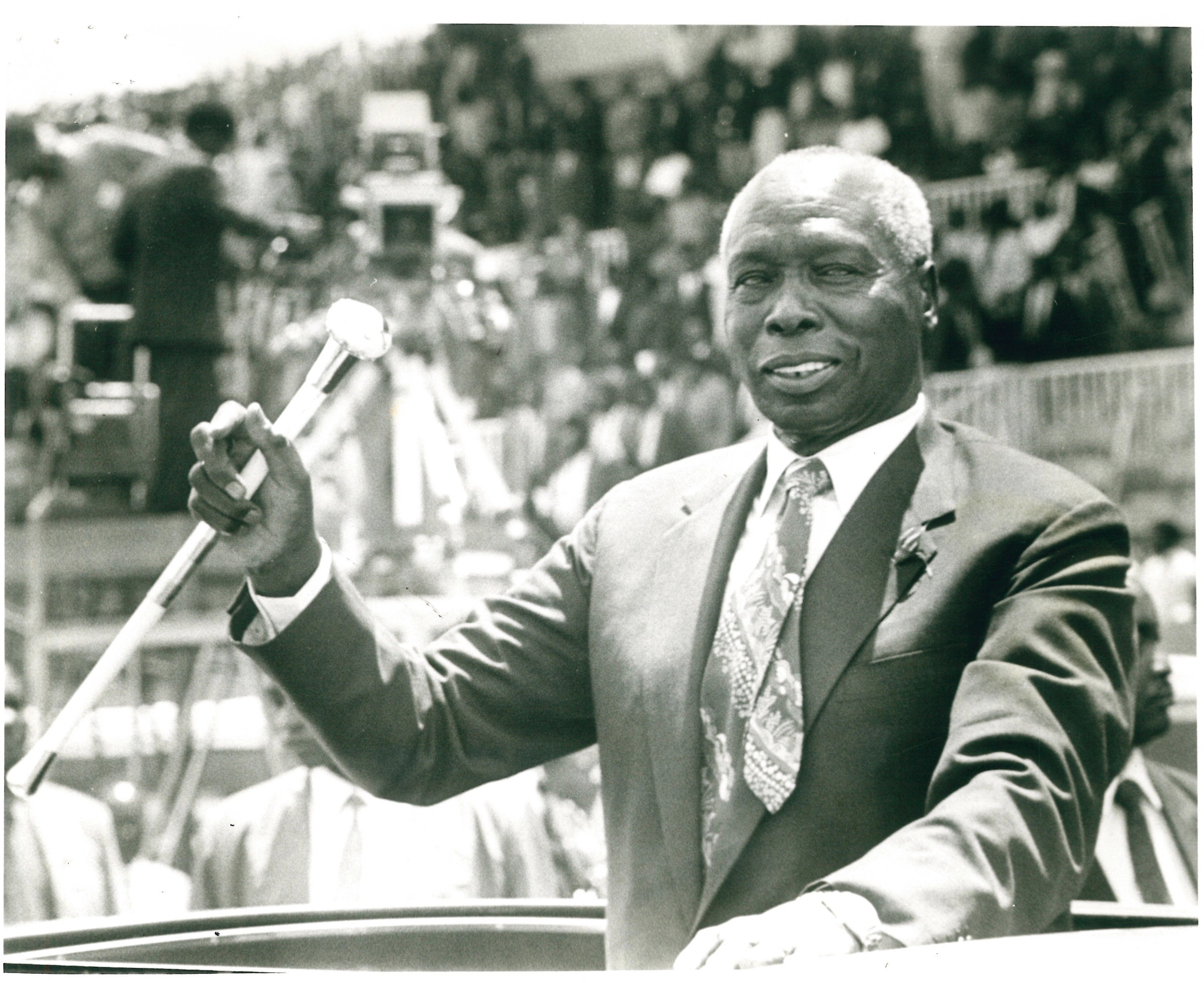
President Daniel Arap Moi acknowledging cheers from Wananchi during the Moi Day Celebrations at Nyayo National Stadium
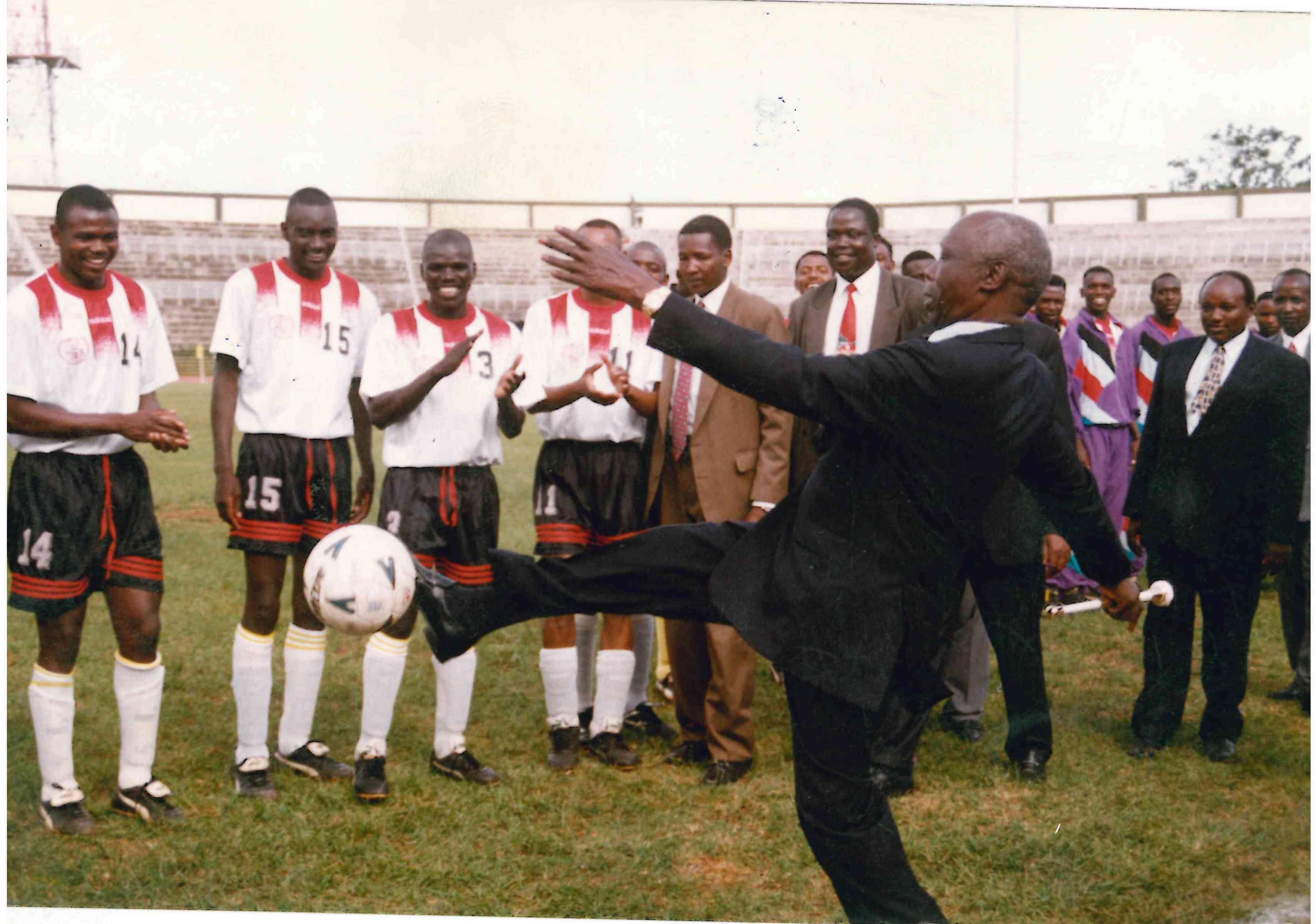
President Daniel Moi entertains footballers and fans with a ball kick during a premier league match between AFC Leopards and Utalii FC at Nyayo Stadium
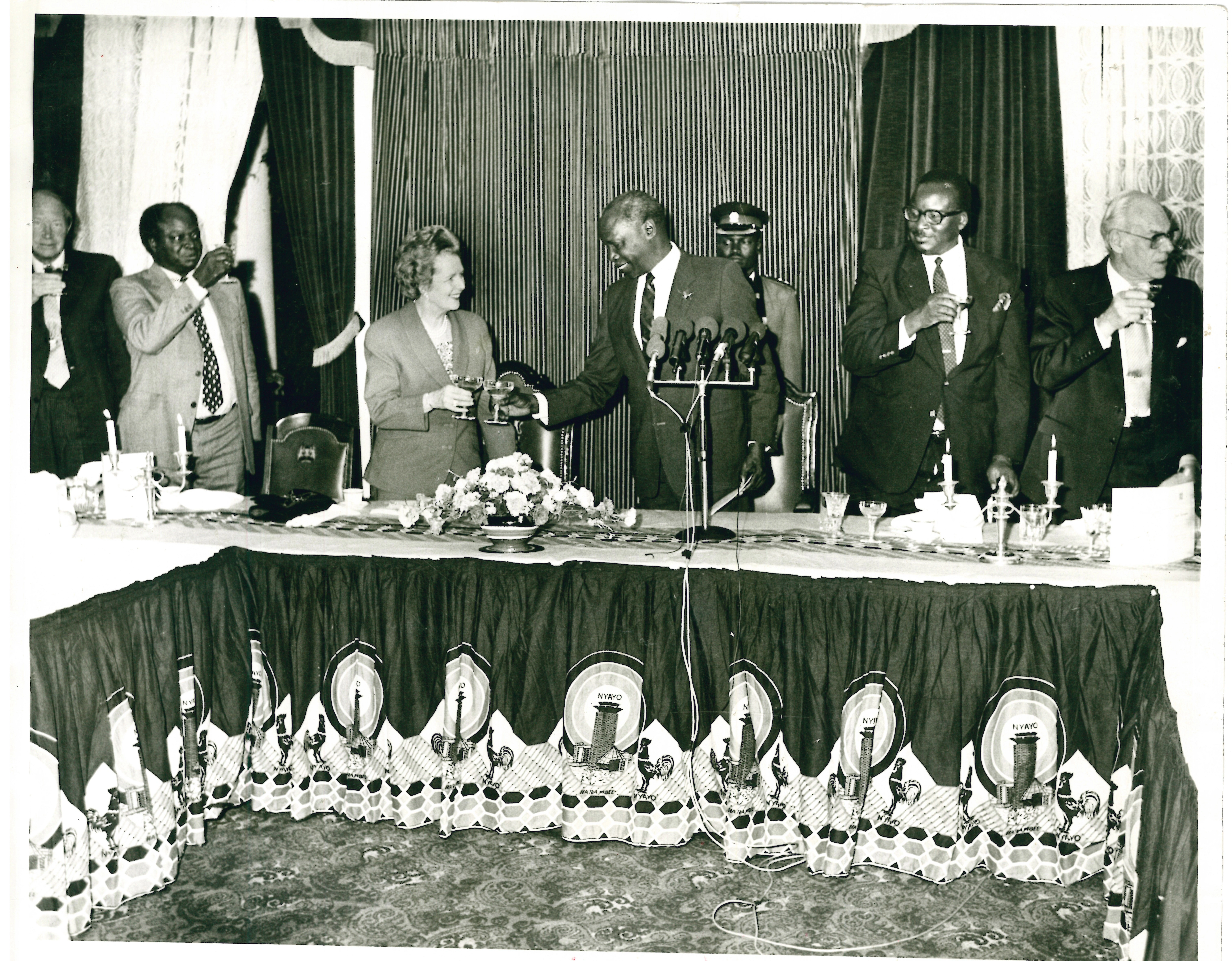
President Daniel Arap Moi hosting British Prime Minister Margaret Thatcher toasting during a banquet at State House Nairobi
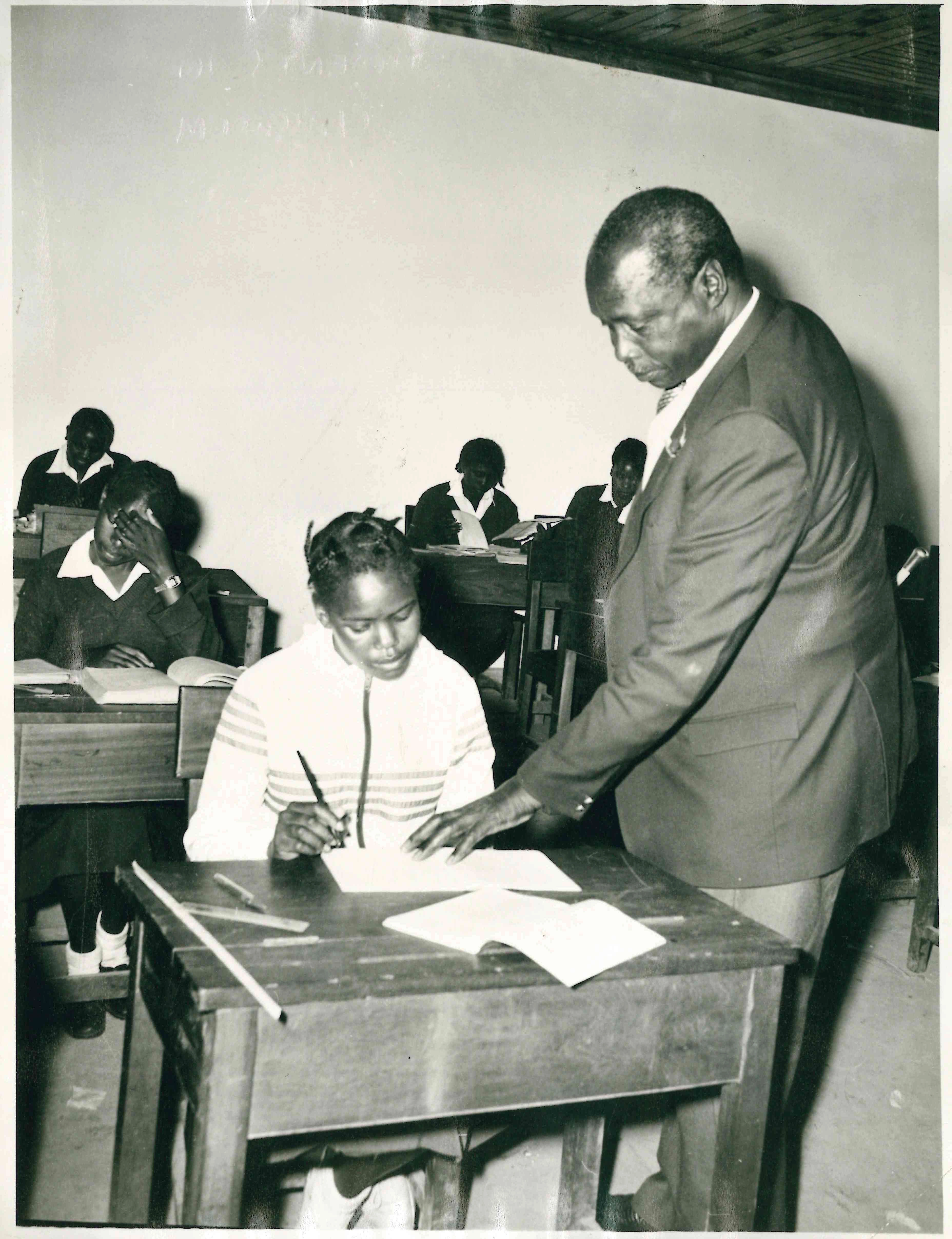
President Daniel Arap Moi checks the book of a student while in classroom during a School tour in Nairobi
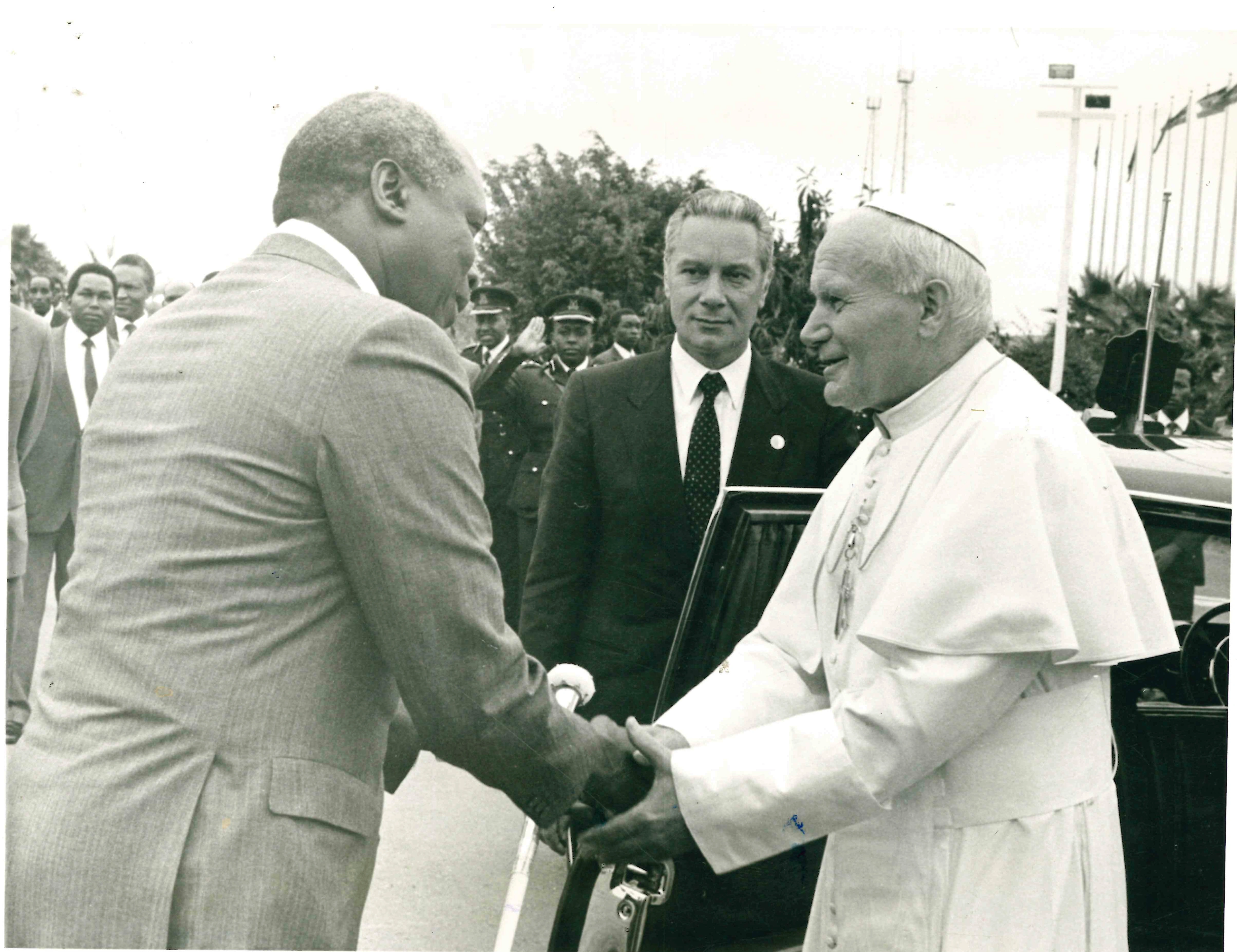
President Daniel Arap Moi bidding farewell to Pope John Paul II after the Papal visit to Kenya
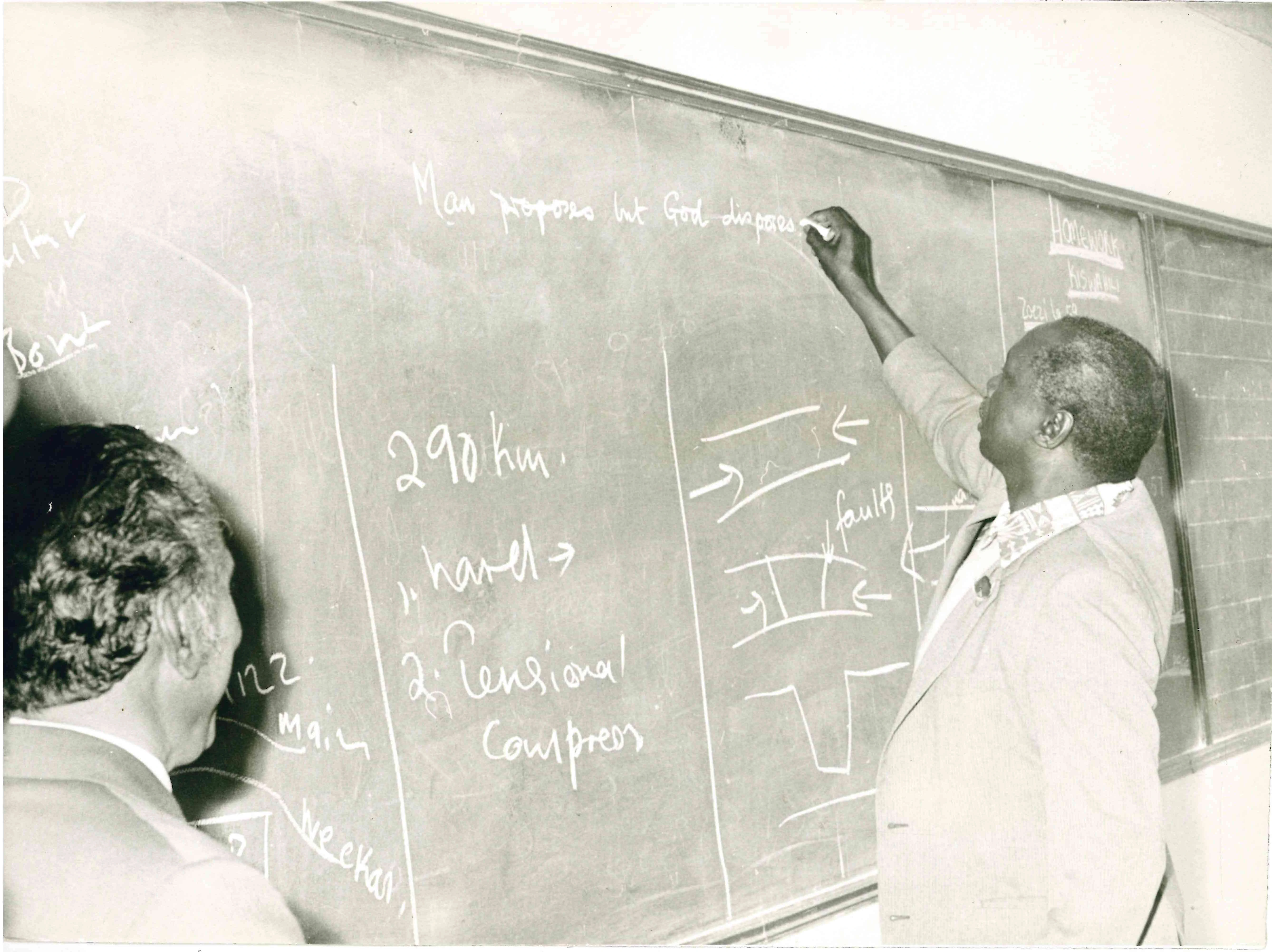
President Daniel Arap Moi trying his teaching writing skills on the blackboard at Moi Equator Girls High School Nanyuki during a visit to the school
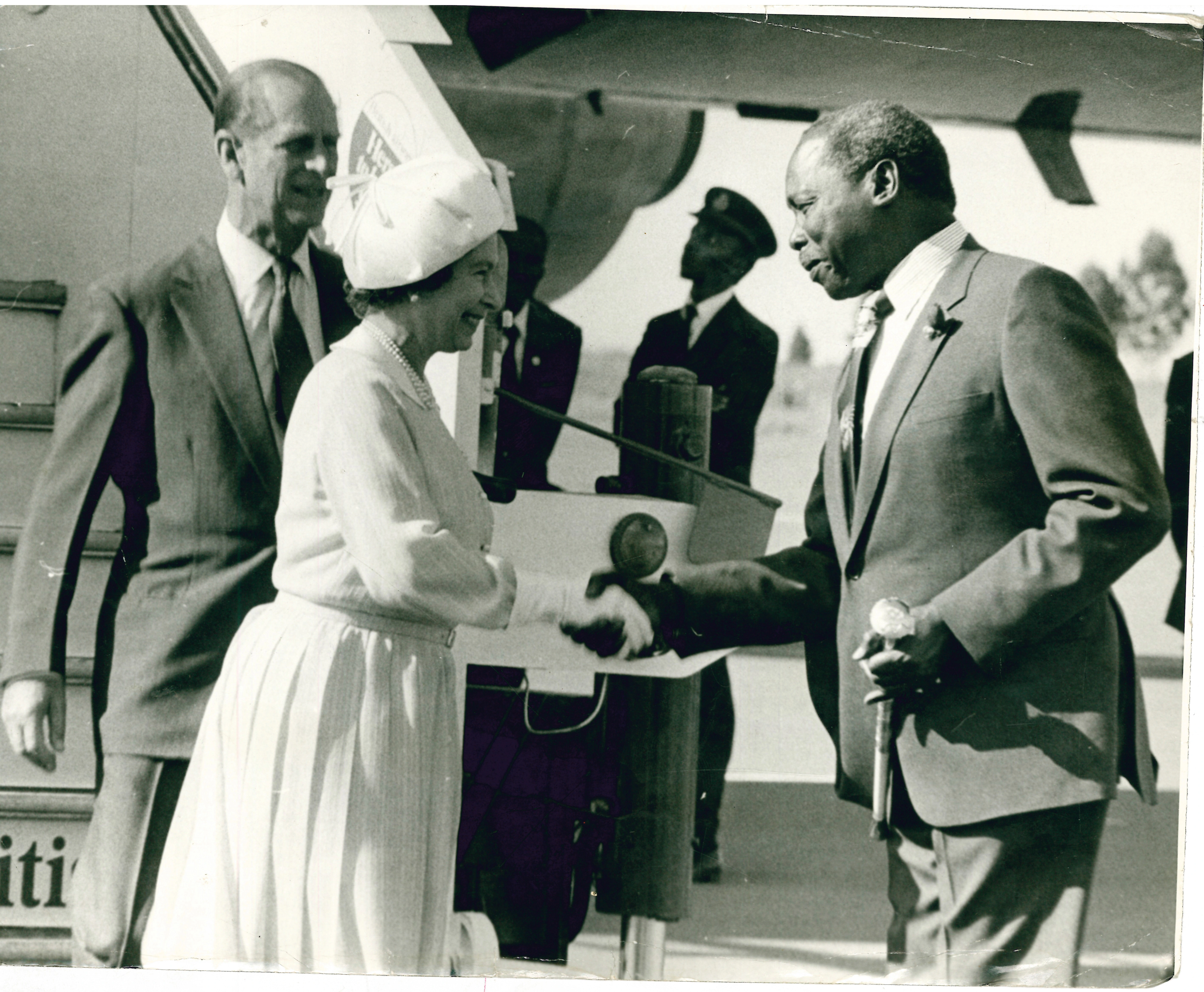
President Daniel Arap Moi welcomes Queen Elizabeth and Prince Philip during their 1983 visit to Kenya
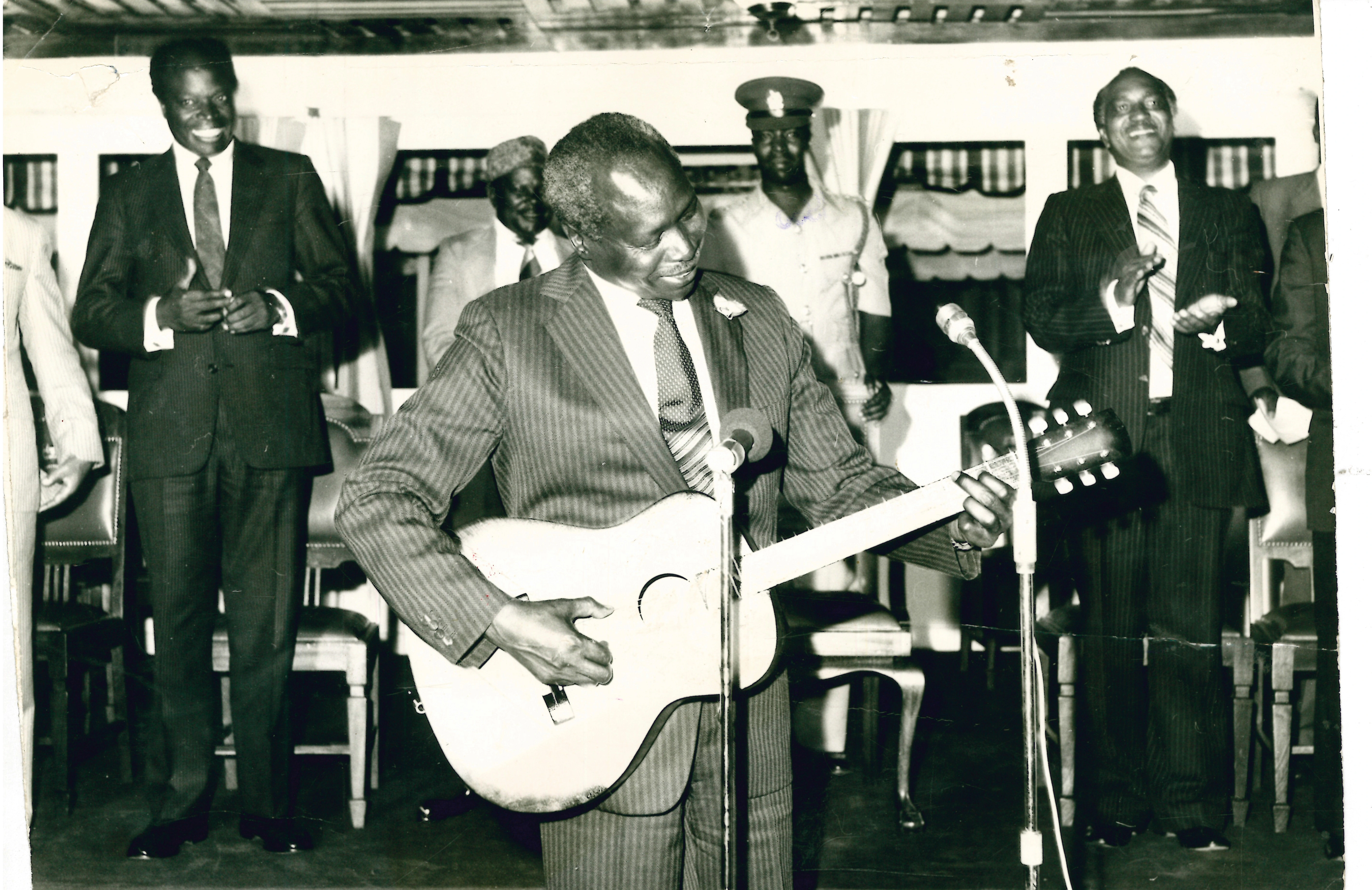
President Daniel Arap Moi tries his hand to play a guitar presented to him by Musician Joseph Kamaru as Minister for Culture Jeremiah Nyagah looks on
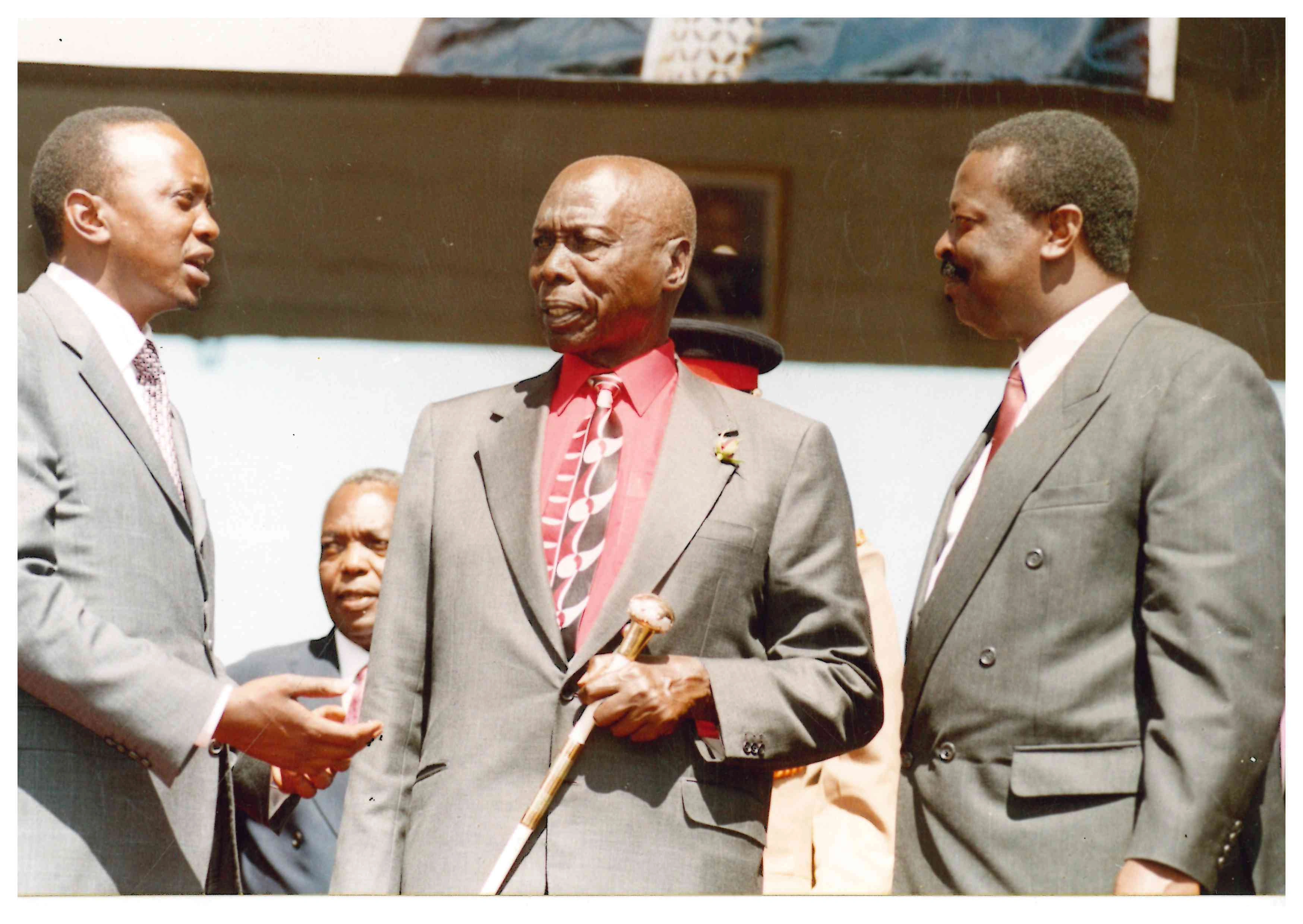
President Daniel Arap Moi and KANU presidential Candidate Uhuru Kenyatta together with VP Musalia Mudavadi at Uhuru Park Nairobi
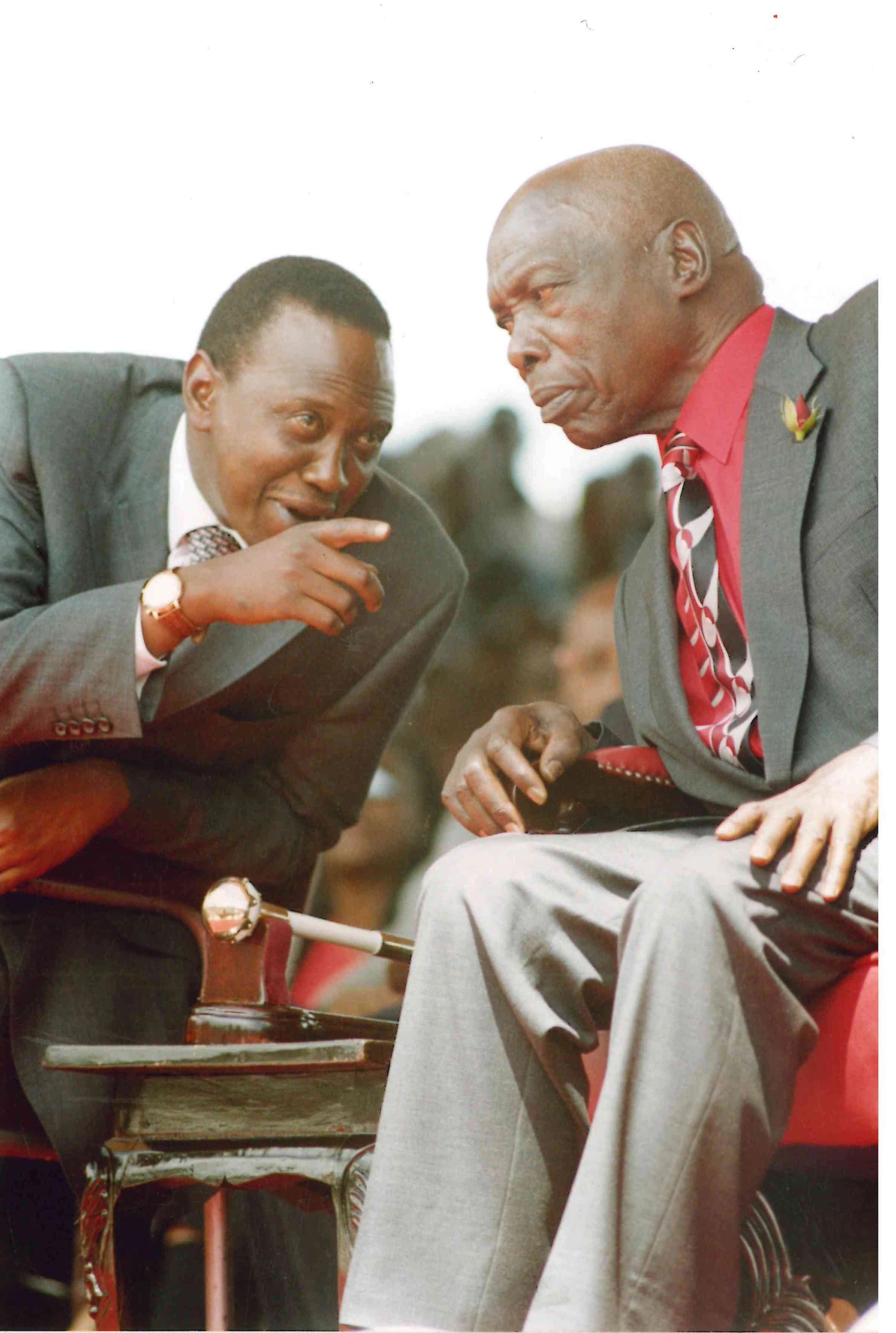
President Daniel Arap Moi tete a tete with KANU presidential Candidate Uhuru Kenyatta at Uhuru Park Nairobi
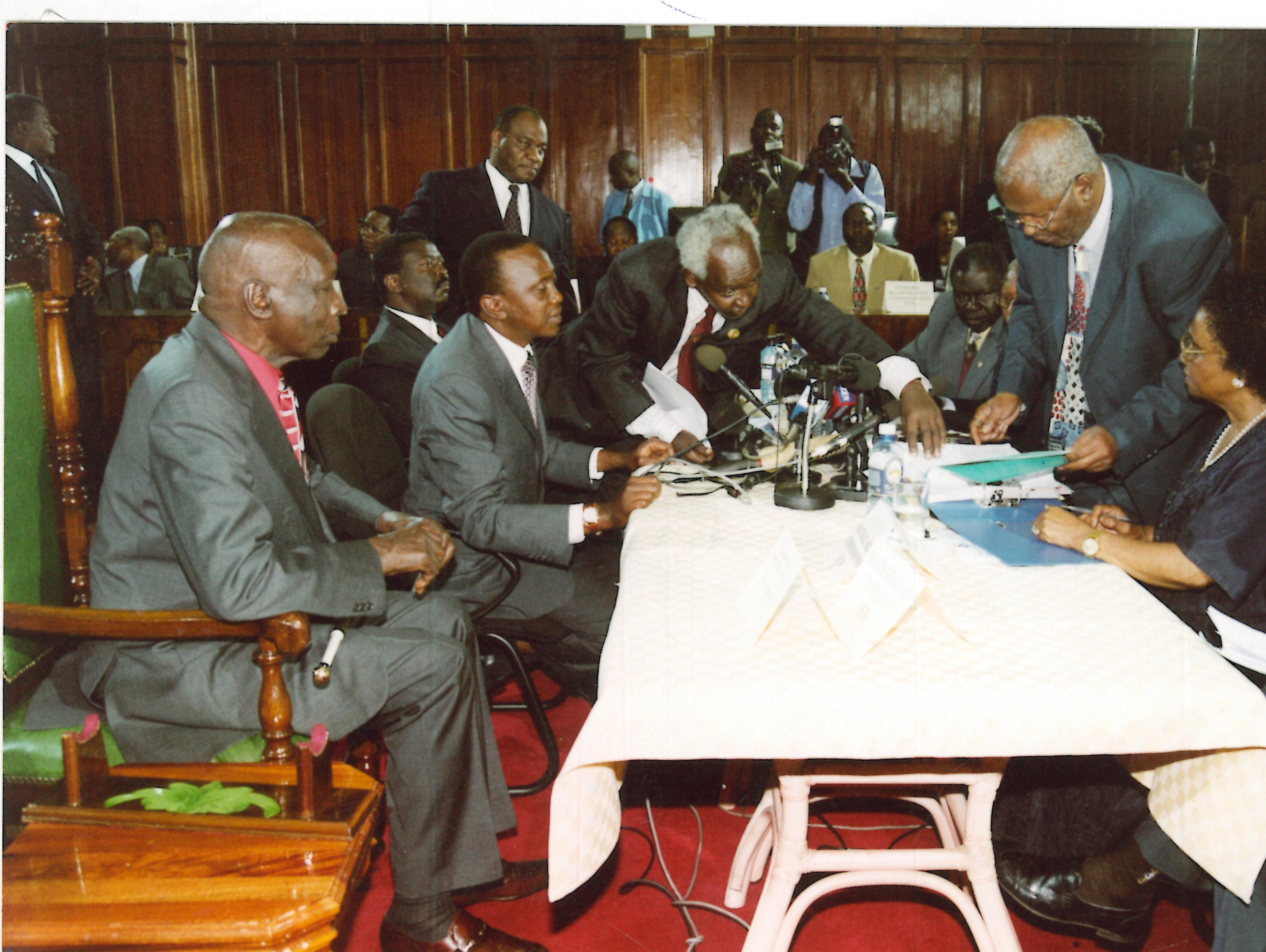
President Daniel Arap Moi with the KANU Presidential Candidate Uhuru Kenyatta presenting nomination Papers at KICC Nairobi
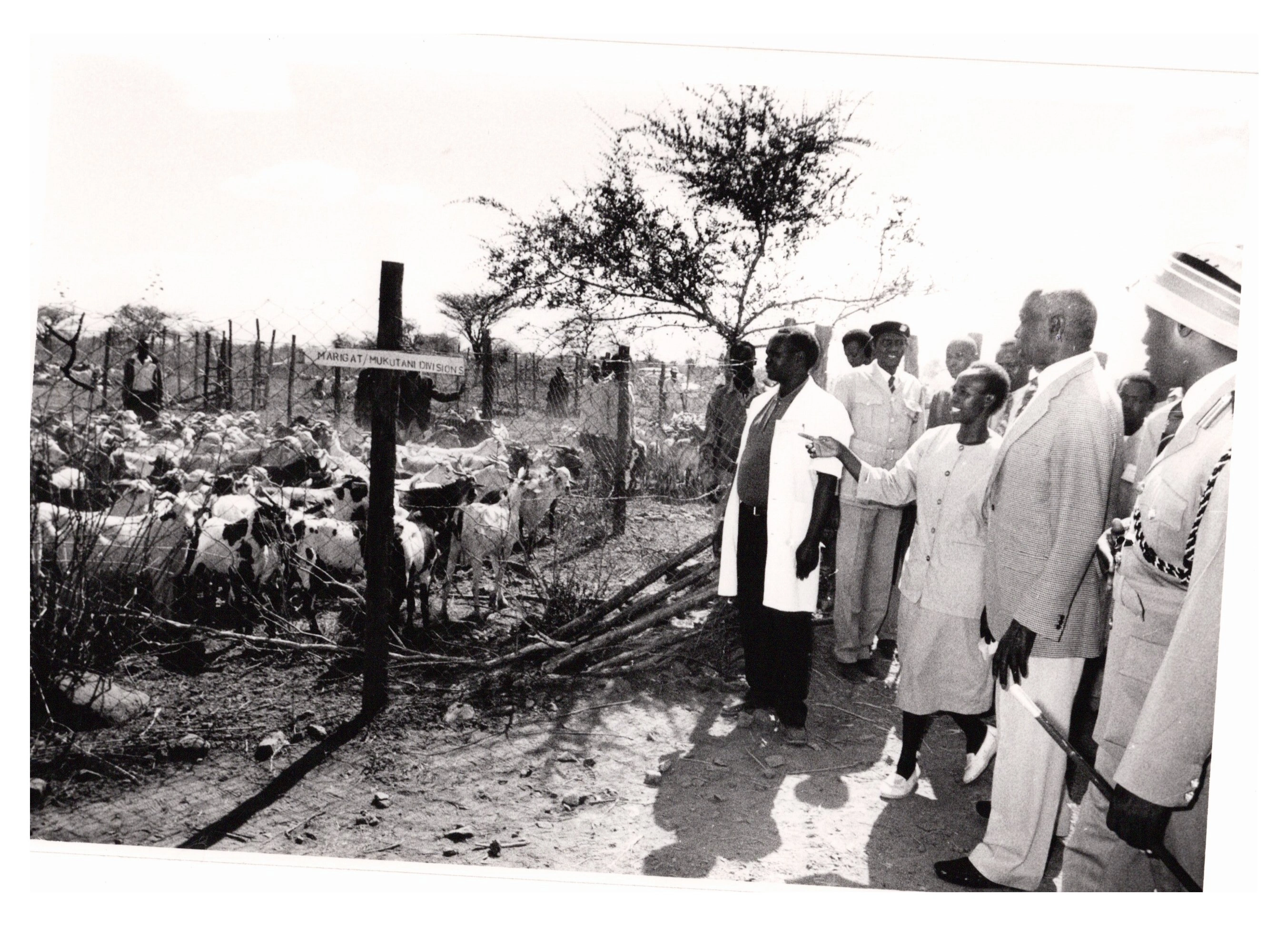
President Daniel arap Moi viewing some of the goats being auctioned at Kimalel goat auction Baringo District alongside Mr Ezekiel Barngetuny
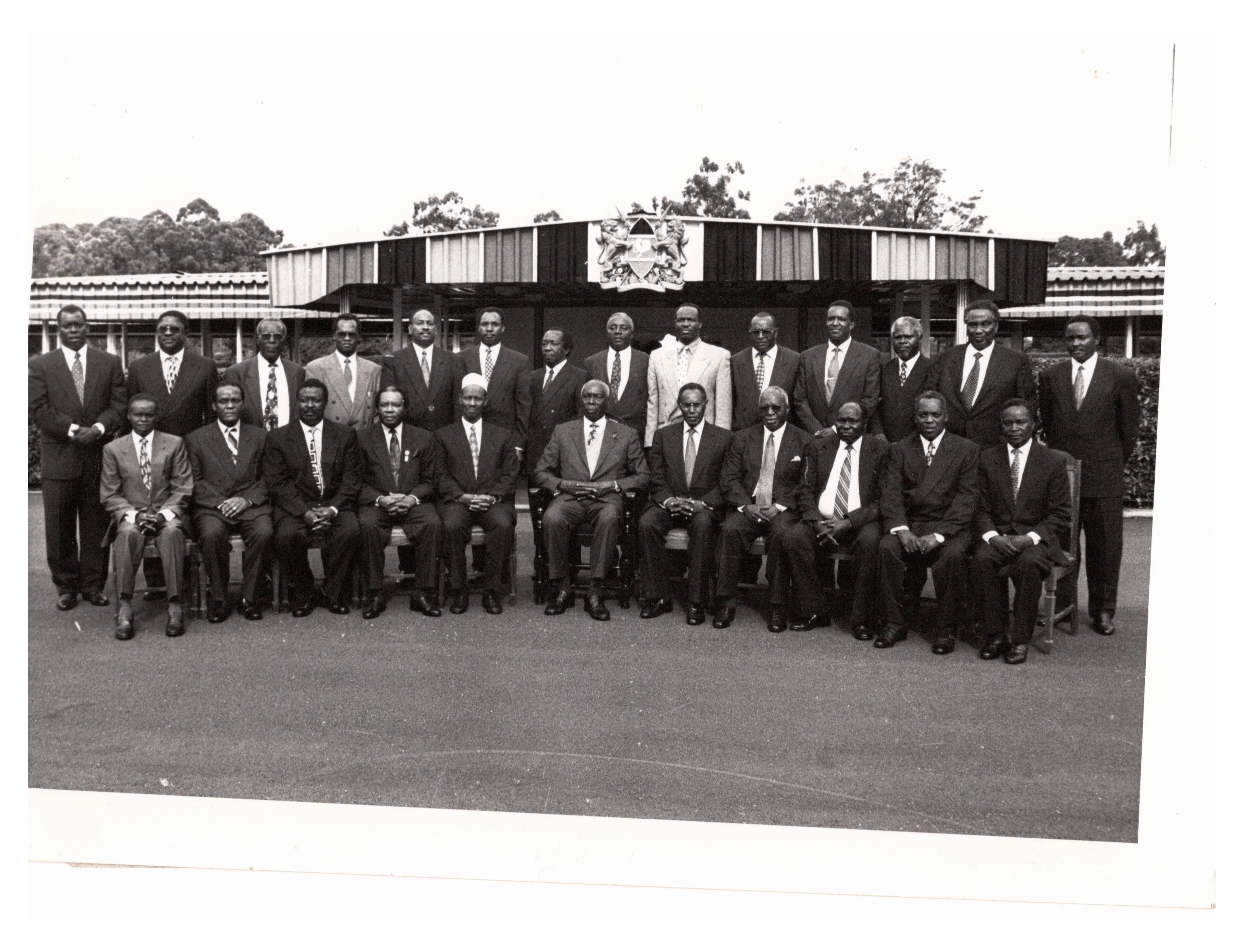
President Daniel Arap Moi poses for a picture with all the Cabinet ministers sworn in at State House Nairobi
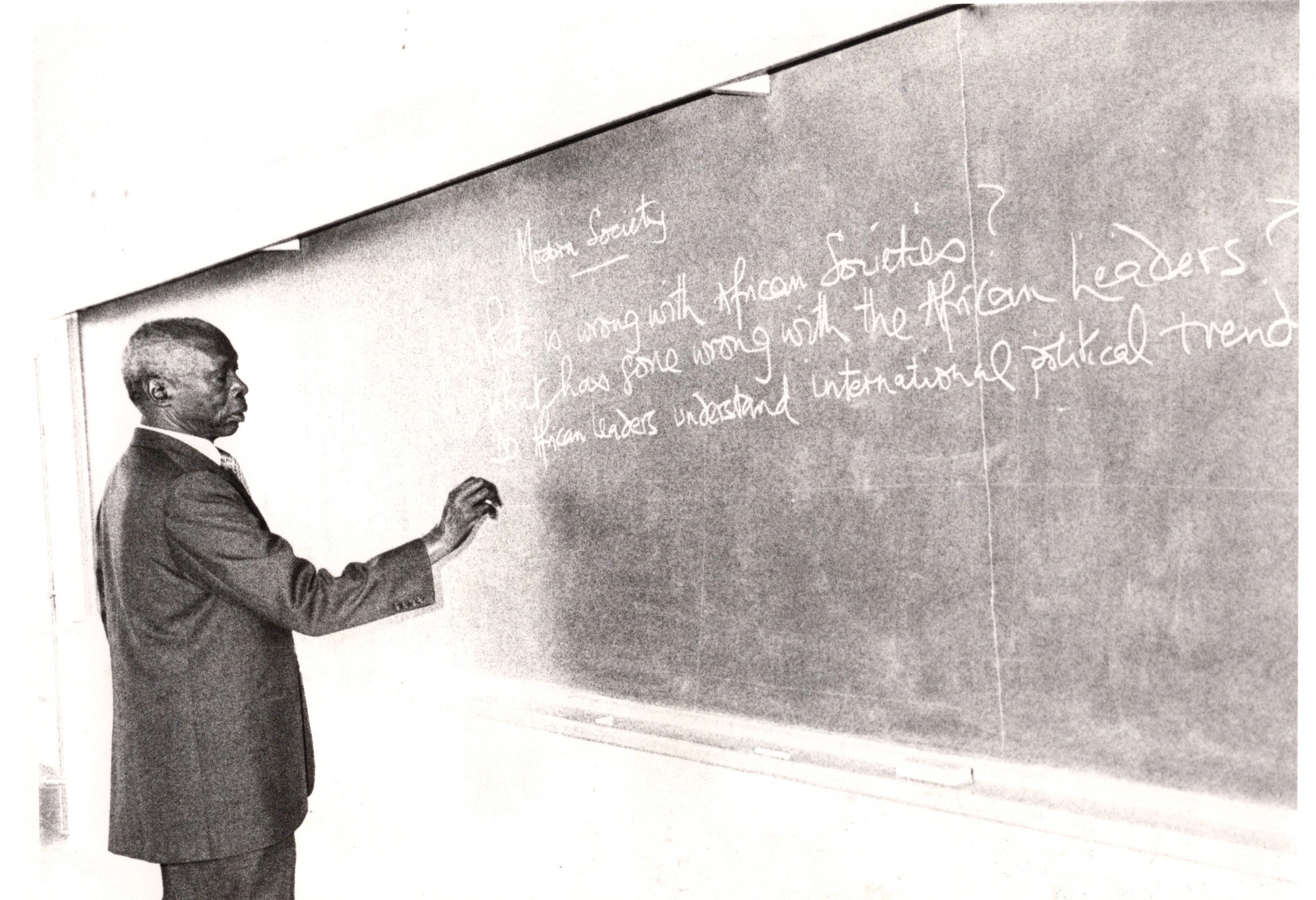
President Daniel Arap Moi writing on the Blackboard of one the 8.4.4 classes during the Kenyatta University graduation ceremony
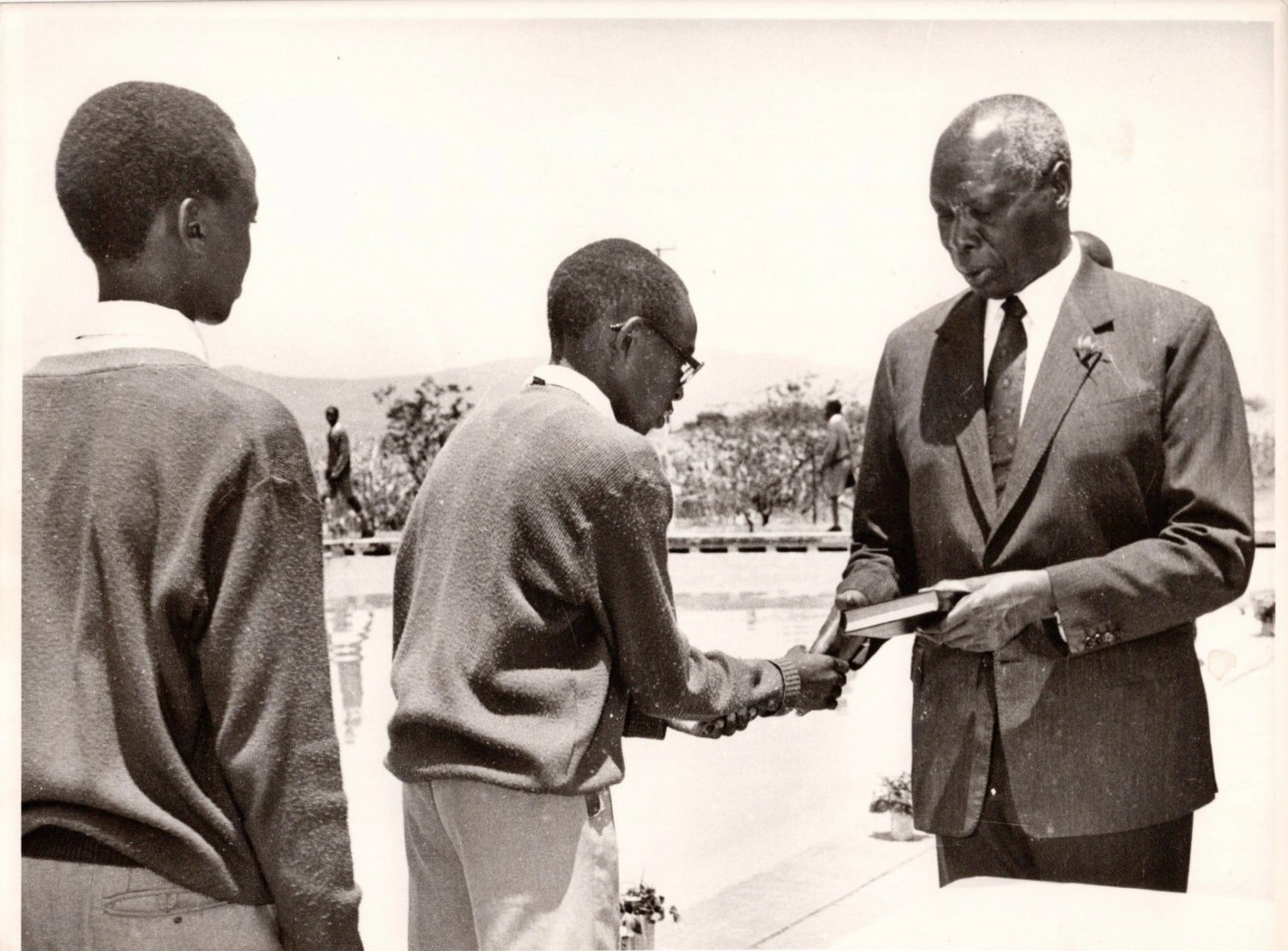
President Daniel Arap Moi Presents a Bible to one of the students of Moi High School Kabarak during the baptismal worship led by Rev Johnes Kareri
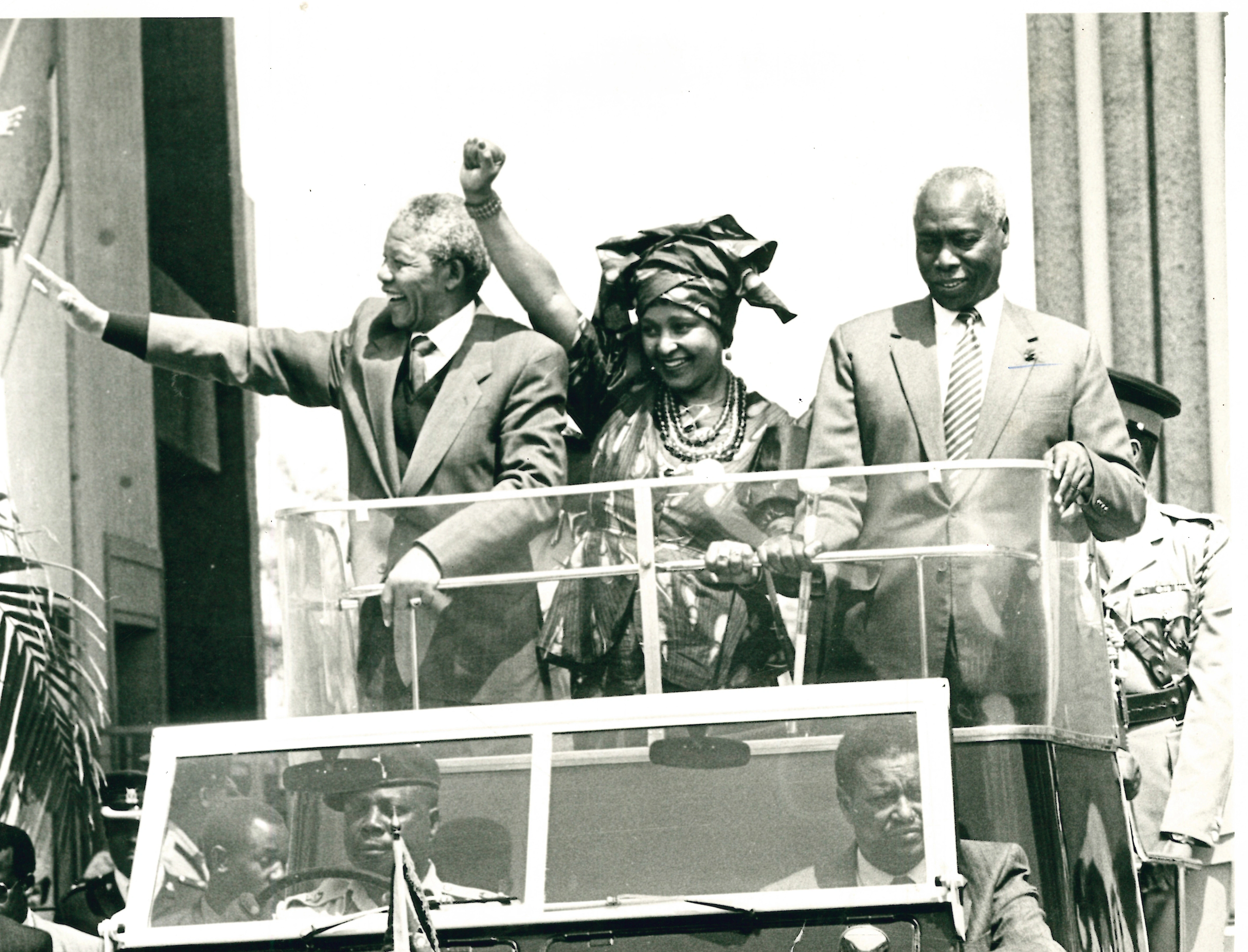
President Daniel Arap Moi welcoming South African ANC Leader Nelson Mandela and his wife Winnie Madikizela in Nairobi Kenya
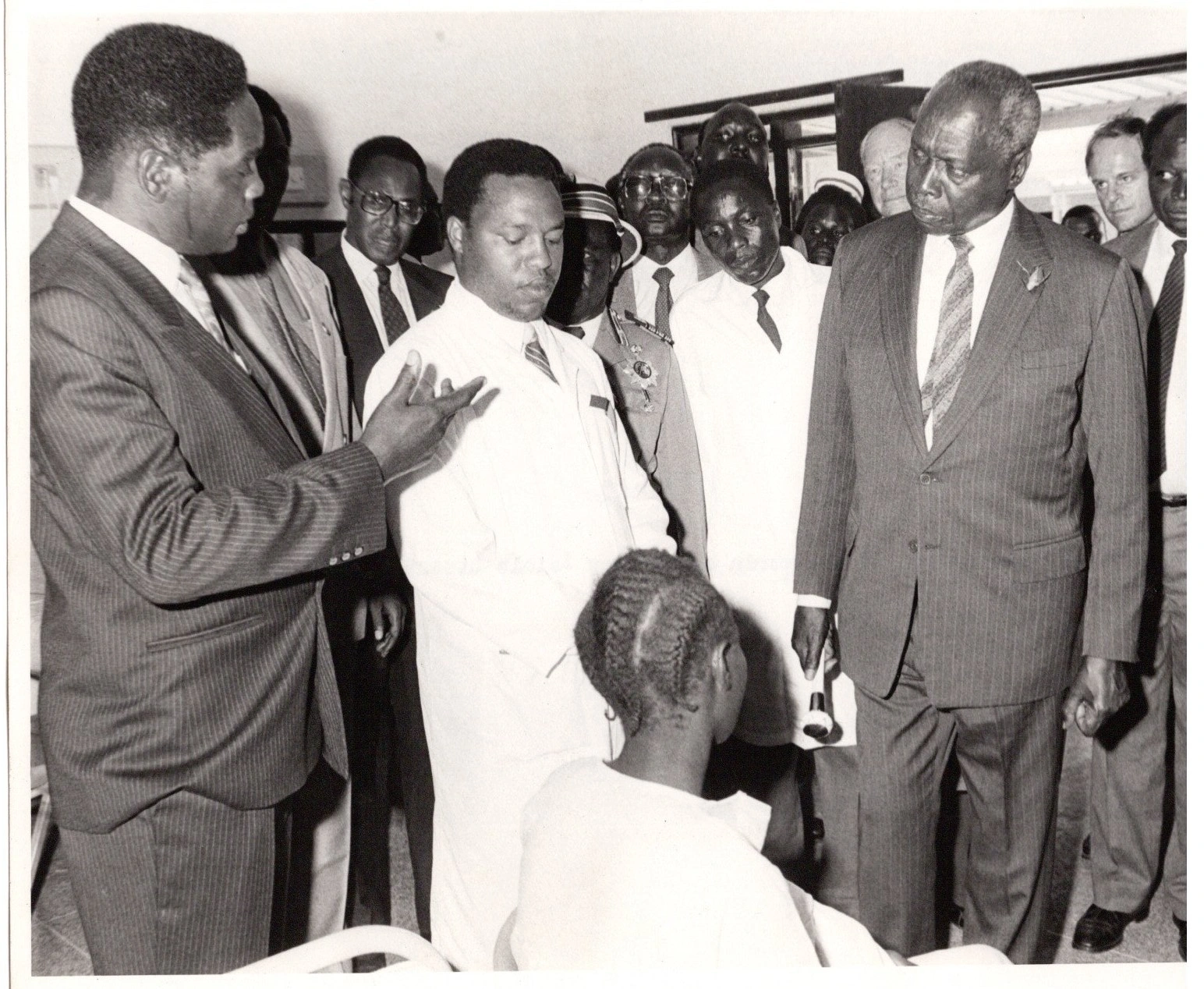
President Daniel Arap Moi touring one of the wards at the Isiolo District Hospital during its official opening ceremony
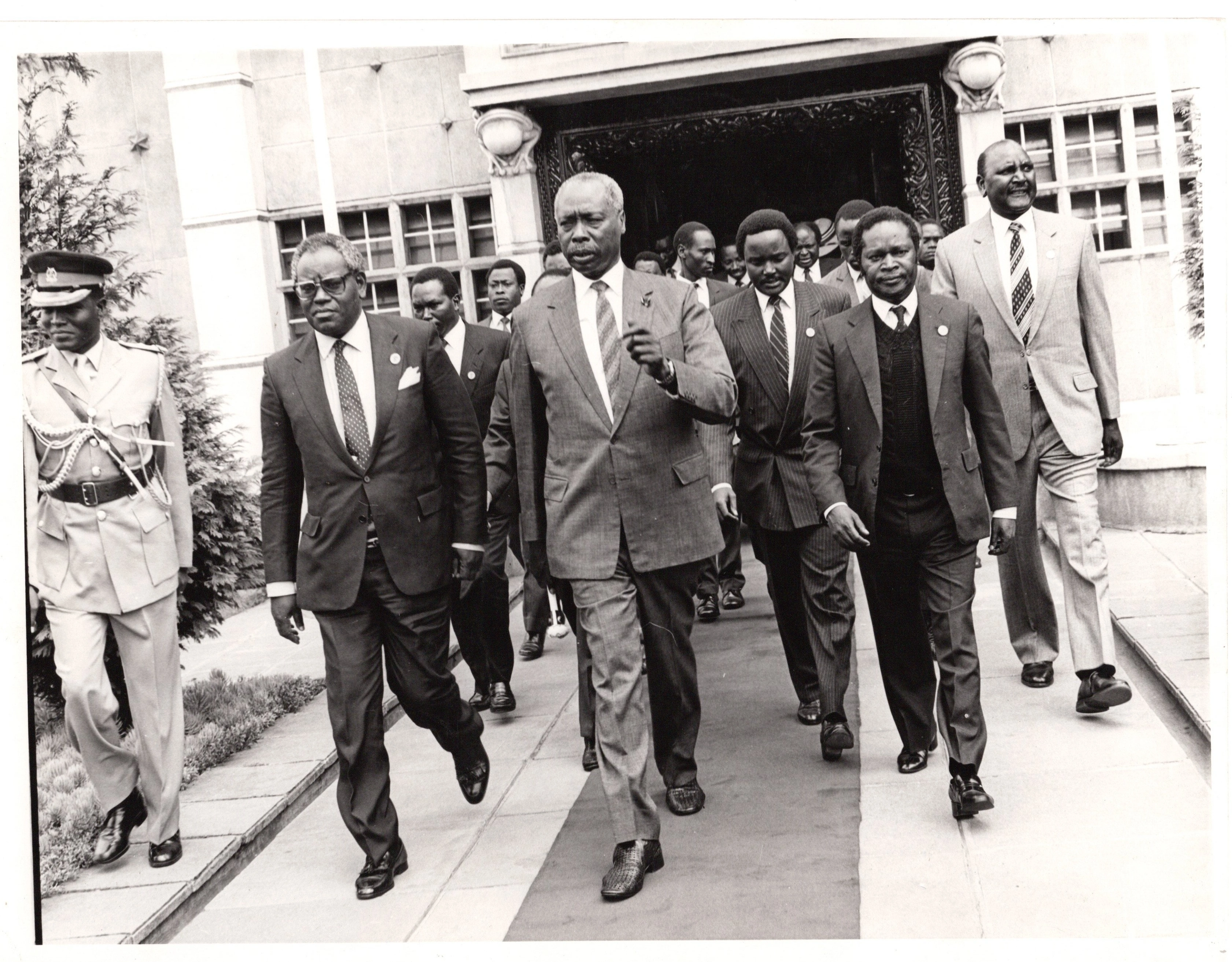
President Daniel Arap Moi leaving Parliament buildings escorted by VP Josphat Karanja after chairing a KANU parliamentary group meeting
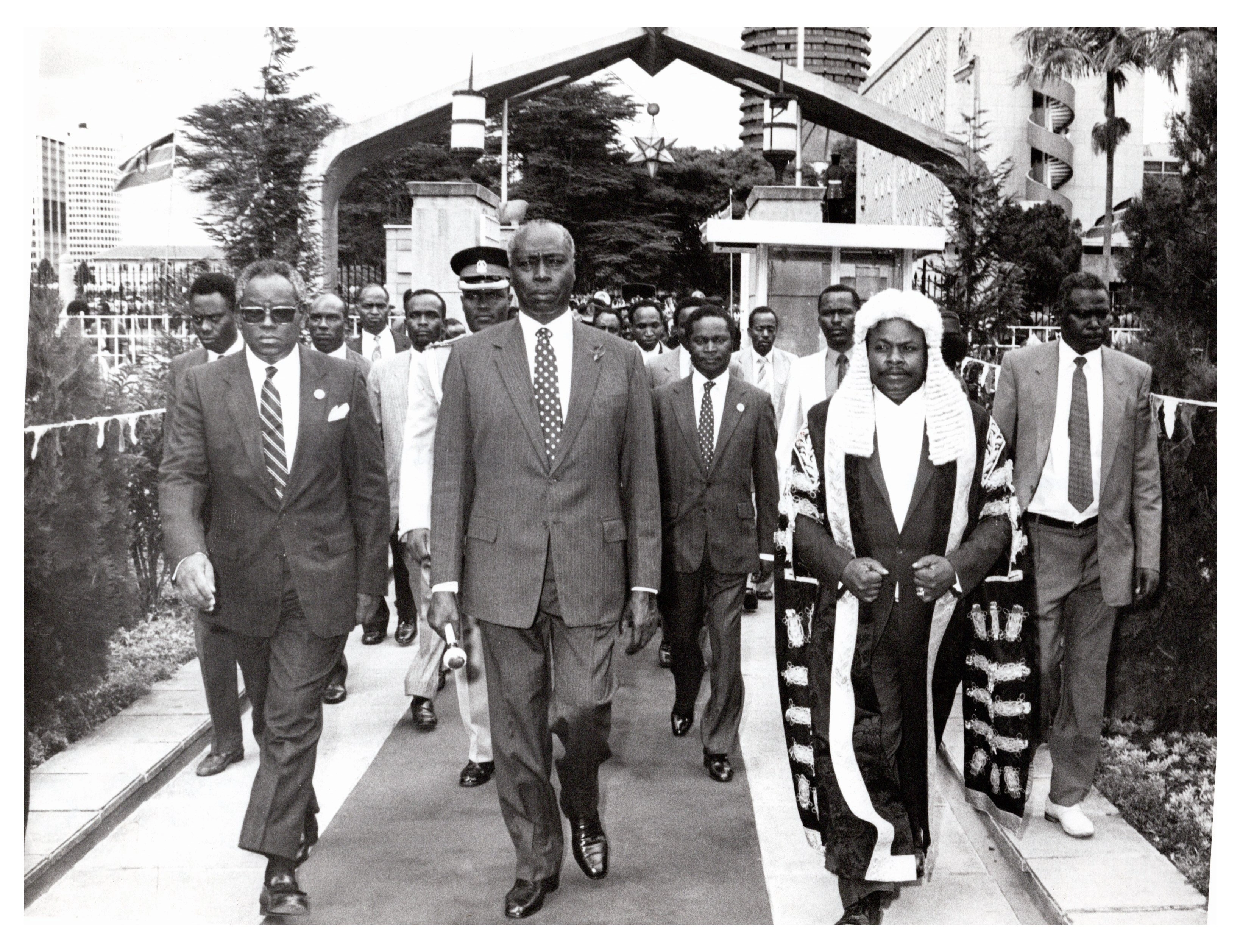
President Daniel arap Moi arriving at Parliament buildings when he officially opened the 6th National Assembly 8.4.1988
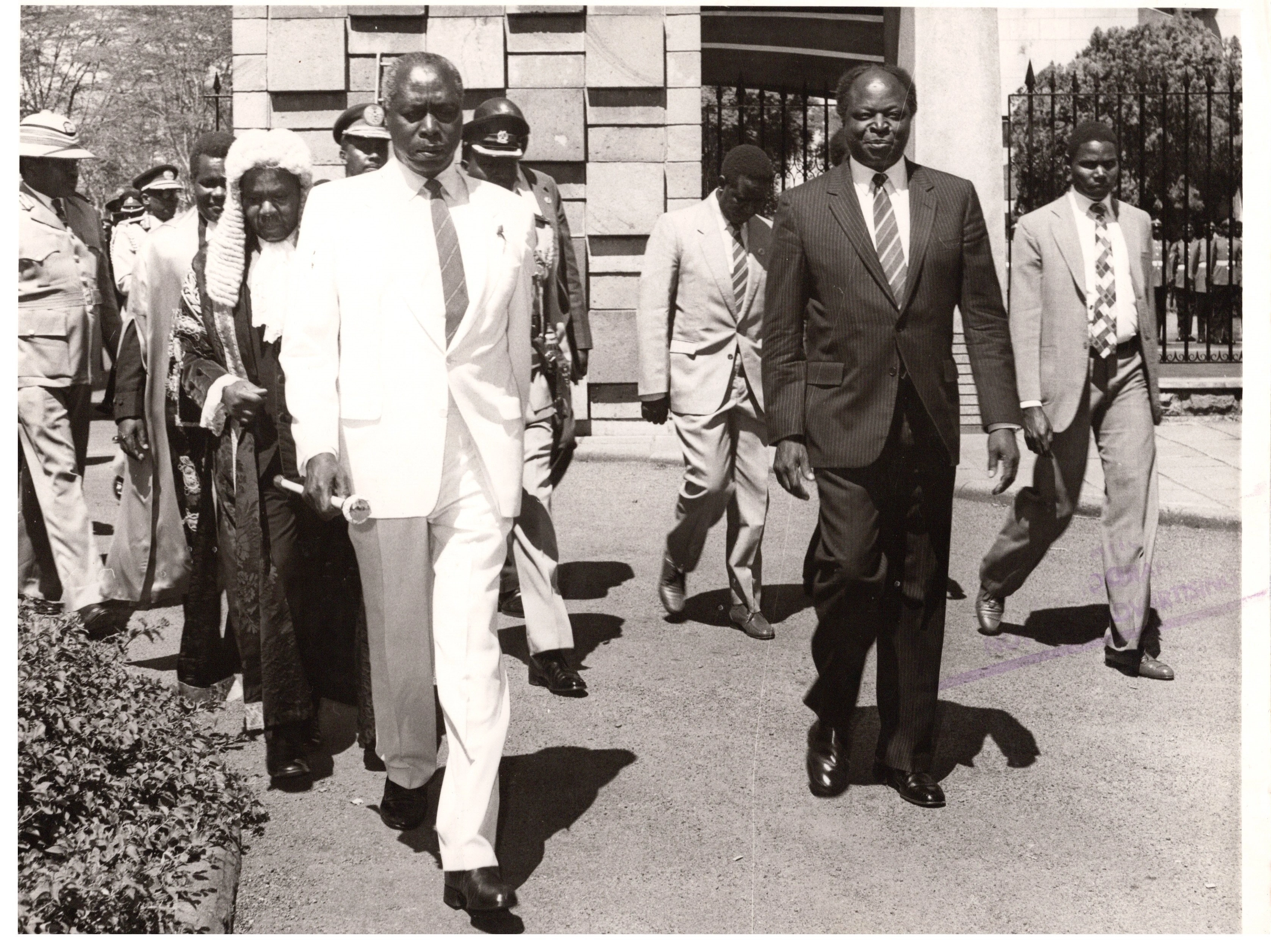
President Daniel Arap Moi arriving at Parliament Buildings being escorted by Speaker Fred Mati and VP Mwai Kibaki during official opening 3.3.1987
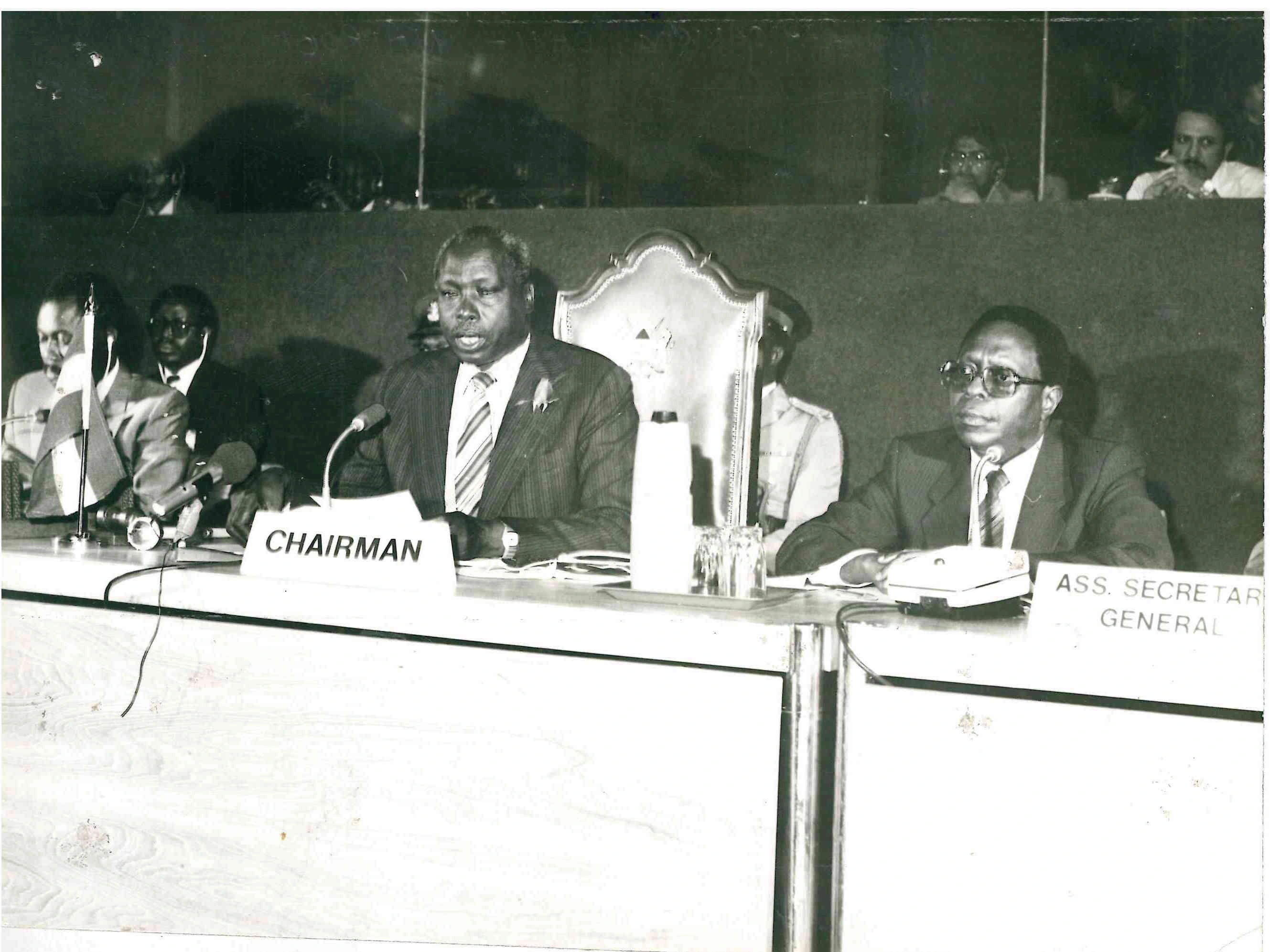
President Daniel Arap Moi The OAU Chairman addressing the 18th Assembly of the Summit at KICC Nairobi 18.4.1982
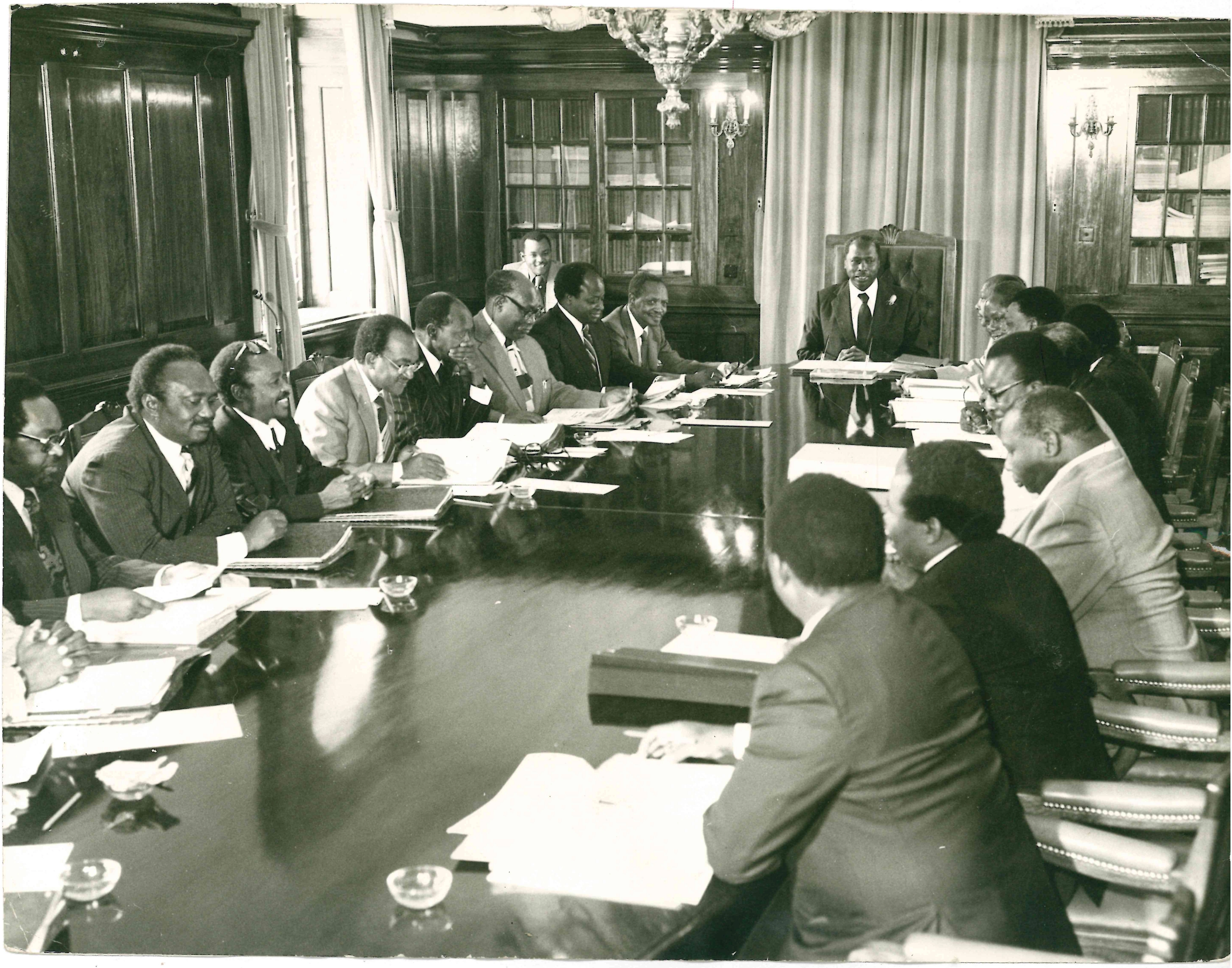
President Daniel Arap Moi chairing a Cabinet meeting as the new President two weeks after Jomo Kenyatta's death at State House Nairobi 8.9.1978
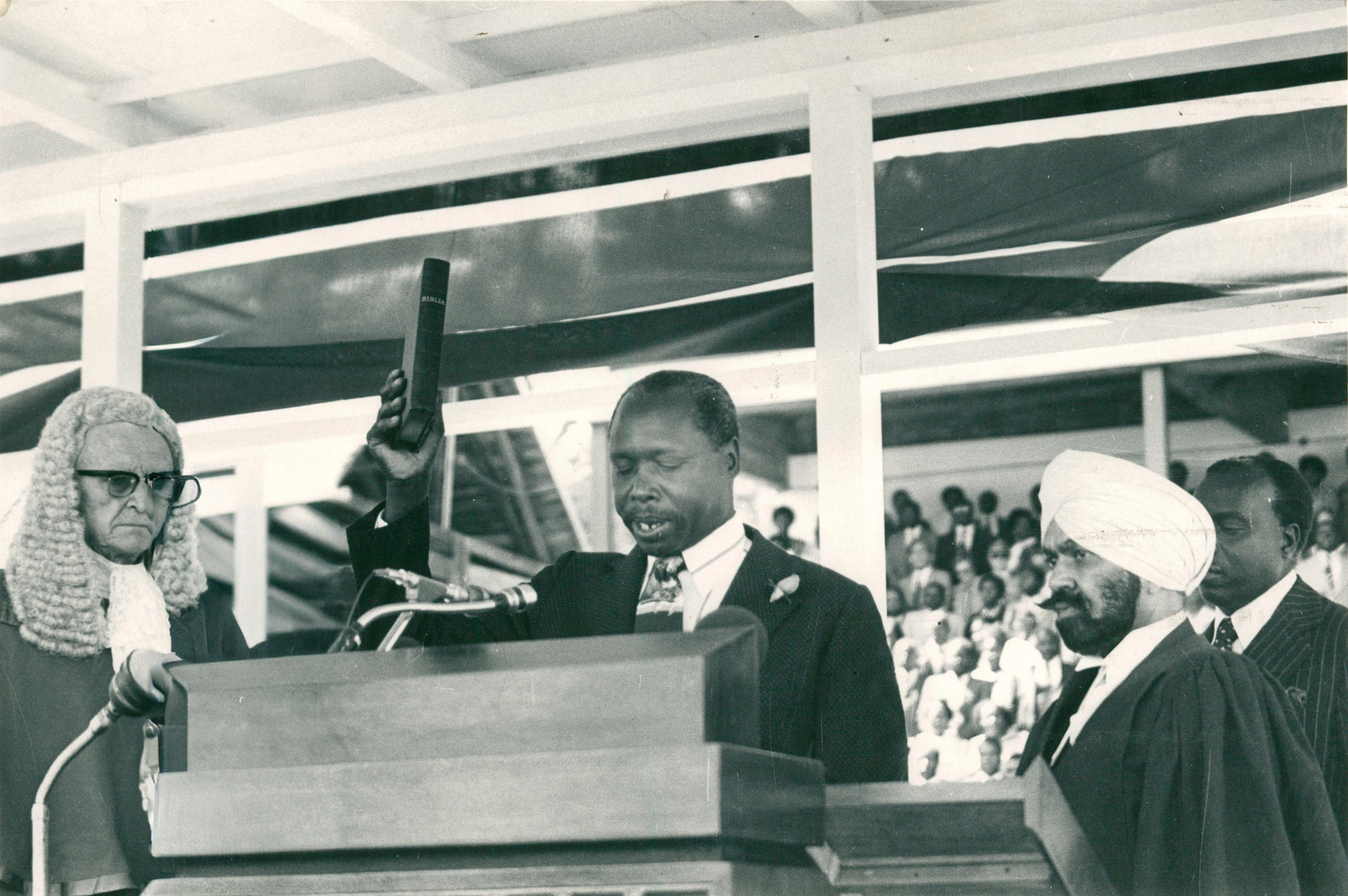
President Daniel Arap Moi Swearing in after the death of Mzee Jomo Kenyatta at Uhuru Park in 1978_14.10.1978
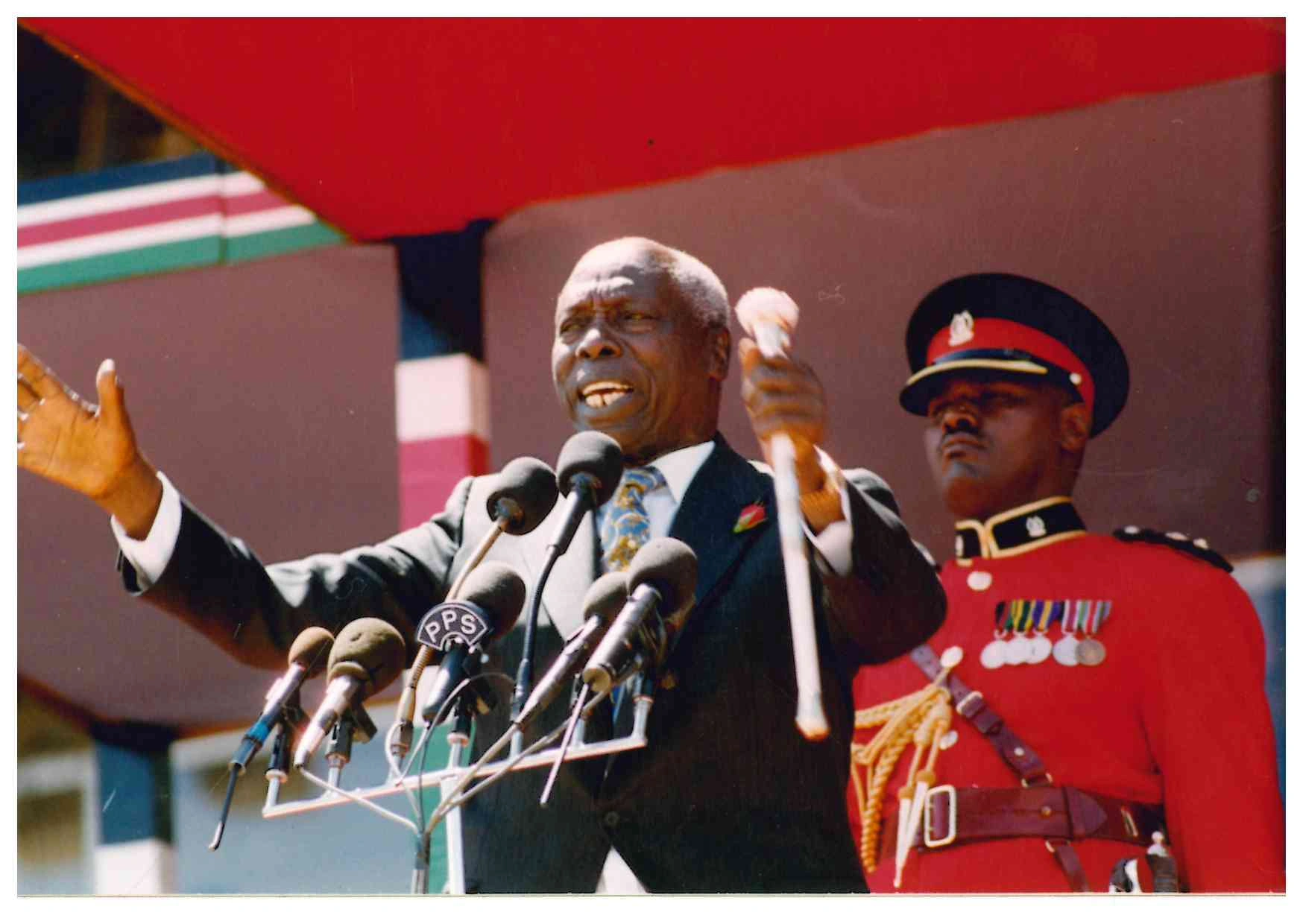
Daniel Arap Moi addressing Kenyans at Nyayo National Stadium during Jamhuri Day Celebrations
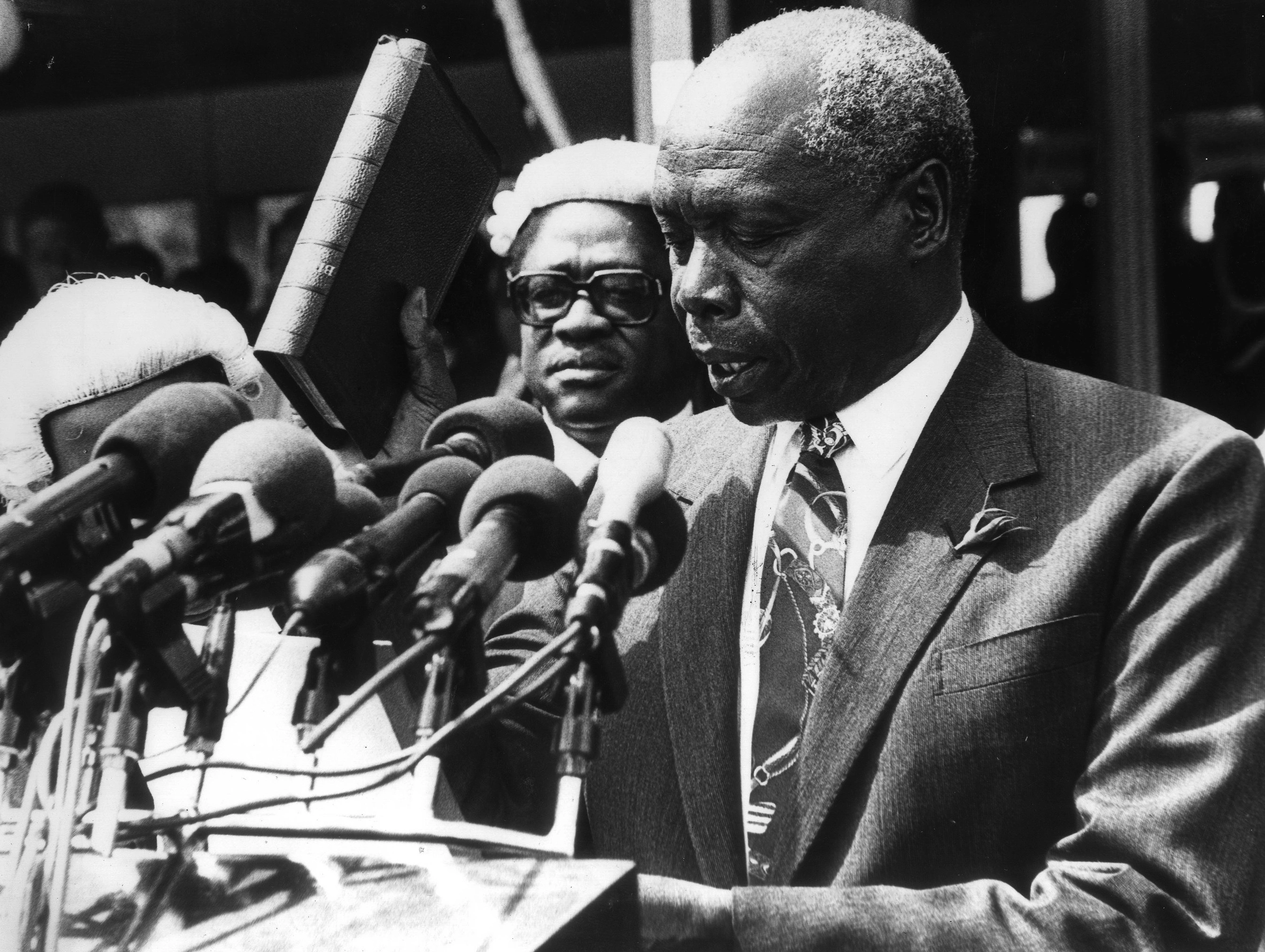
President Daniel Arap Moi swearing in after the 1992 Multiparty Election at Uhuru Park Nairobi_23.1.1993
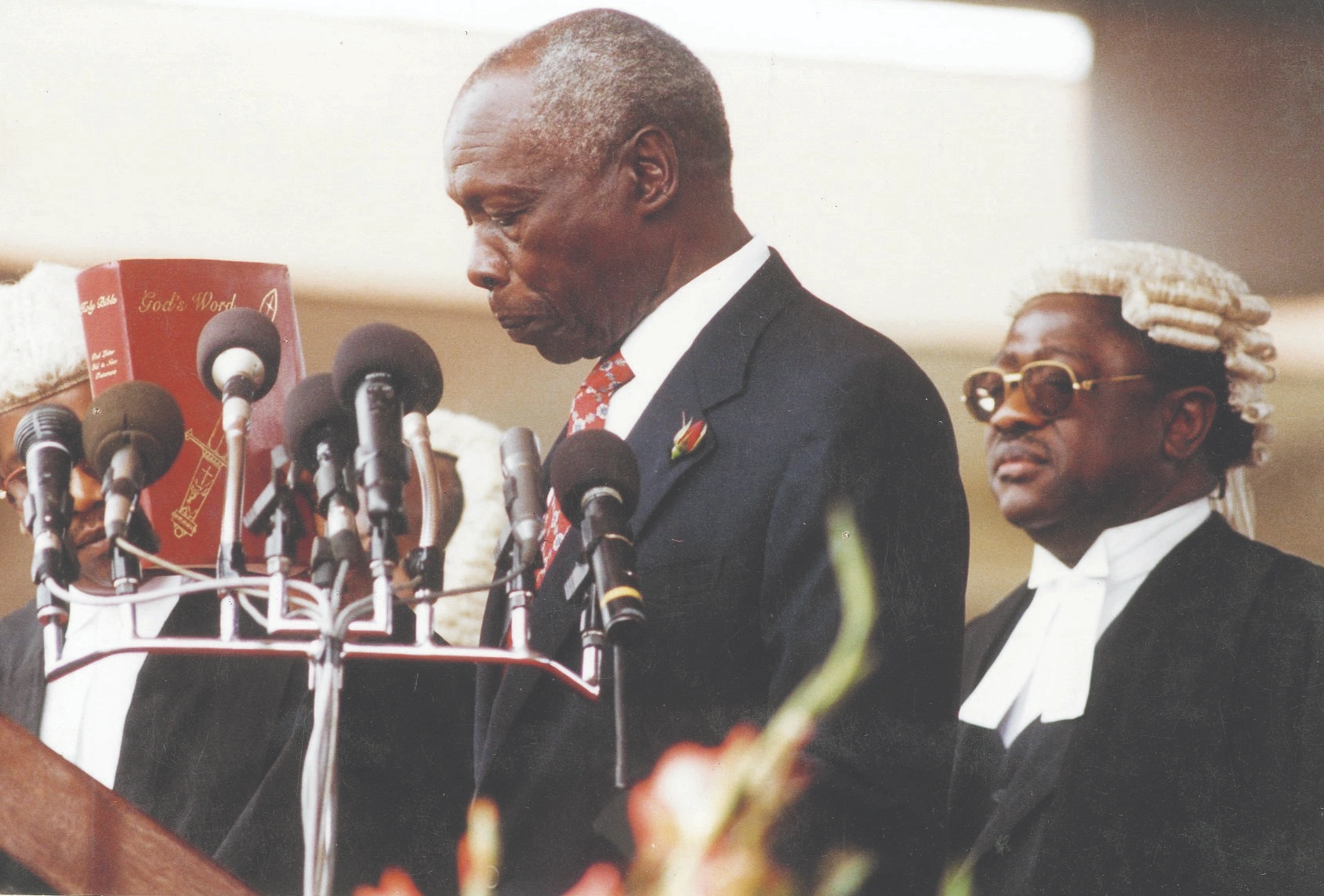
President Daniel Arap Moi swearing in after the 1997 General Election at Uhuru Park Nairobi_5.1.1998
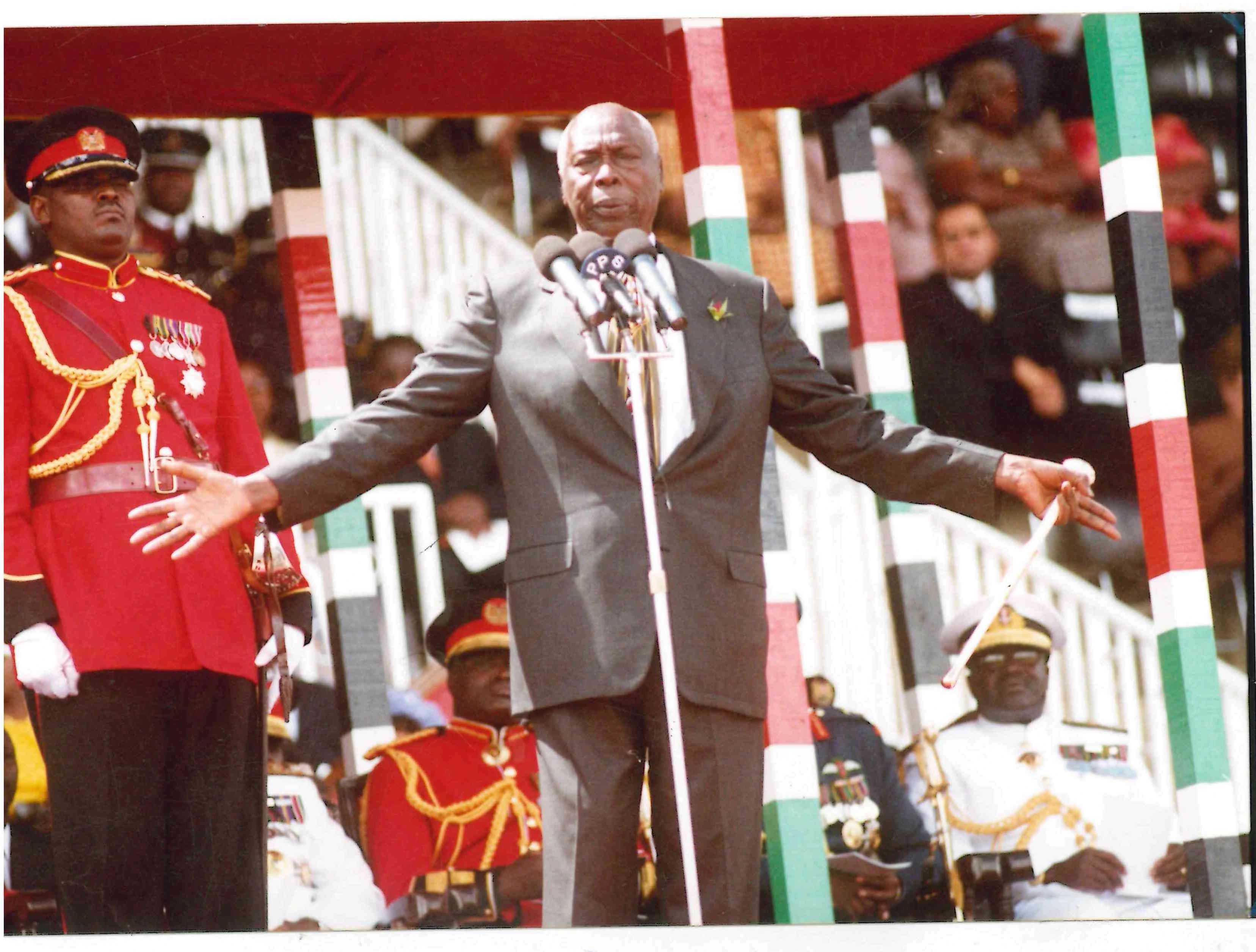
President Daniel Arap Moi addressing his last Jamhuri Day
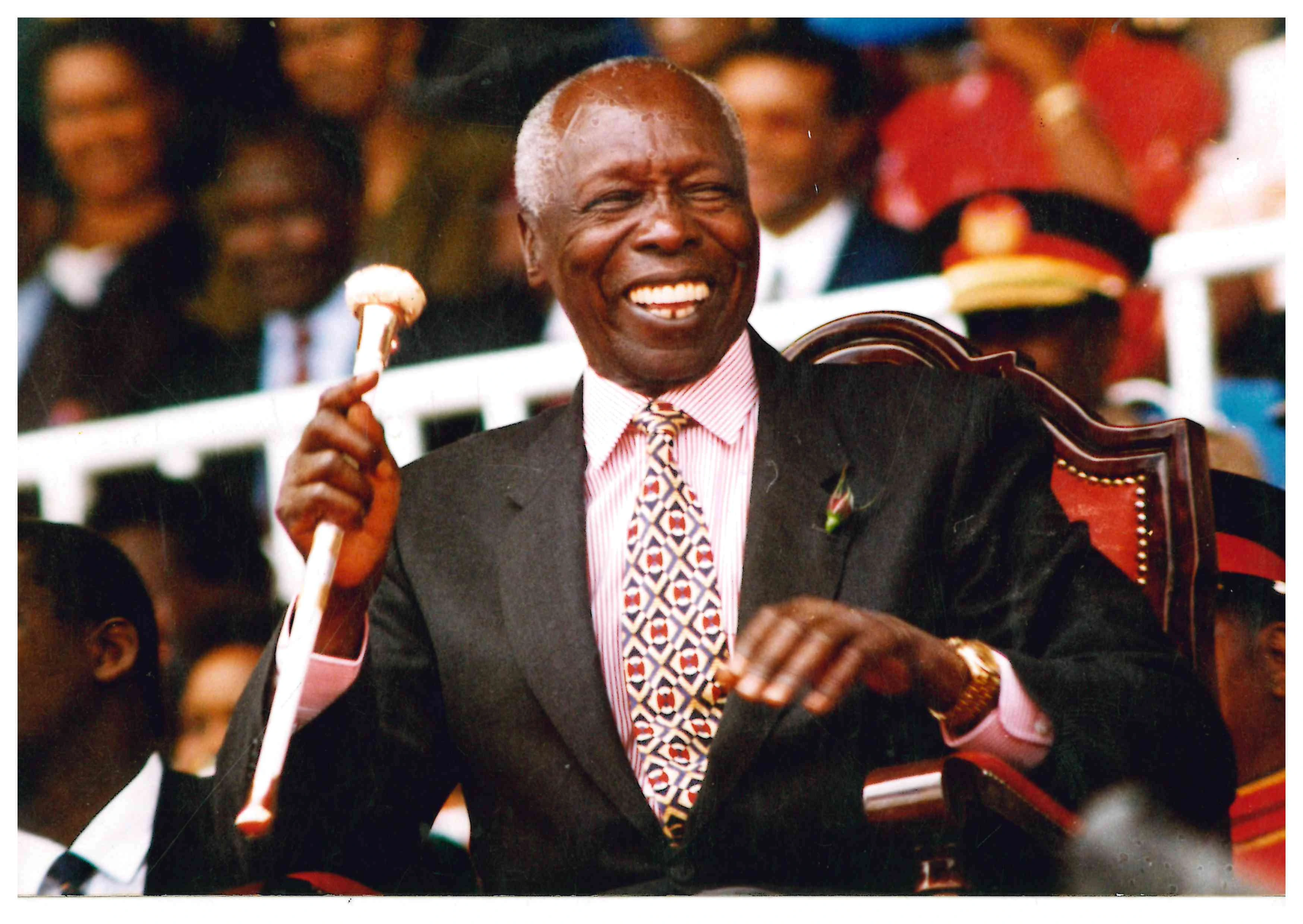
President Daniel Arap Moi laughing during Madaraka Day Celebrations
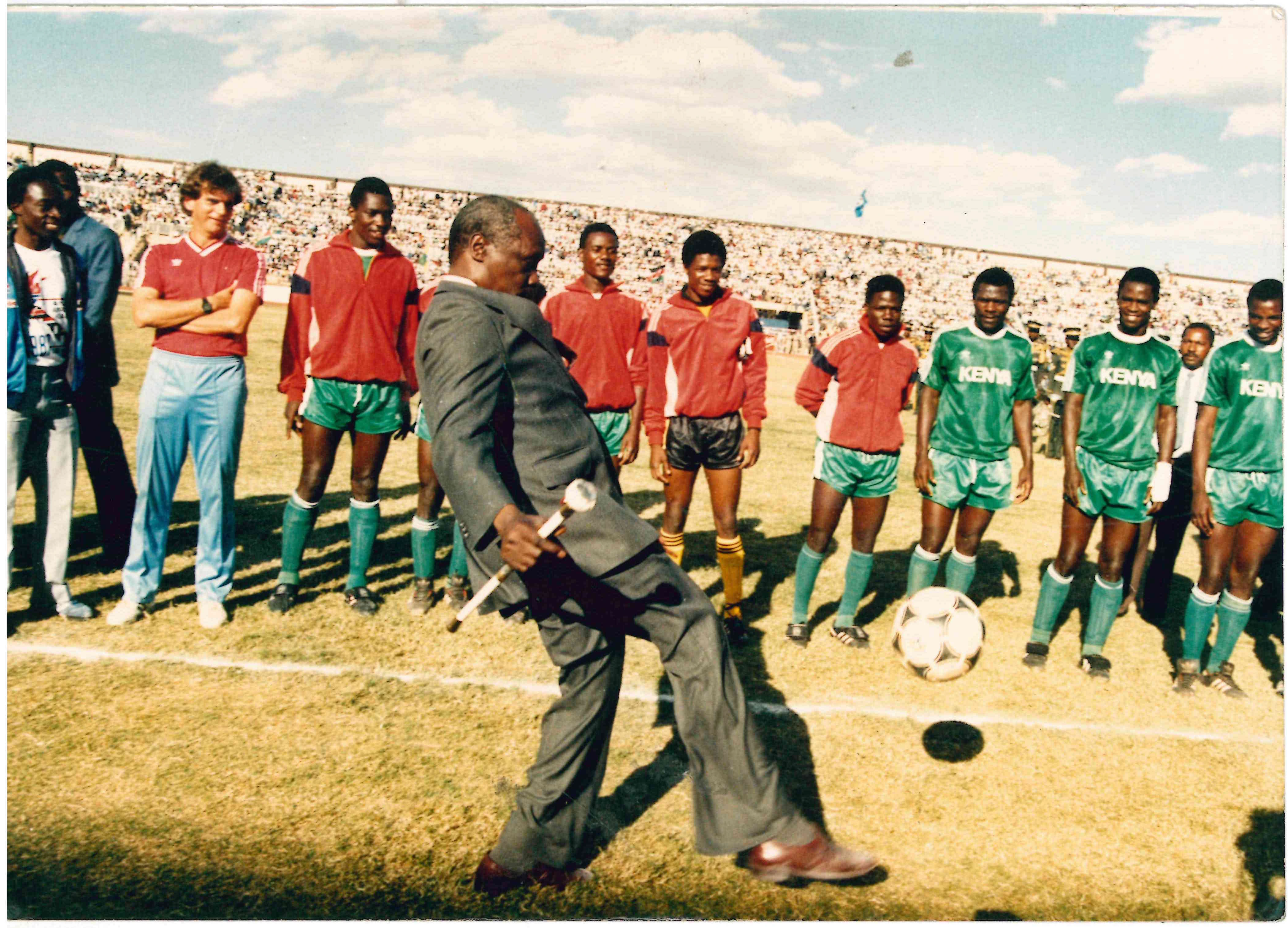
President Daniel Arap Moi juggling the ball before a football match
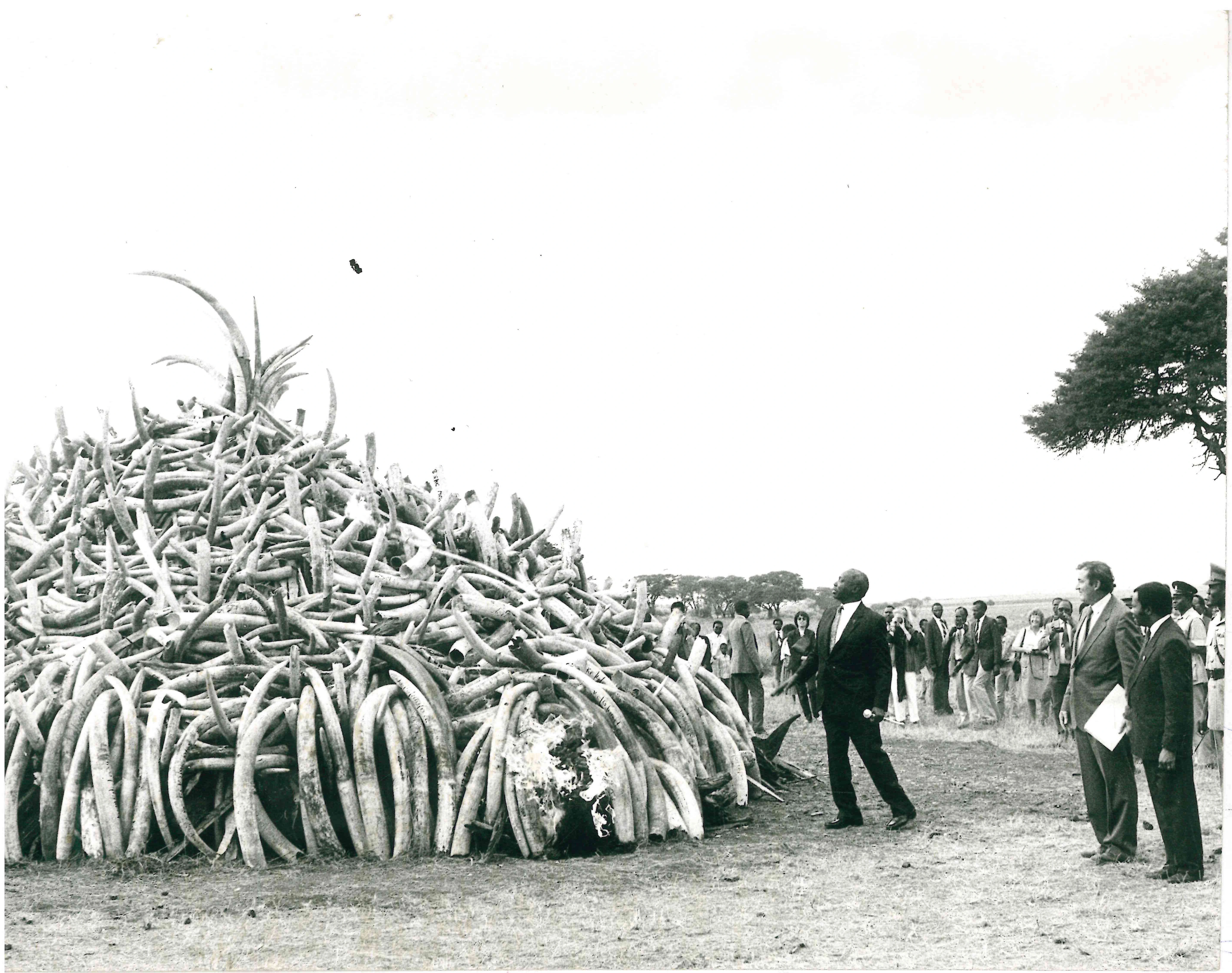
President Daniel Arap Moi burning ivory
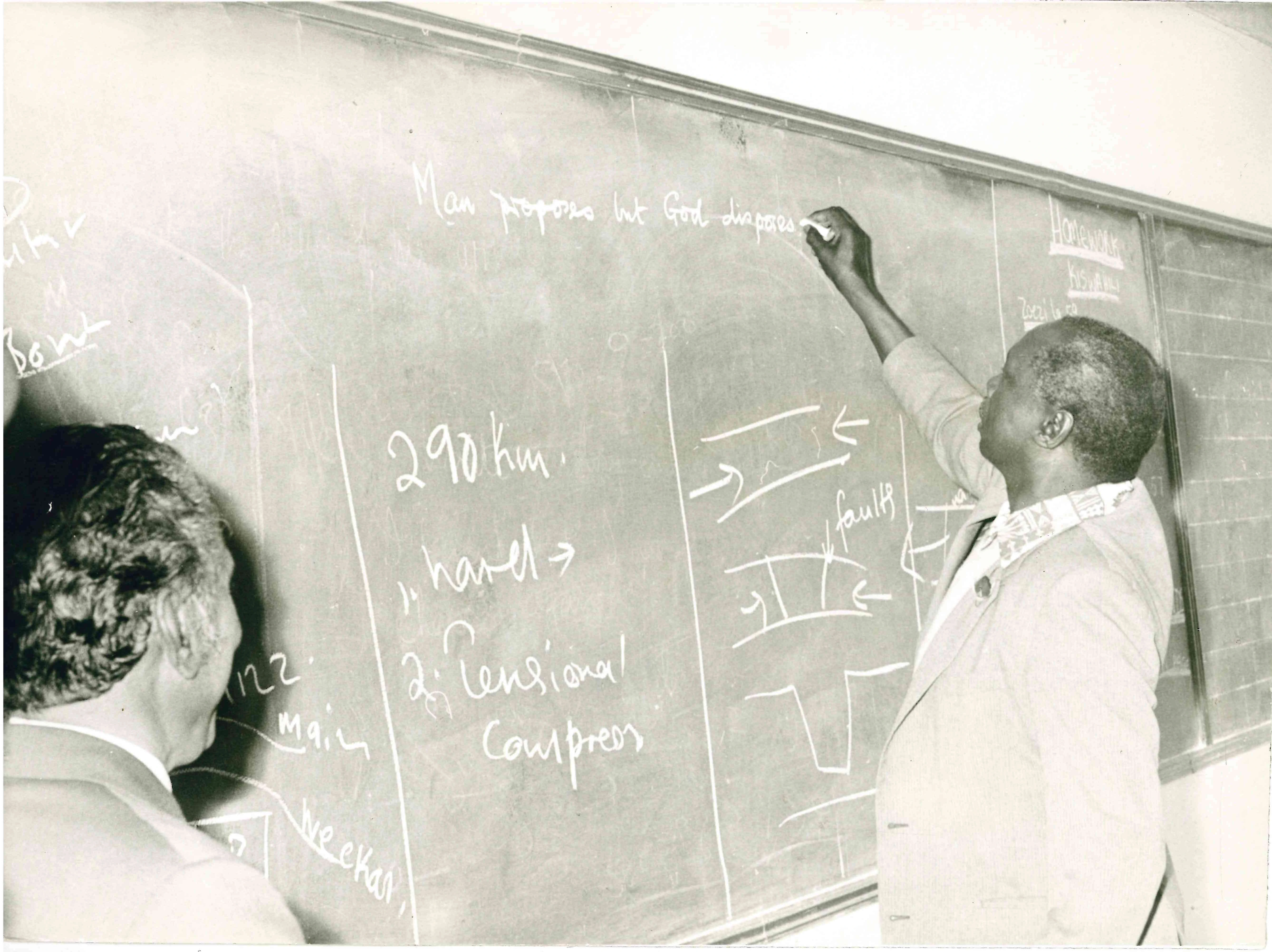
President Daniel Moi relives his teaching experience at Moi Equator Girls, Nanyuki
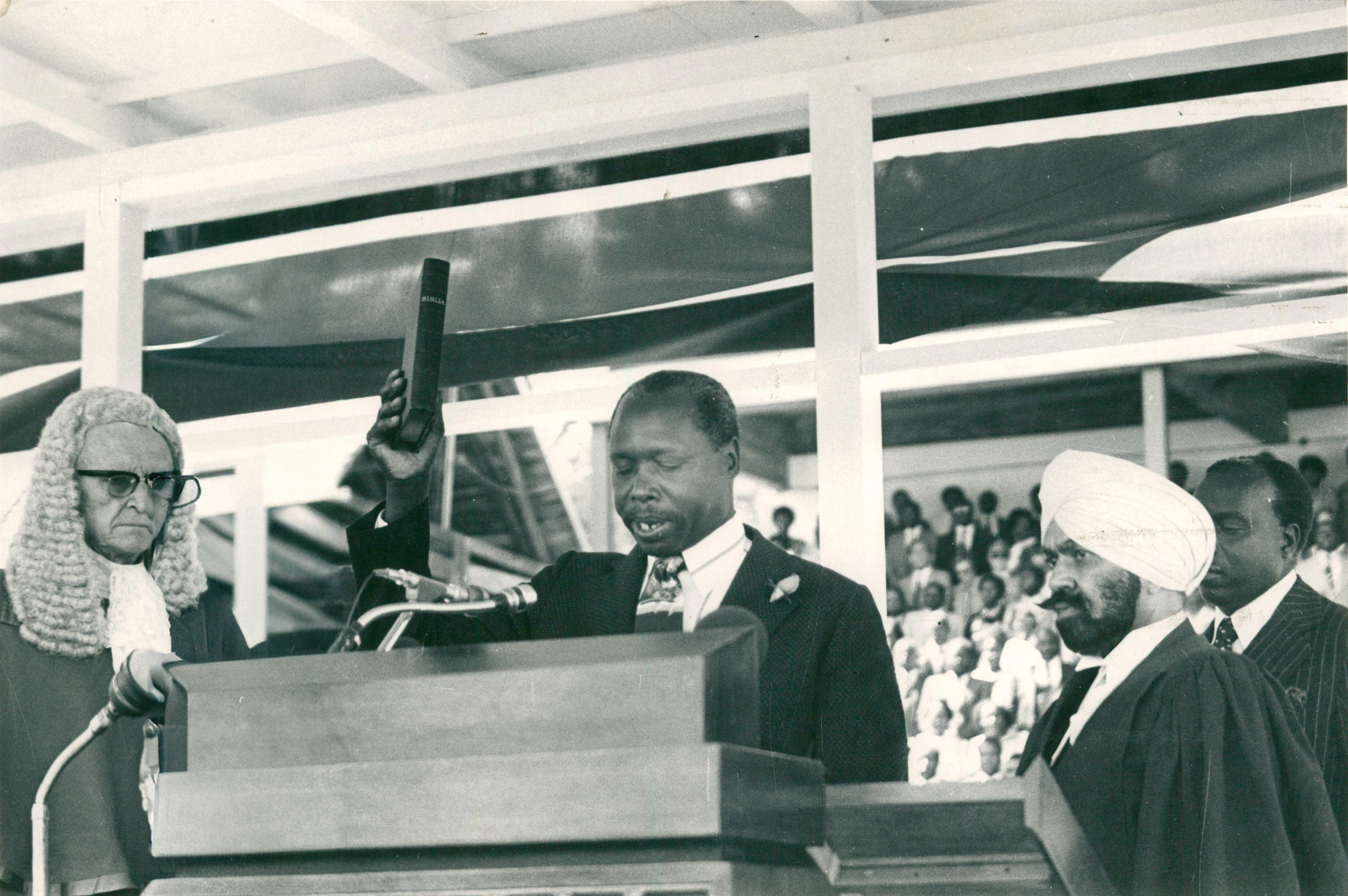
President Daniel Arap Moi Swearing in after the death of Mzee Jomo Kenyatta at Uhuru Park in 1978
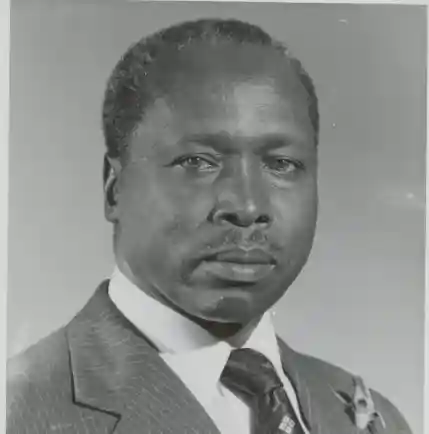
President Daniel arap Moi Official Portrait
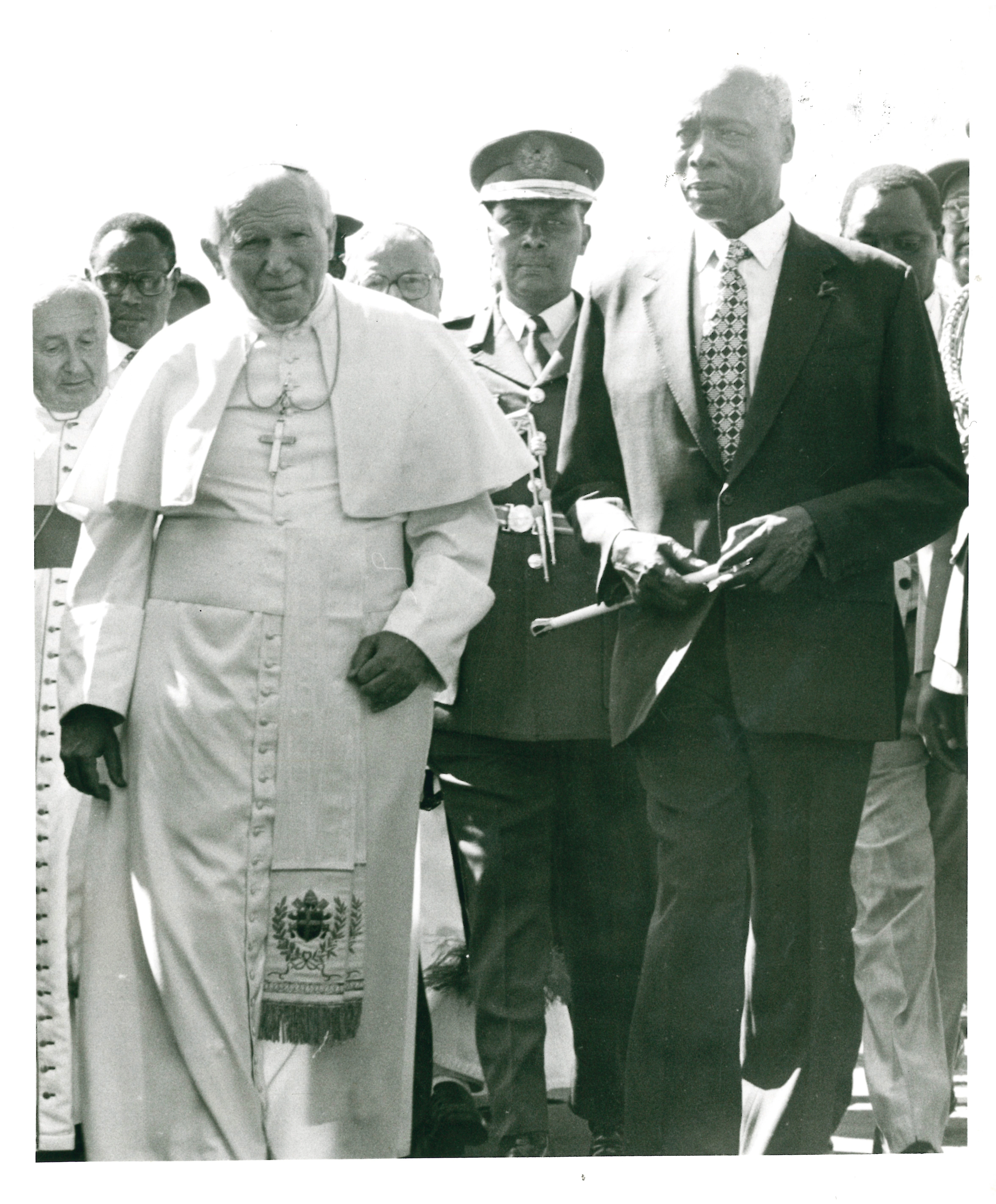
President Daniel Arap Moi walking alongside Pope John Paul II during the Papal visit to Kenya
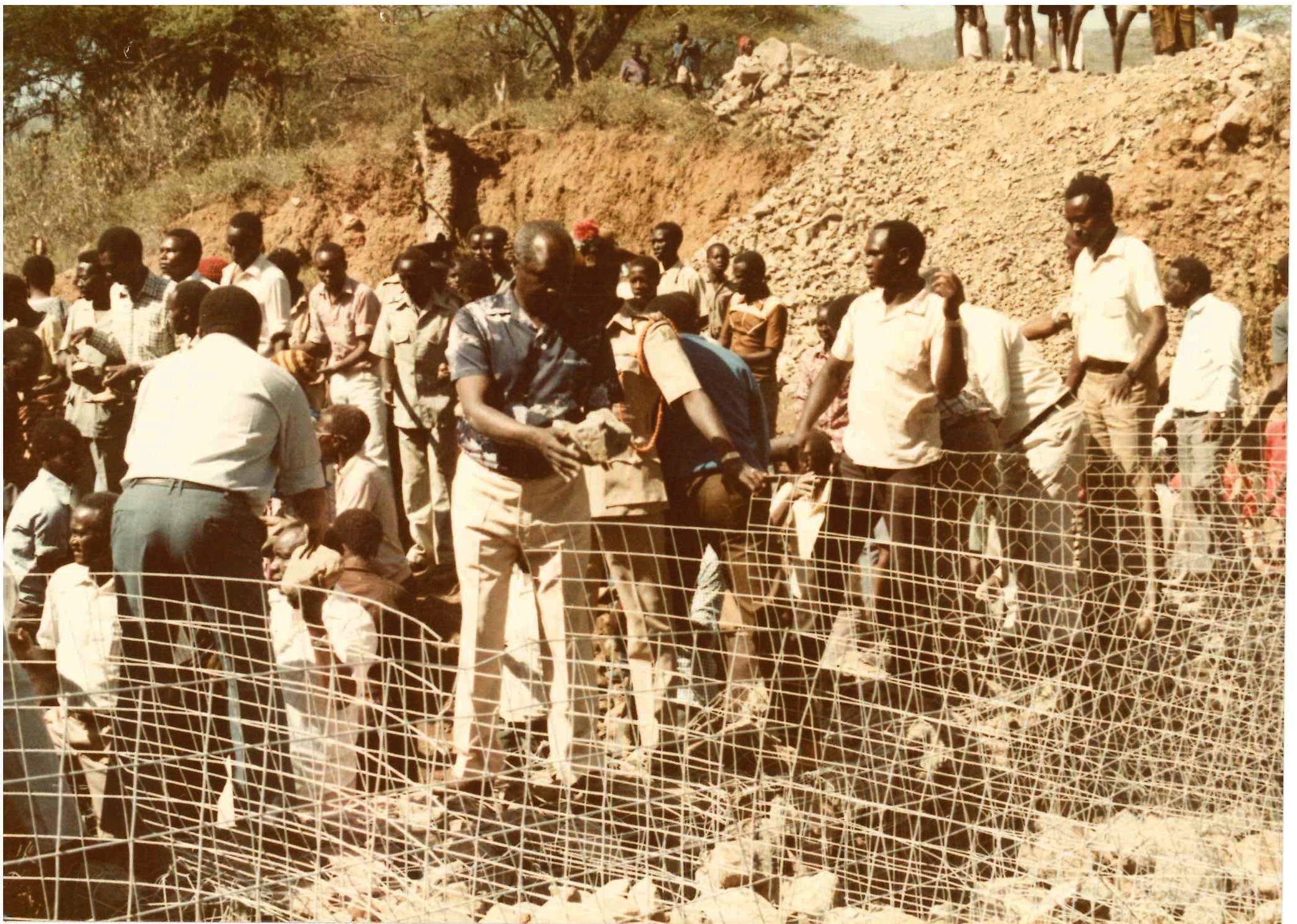
President Daniel Arap Moi Leading Wananchi in Building Gabions to mitigate soil erosion
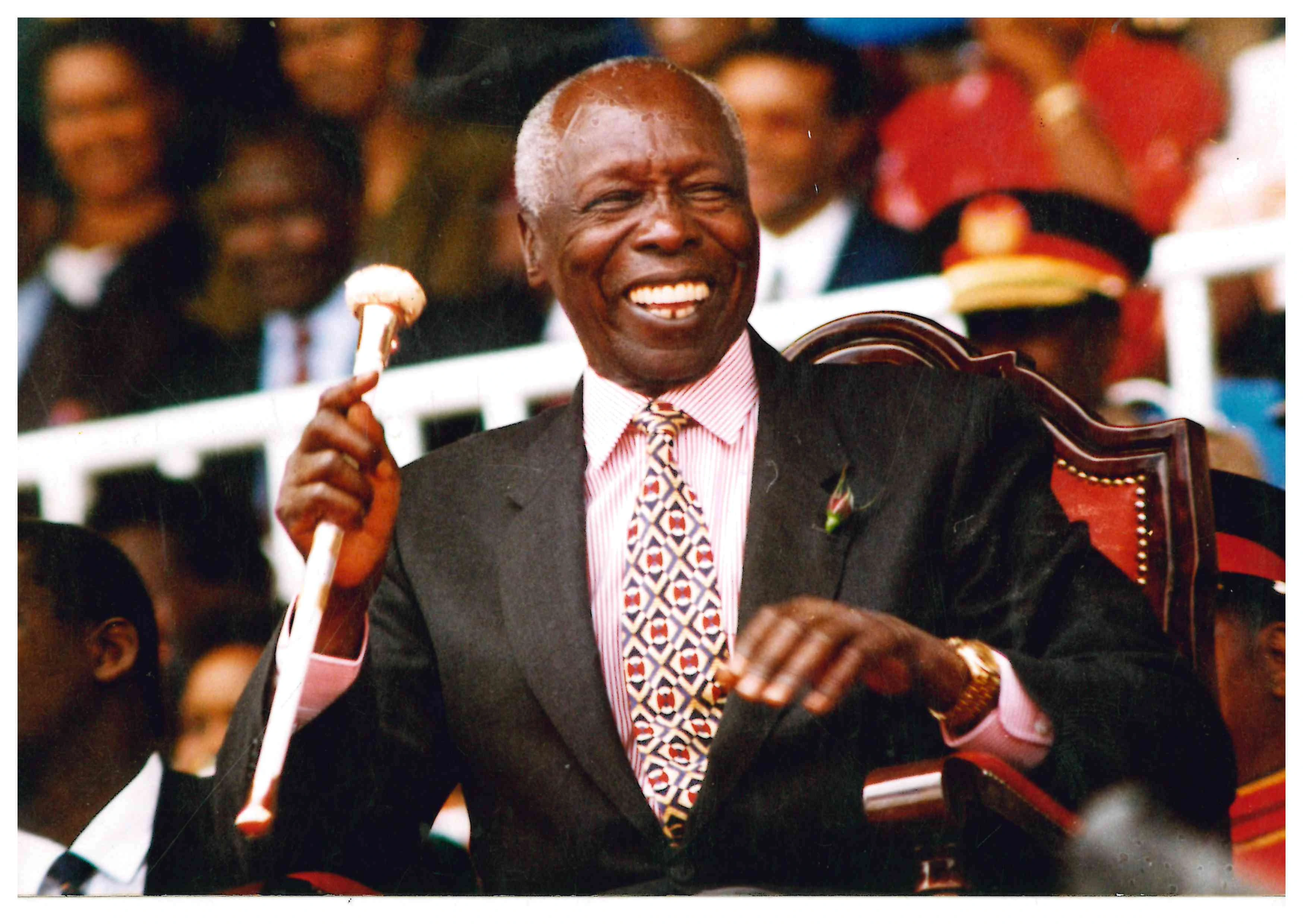
President Daniel Arap Moi laughing during Madaraka Day Celebrations at Nyayo Stadium
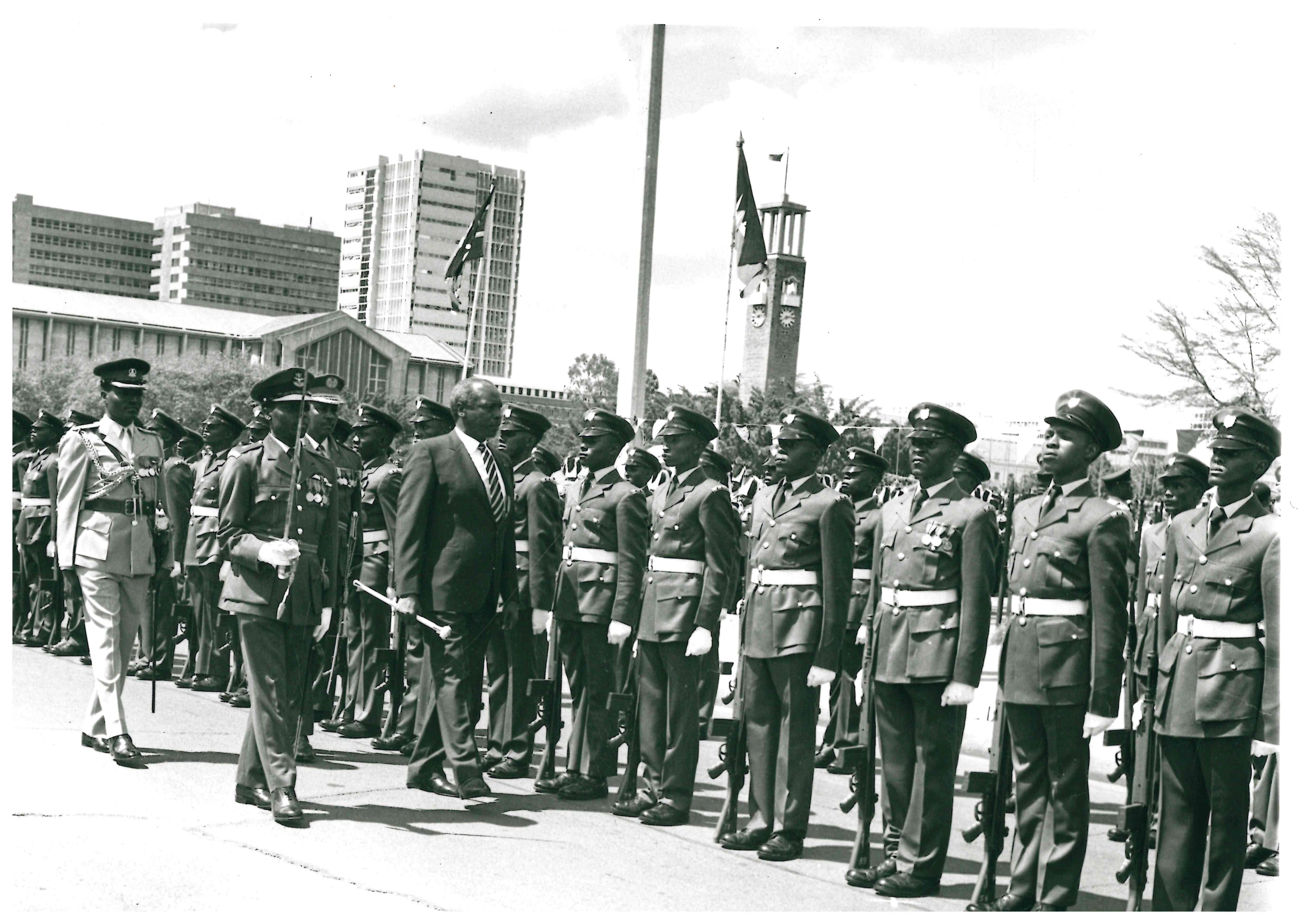
President Daniel Arap Moi inspecting a guard of honour mounted by the Kenya Military outside Parliament Buildings Nairobi.
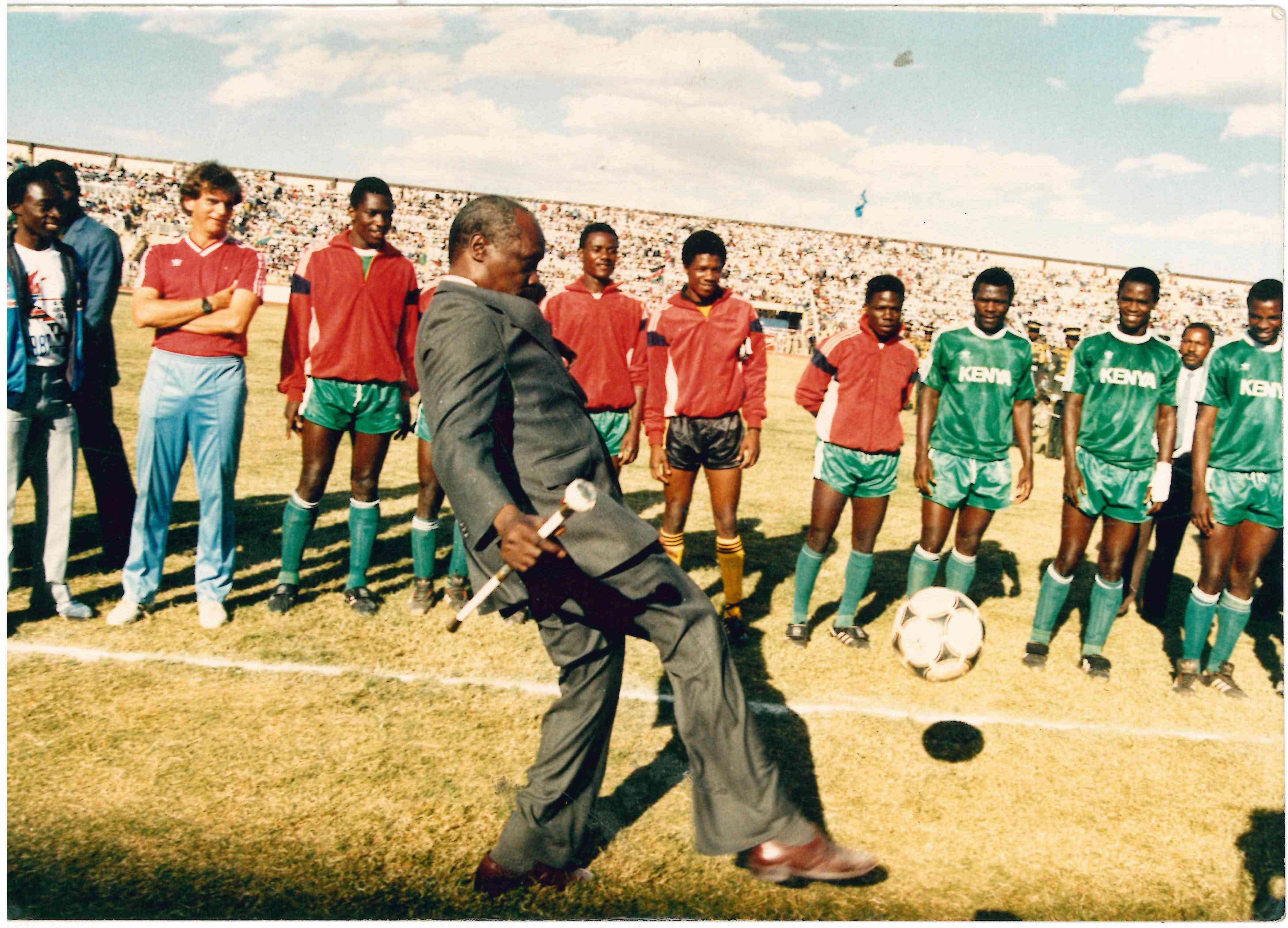
President Daniel Arap Moi juggling the ball before a football match at Nyayo Stadium
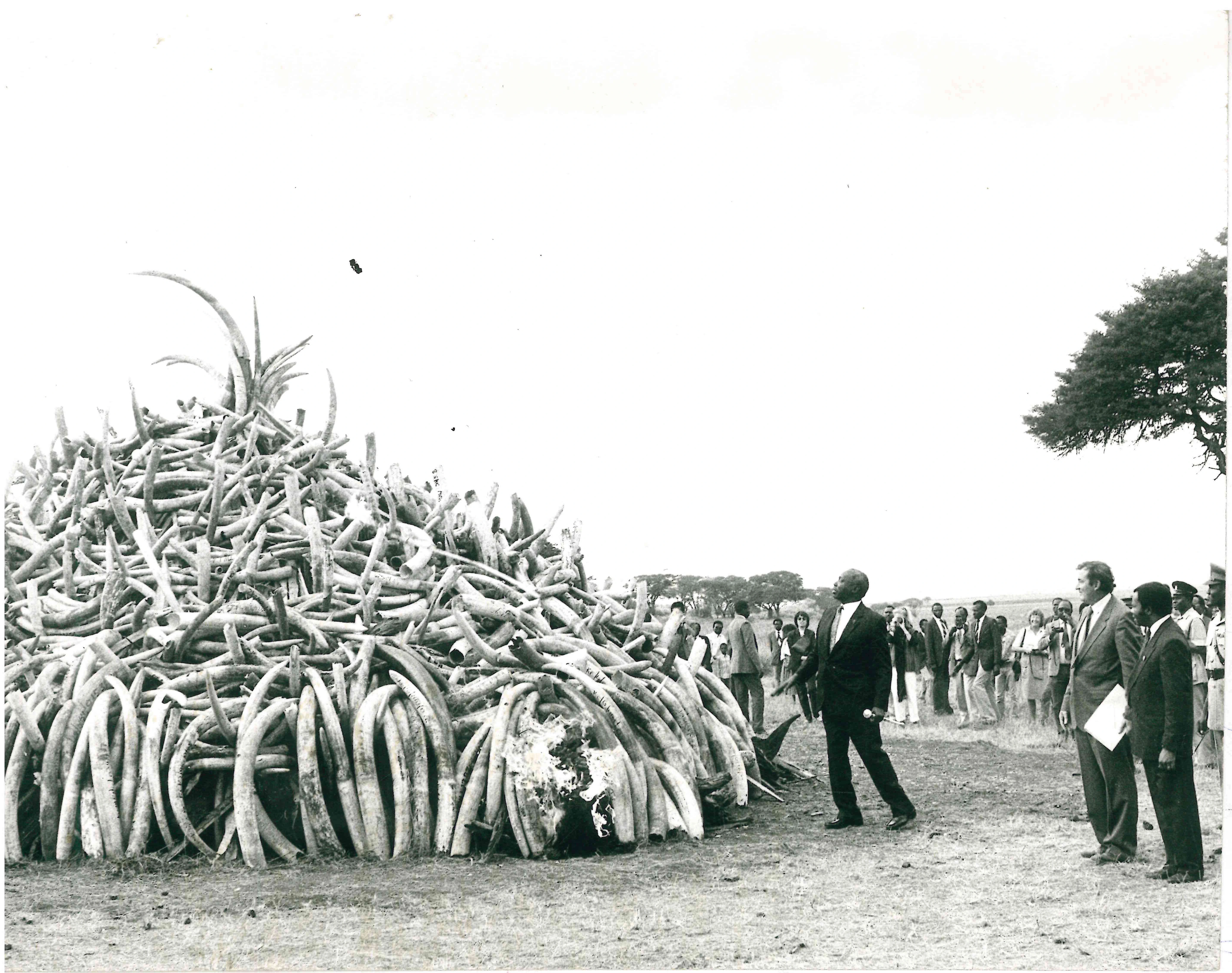
President Daniel Arap Moi burning ivory at Nairobi National Park
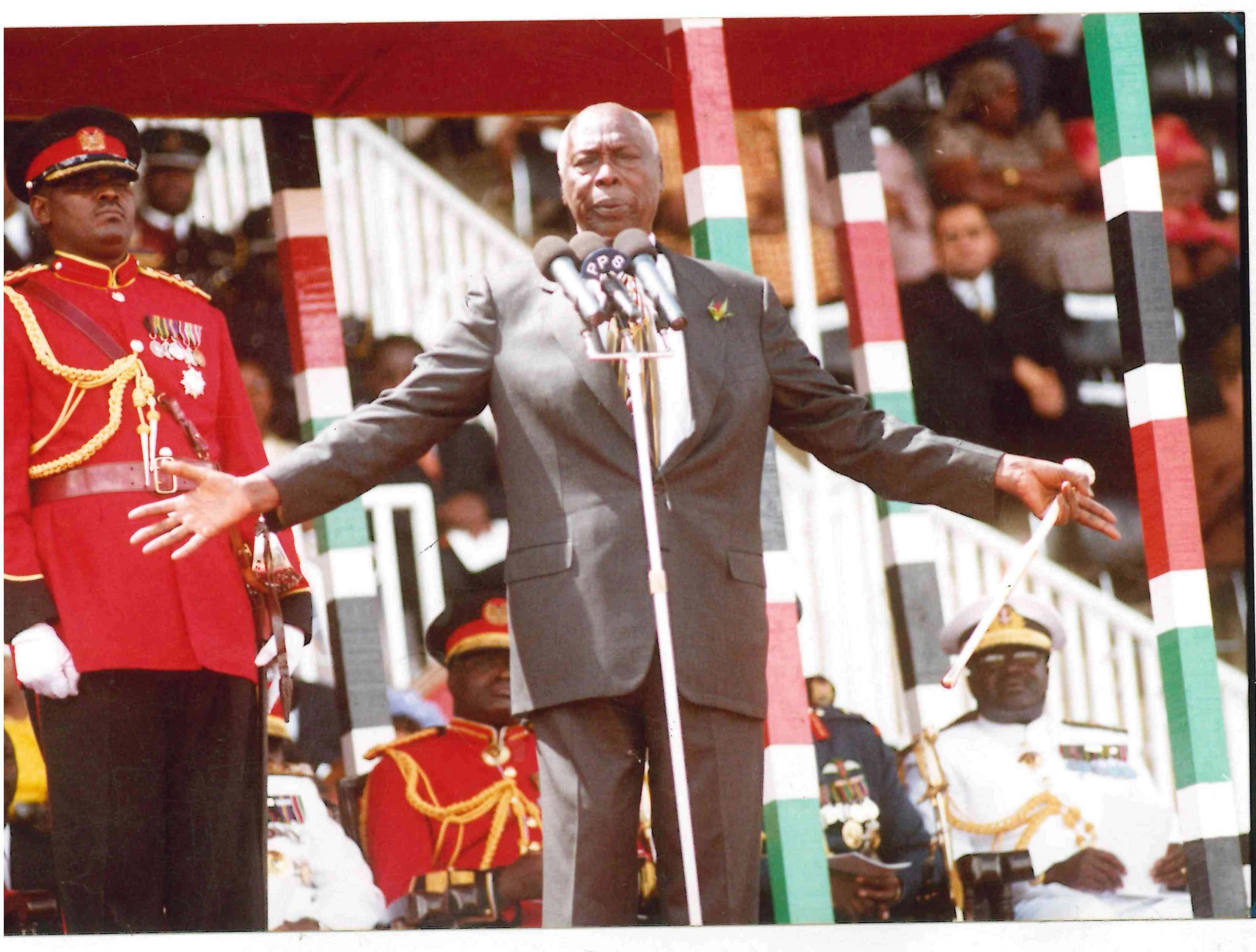
President Daniel Arap Moi addressing his last Jamhuri Day as President of the Republic of Kenya at Nyayo Stadium before retirement
Speeches
President Daniel Arap Moi Speech on Madaraka Day_1.6.1979
Open Resource
President Daniel Arap Moi Speech on Jamhuri Day_12.12.1979
Open Resource
President Daniel Arap Moi Speech on Jamhuri Day_12.12.1978
Open Resource
President Daniel Arap Moi Speech on Kenyatta Day_20.10.1980
Open Resource
President Daniel Arap Moi Speech on Kenyatta Day_20.10.1978
Open Resource
Related Artifacts
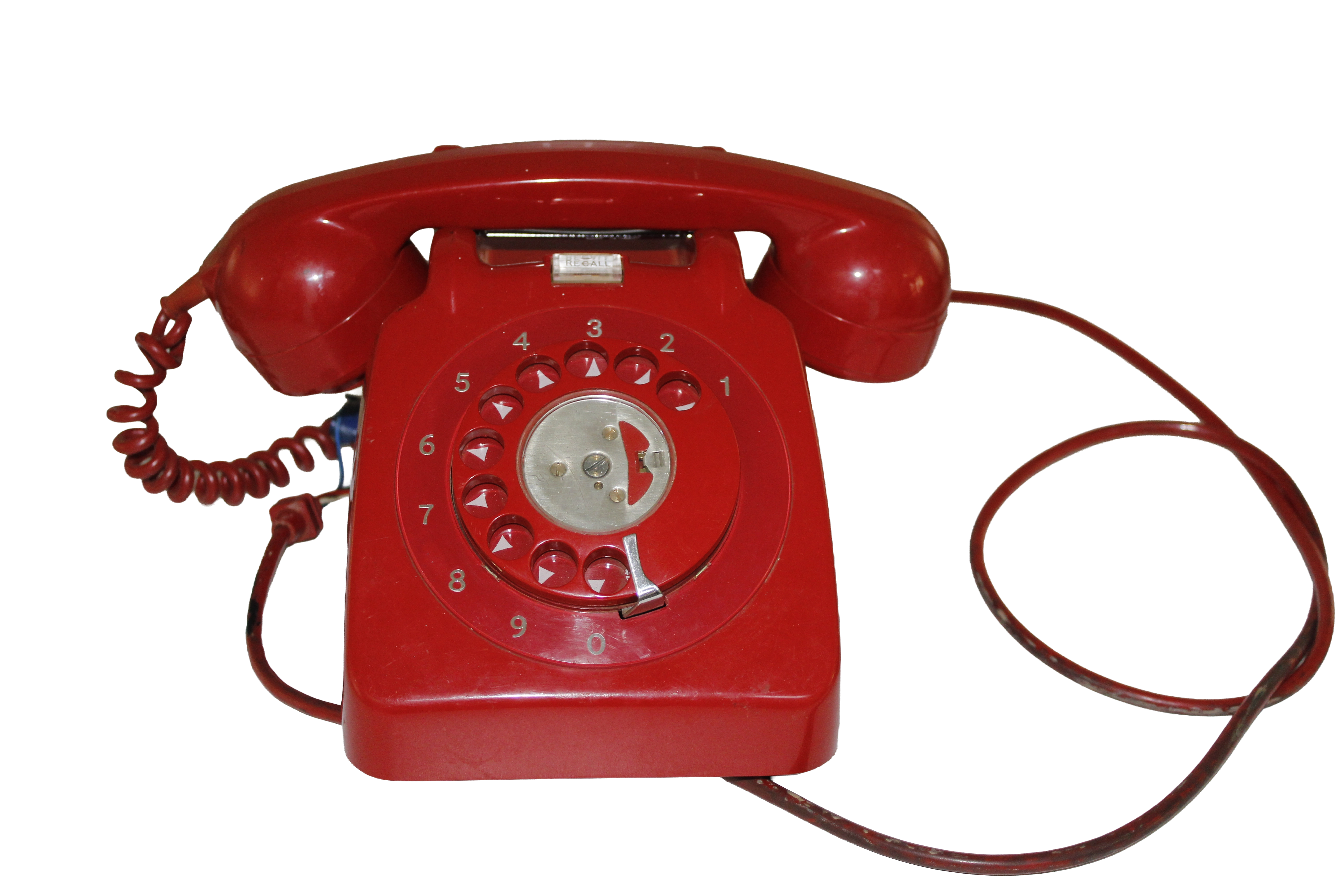
President Daniel Arap Moi Red LandLine Phone_1978-2002
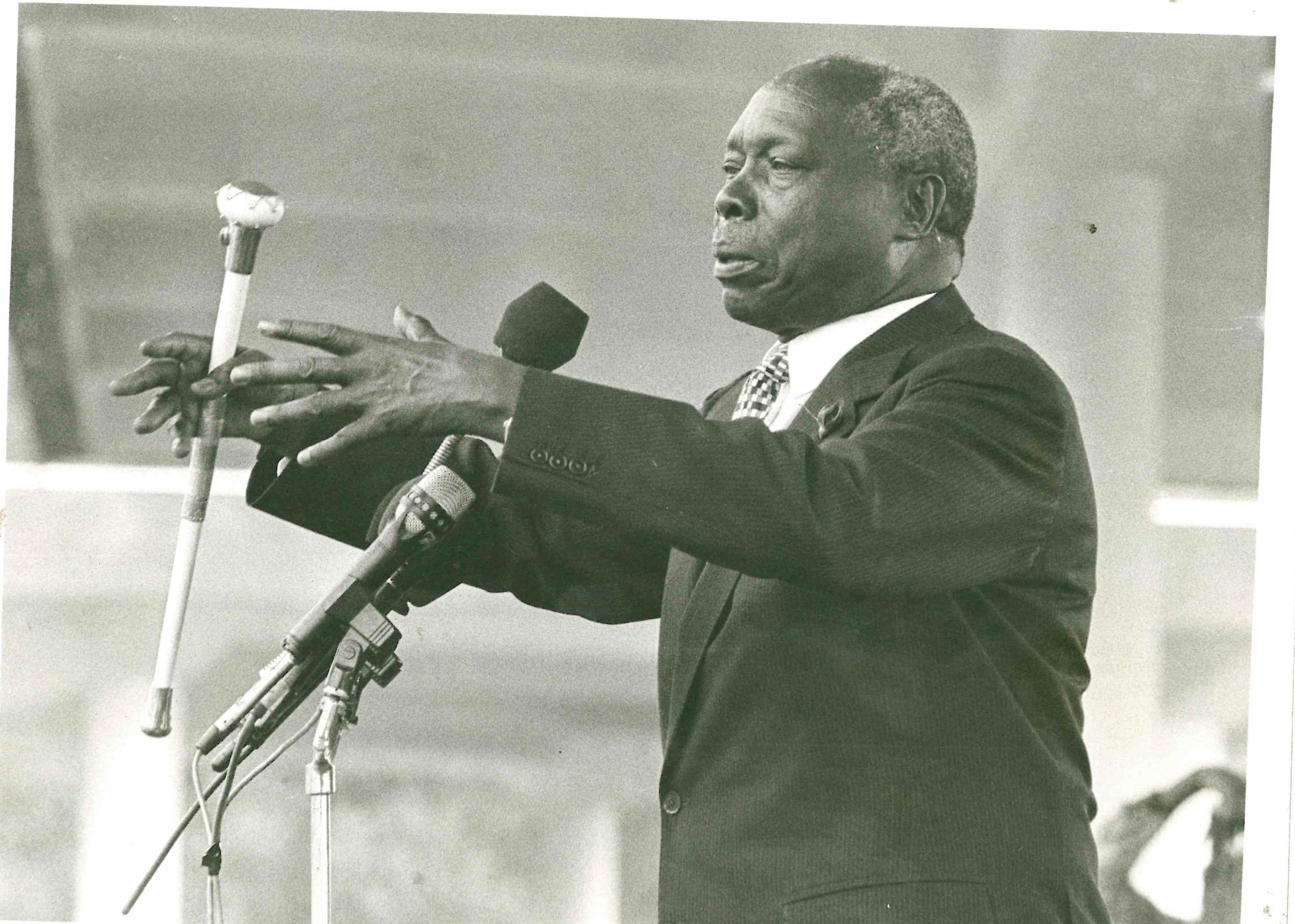
President Daniel Arap Moi Nyayo baton-Fimbo ya Nyayo a central symbol of power and authority_1985
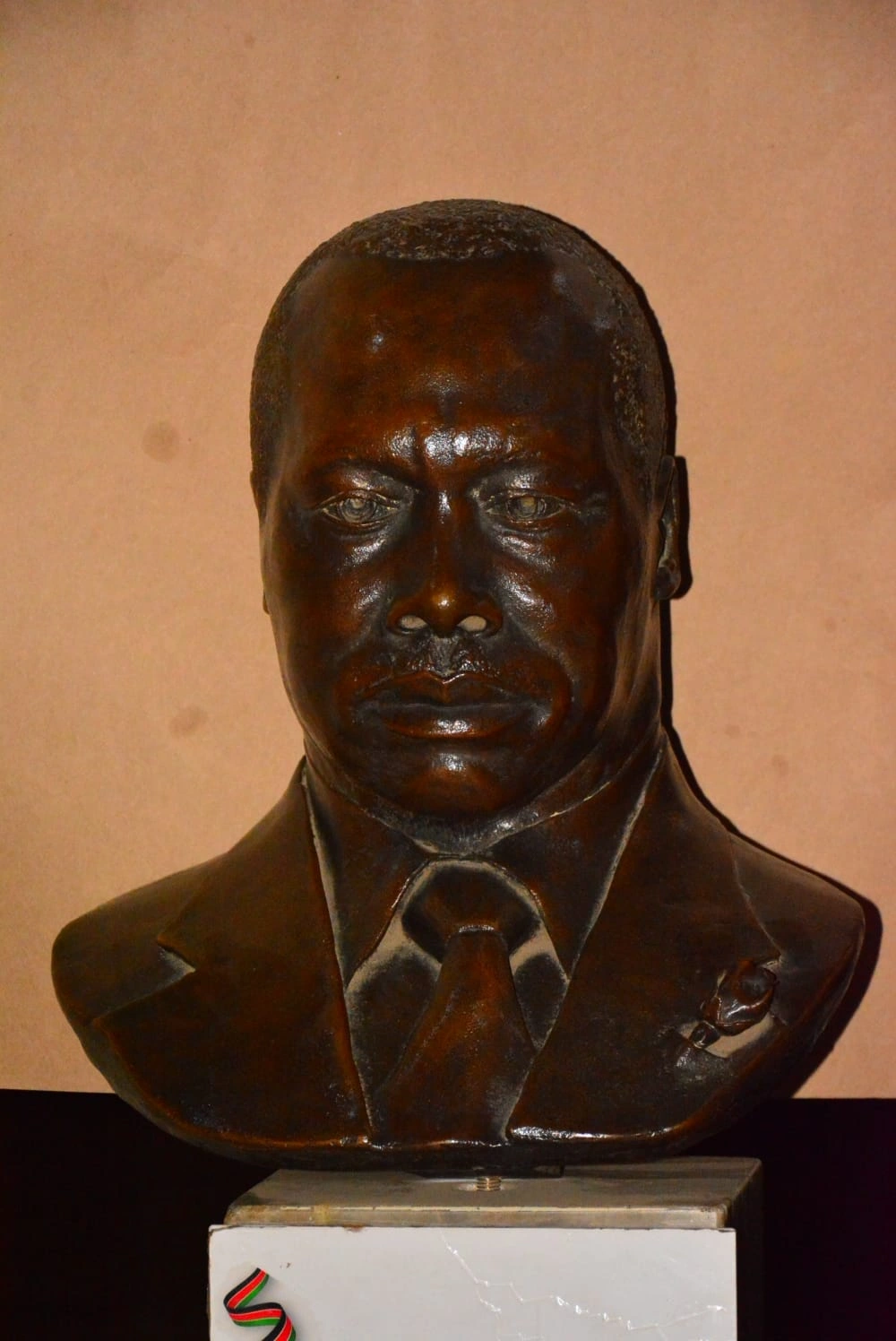
The Bust of Kenyan Second President Daniel Arap Moi Close Up shot_2000
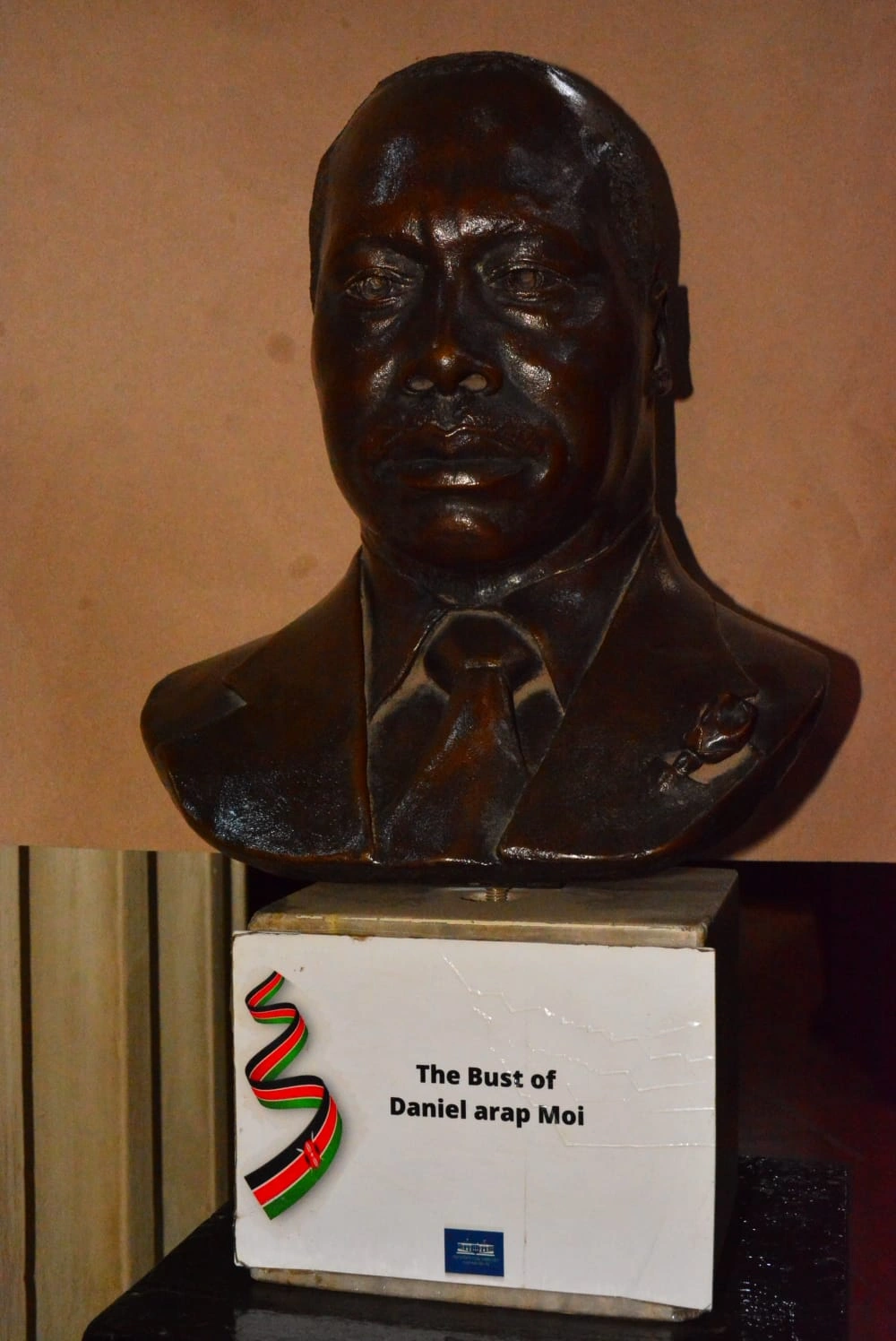
The Bust of Kenyan Second President Daniel Arap Moi Long shot_2000
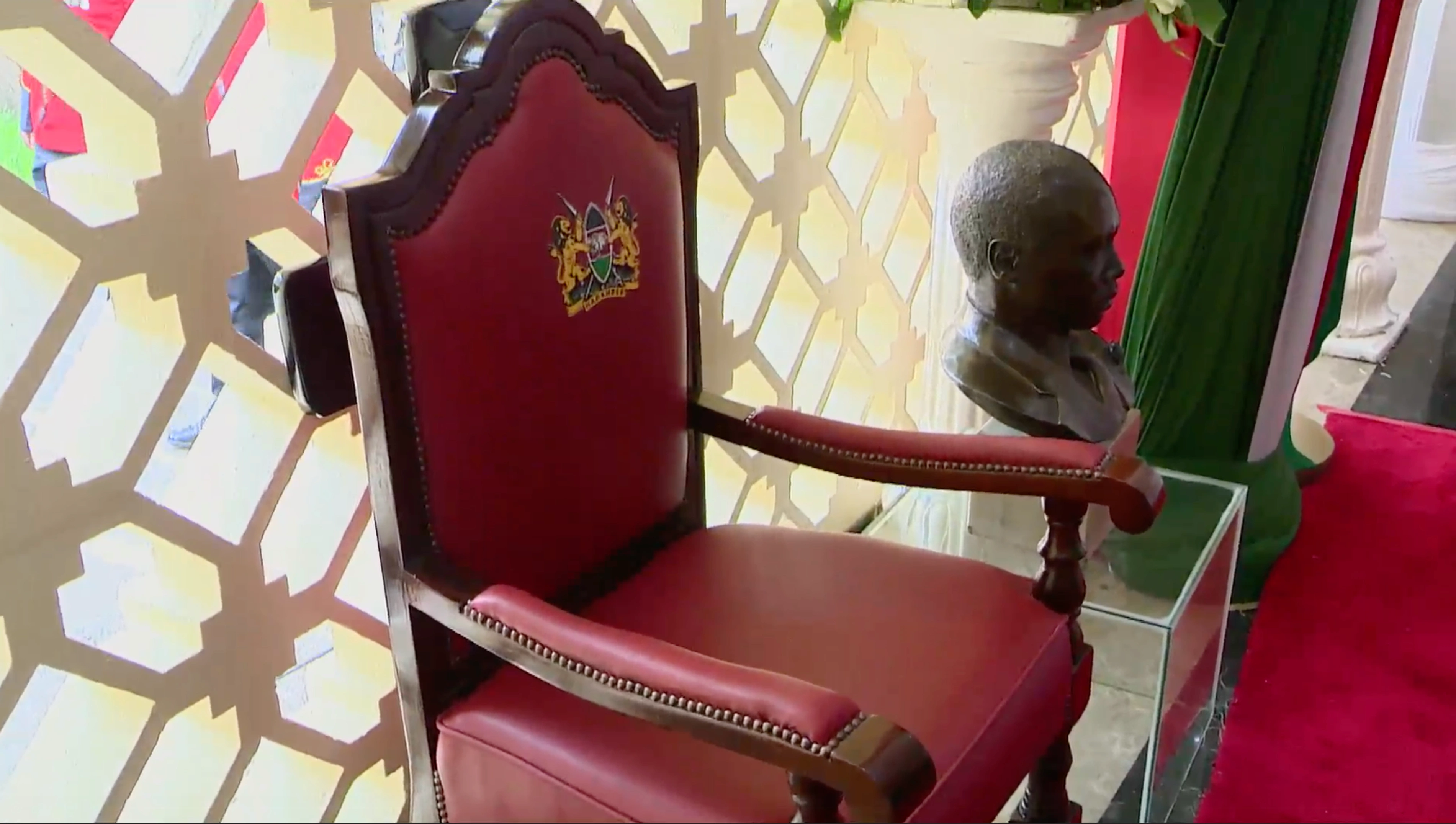
President Daniel Arap Moi Seat displayed at Parliament Buildings_February 2020
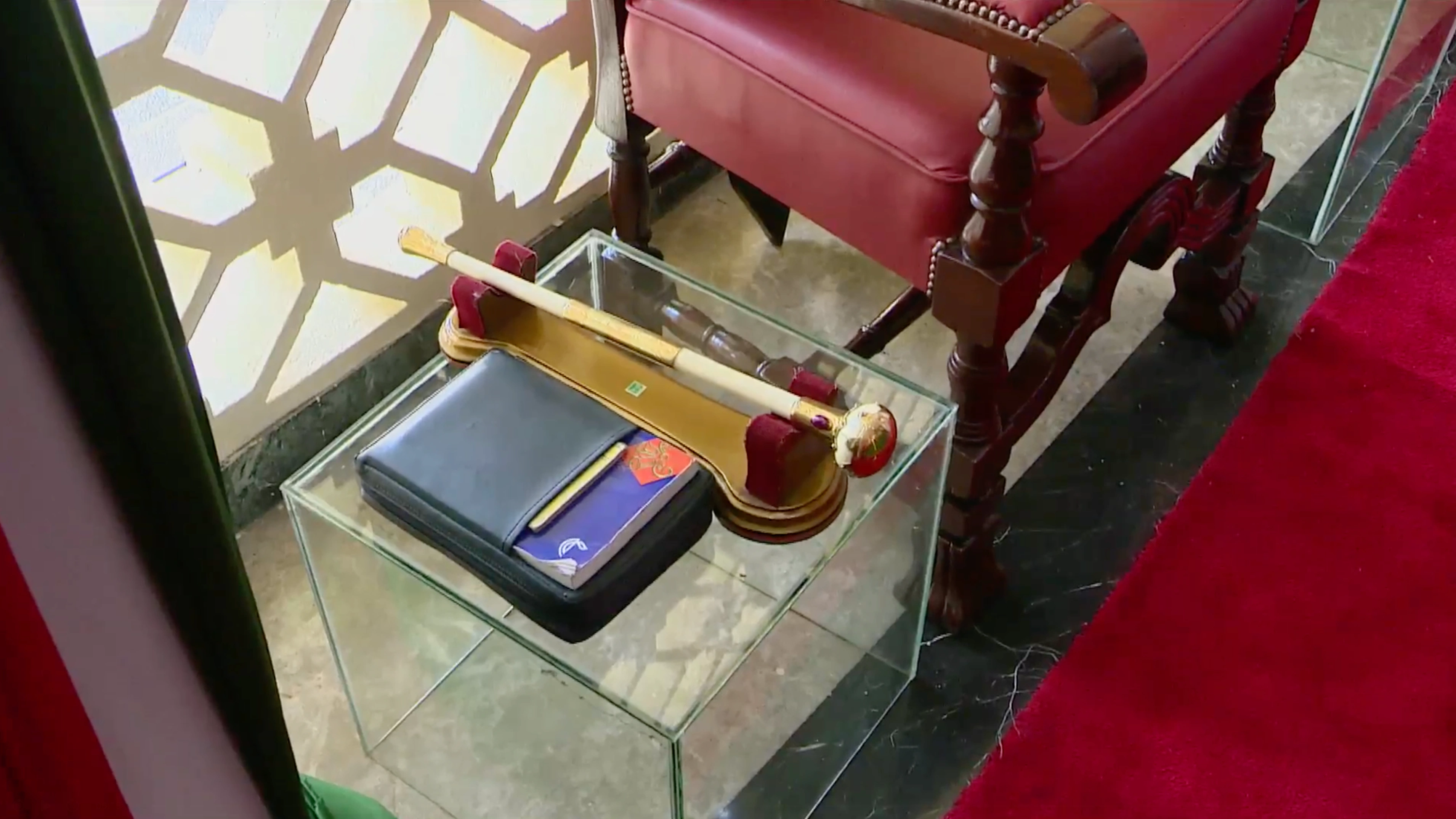
President Daniel Arap Moi iconic Baton-Fimbo ya Nyayo displayed at Parliament Buildings_February 2020
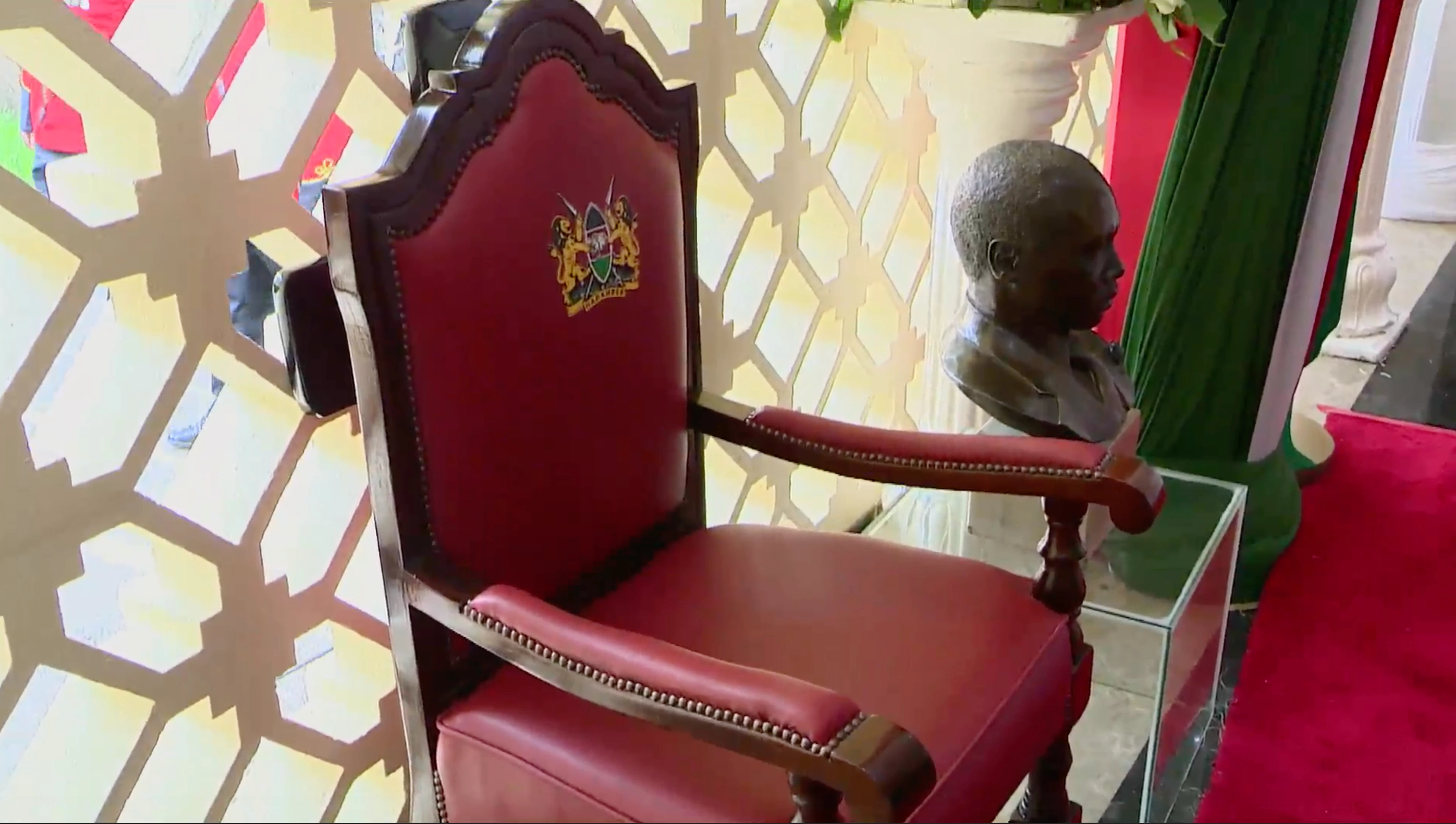
President Daniel Arap Moi Bust displayed at Parliament Buildings_February 2020
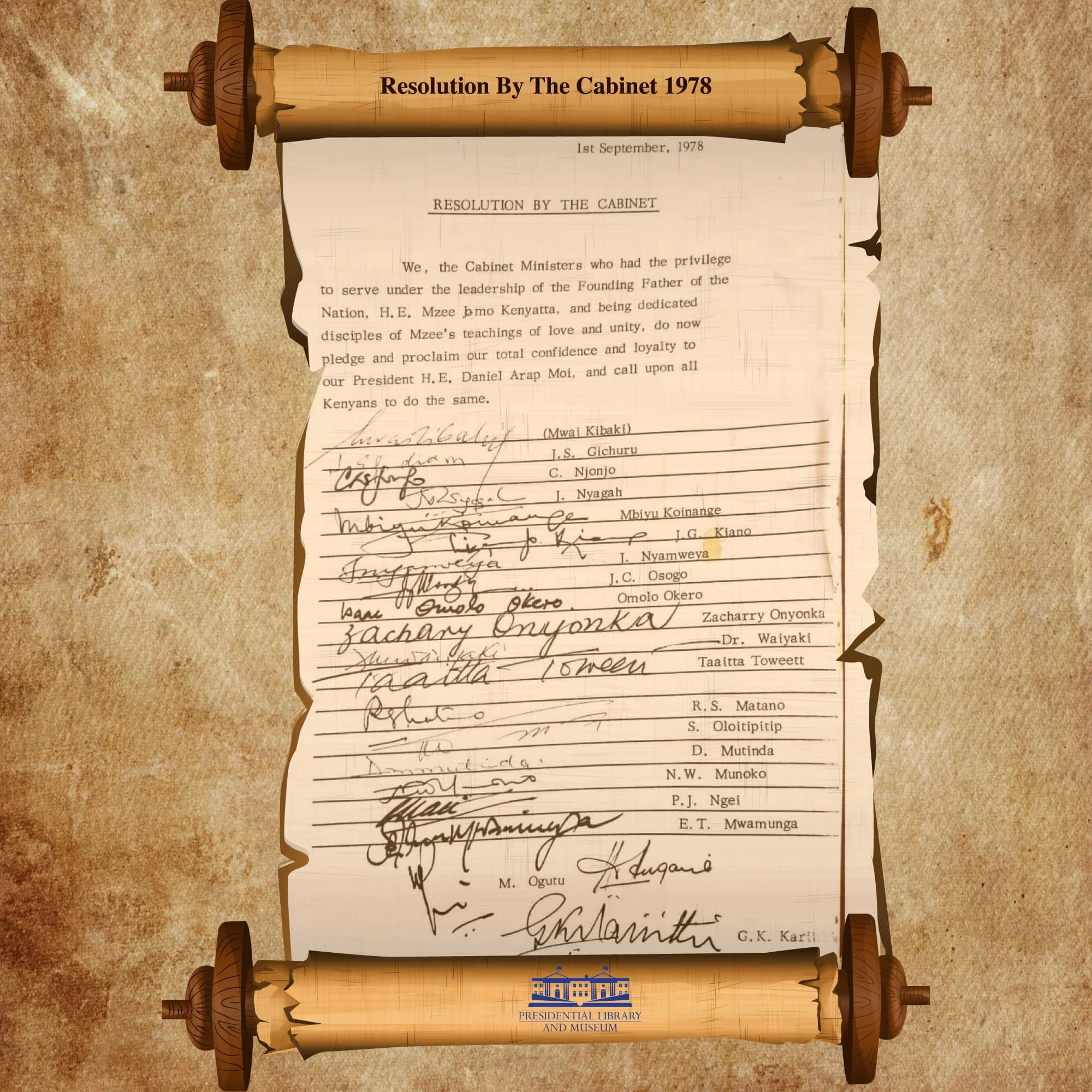
Resolution By The Cabinet on the Pledge and Proclamation of Total Confidence and Loyalty to President Daniel Arap Moi_1.9.1978
Documents
PDF
The Cabinet resolution was pivotal in consolidating the then-Acting President Daniel Arap Moi's leadership and unifying the country following the death of founding President Jomo Kenyatta.