Nationalism, war and road to revolt
By the 1930s and 1940s, resistance to colonial rule in Kenya had grown beyond isolated protests and local grievances. Across the colony, political consciousness was spreading among workers, farmers, students, war veterans and a new generation of African leaders.
The demand for change was becoming louder and impossible for the colonial government to ignore.
Despite decades of forced labour, unfair taxation and contribution to the colonial economy, Africans remained excluded from meaningful political power. Land grievances persisted, wages remained unequal and racial segregation shaped many aspects of life in towns, schools and workplaces.
Then came the Second World War.
Thousands of Africans from Kenya were recruited into the British war effort, serving in different parts of Africa and Asia. Many returned home having encountered new ideas about freedom, equality and self-determination. They had fought alongside others in a global conflict presented as a struggle for liberty — yet back home, colonial restrictions still remained firmly in place.
The contradictions became increasingly difficult to ignore.
Urban centres such as Nairobi continued expanding, creating spaces where workers, trade unionists and political activists could organise more openly. Newspapers, associations and public meetings helped spread nationalist ideas across different communities.
During this period, African political organisations grew stronger and more vocal. Leaders began demanding greater African representation, improved labour conditions and the return of alienated land.
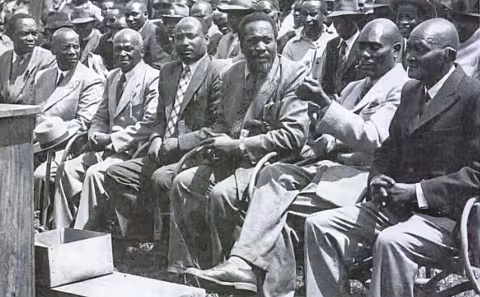
One of the most influential organisations to emerge was the Kenya African Union (KAU), which brought together African leaders seeking political reforms and greater African participation in governance.
Among the rising figures in it was Jomo Kenyatta, who became one of the most recognisable voices advocating for African rights and self-governance. His calls for unity and political action resonated with many Africans frustrated by decades of inequality and exclusion.
But as constitutional demands intensified, so did tensions within the colony.
For many Africans—particularly those affected by land injustices in Central Kenya—political reforms appeared painfully slow. Frustration deepened among communities who felt that peaceful appeals were producing little meaningful change.
By the early 1950s, underground movements and militant networks were beginning to form, especially among sections of the Kikuyu community most affected by land displacement and colonial restrictions.
The colony was approaching a breaking point.
What had begun decades earlier as petitions, protests and political associations was gradually evolving into a far more direct and confrontational struggle against colonial rule.
Soon, Kenya would enter one of the most turbulent and defining chapters in its history.