Mau Mau uprising: From grievance to rebellion
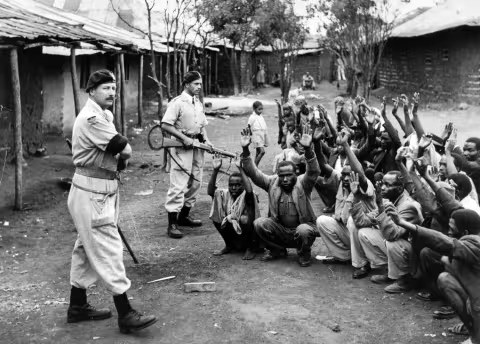
By the early 1950s, colonial rule was causing many Kenyans untold frustration and disillusionment.
Land alienation had displaced communities from fertile agricultural areas. Political representation remained limited, while economic opportunities were often shaped by racial inequalities embedded within the colonial system.
Among the notable economic policies that caused anguish among locals was the introduction of the ‘Kipande’ in 1919 under the Registration of Native Ordinance No.15 of 1915. Kipande, a metallic pendant worn around the neck and containing personal details, fingerprints, and employment history, was used by the colonial administration to trap local workers in low-paying jobs. It was also used to monitor the movement of Africans, making it easier to arrest individuals for "vagrancy" if they were found without the document.
Despite years of petitions, protests and political activism, locals believed their concerns were being ignored.
For communities most affected by land loss, particularly in Central Kenya, frustration deepened into anger. Growing numbers began to question whether constitutional reforms alone could bring meaningful change.
These conditions birthed the Mau Mau movement (also known as the Mau Mau uprising), an armed conflict between the Kenya land and Freedom Army (the locals) and the colonial authorities.
The movement drew support primarily from the Gikuyu, Embu and Meru (Gema community), many of whom had experienced the direct effects of colonial land policies. Through network organisation, secrecy and oath-taking, supporters committed themselves to a struggle aimed at reclaiming land, restoring rights and ending colonial domination.
As tensions increased, acts of violence and resistance spread across parts of the colony. Colonial authorities viewed the movement as a serious threat to public order and imperial control.
In October 1952, the colonial government declared a State of Emergency throughout Kenya.
The declaration marked a dramatic turning point. Emergency regulations granted authorities sweeping powers of arrest, detention and surveillance. Security operations intensified as the government sought to suppress both armed resistance and political dissent.
The crackdown quickly extended beyond suspected Mau Mau fighters.
Prominent local leaders, activists and organisers were arrested as authorities moved to weaken nationalist movements. Among those detained was Jomo Kenyatta, one of the colony's most influential political figures.
Together with five other prominent nationalists and independence struggle leaders – Bildad Kagia, Ramogi Achieng’ Oneko, Paul Ngei, Fred Kubai and Kungu Karumba – who would later enter the annals of history as the Kapenguria Six, Kenyatta was detained in Kapenguria detention camp in West Pokot county and later tried in a case that became internationally known and helped transform him into a symbol of the nationalist struggle.
Thousands of other Kenyans, including teachers, trade unionists, community leaders and suspected sympathisers, were detained under Emergency regulations. Political meetings were restricted, organisations faced increased scrutiny and public expressions of dissent came under growing pressure.
Yet rather than ending the Kenyans’ demands for change, the measures only strengthened their urge.
The Emergency had begun as an attempt to restore colonial control. Instead, it revealed how deep dissatisfaction had spread throughout Kenyan society.
The struggle was entering a new and more dangerous phase.