
Dedan Kimathi and the human cost of conflict
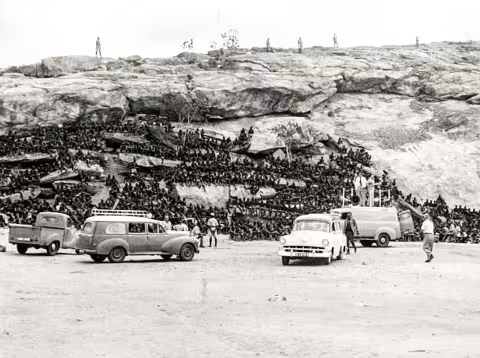
As colonial authorities intensified crackdown on Mau Mau fighters, many of them retreated into the forests of the Aberdares and the Mt Kenya region.
From these rugged landscapes, resistance groups organised military operations against colonial forces and their allies. Living under harsh conditions, fighters relied on networks of supporters who provided food, intelligence and supplies despite significant risks.
Among the most prominent leaders to emerge from the forest struggle was Dedan Kimathi Waciũri (born Kĩmathi Waciũri; October 31, 1920 – February 18, 1957).
A determined organiser and military leader, Kimathi became one of the most recognisable faces of the resistance. To supporters, he embodied rare courage, sacrifice and the determination to challenge colonial rule despite overwhelming odds.
Under Kimathi’s leadership, Mau Mau regional commanders mounted a sustained campaign against the colonial administration and Africans who were perceived collaborators with the colonial regime. One of the most tragic and defining episodes of the struggle occurred on the night of March 26, 1953, the infamous Lari Massacre.
That night, Mau Mau fighters under Field Marshal Mbaria Kaniu, launched a devastating attack targeting loyalist home guards, colonial chiefs, and their families in Lari, Limuru. Among the principal targets was Chief Luka wa Kahangara, who had gained notoriety for his harsh enforcement of colonial policies and tax collection. During the assault, attackers herded resident loyalists and their families into their huts, set the structures ablaze, and killed those who attempted to escape. Estimates of the death toll ranged from 74 to 150 people, the majority of whom were women, children and the elderly.
The colonial government responded with extensive military operations aimed at crushing the insurgency. It also used the Lari Massacre extensively in its propaganda campaign, portraying the Mau Mau movement as a brutal terrorist organisation. In the aftermath, more than 300 suspected Mau Mau fighters were prosecuted for their alleged involvement in the attack, with many receiving death sentences and being executed by hanging.
Another significant event during the uprising was the assassination of Senior Chief Waruhiu wa Kung'u, a prominent Kikuyu chief and open supporter of the British colonial administration. On October 7, 1952, he was ambushed and killed by Mau Mau fighters near Gachie, approximately seven miles from Nairobi.
The assassination contributed to the British administration's decision to declare a State of Emergency later that month, paving the way for an intensified crackdown on the Mau Mau movement and its supporters.
The conflict, however, extended far beyond the battlefield.
Entire communities found themselves caught between competing forces. Security forces conducted patrols, established restricted zones and launched extensive campaigns throughout affected regions.
Families were separated, livelihoods disrupted and daily life transformed by fear and uncertainty. Villagisation programmes relocated large numbers of people into tightly controlled settlements, while detention camps held thousands of suspected Mau Mau supporters.
The Emergency years (October 1952 to December 1959) left deep scars across Kenyan society.
Thousands of people lost lives with many others enduring imprisonment, displacement, forced labour or long periods of separation from their families. Communities experienced trauma that would continue to shape memories of the conflict long after the fight ended.
In 1956, the capture of Field Marshal Dedan Kimathi dealt a major blow to the forest resistance. Although some fighting continued, the organised insurgency gradually weakened under sustained military pressure.
Yet the defeat of the armed struggle did not bring an end to the larger cause for which many had fought.
The conflict exposed profound tension within colonial Kenya.