
Harambee: Pulling Together a Nation
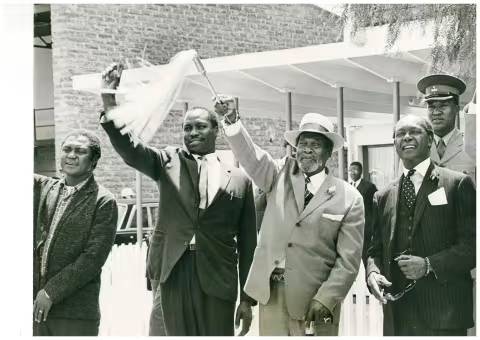
As Kenya embarked on the journey of nation-building after independence, the government faced a difficult reality.
The needs of the young nation were immense. Communities required schools, healthcare centres, roads, water projects and other essential services. Yet government resources were limited, and the demands of development often exceeded what the State alone could provide.
A solution emerged from a simple but powerful idea: A collective effort. The concept became known as Harambee, a Kiswahili word meaning ‘all pull together’.
Although the spirit of communal self-help had long existed within many Kenyan communities, President Kenyatta elevated Harambee into a national philosophy during the country's formative years. He encouraged citizens to contribute their time, skills, labour and resources toward projects that would improve the lives of communities.
The message: Nation-building was not the responsibility of the government alone. Every Kenyan had a role to play.
Across the country, communities organised Harambee events to raise funds and mobilise support for local development initiatives. Villagers contributed labour to build classrooms. Parents raised money for schools. Communities came together to establish health facilities, water projects, churches, social halls and other public amenities.
The efforts became a visible expression of optimism and self-reliance in the years following independence.
Harambee also helped foster a sense of national unity at a time when Kenya was still forging a shared identity from its many communities and regions. By working together toward common goals, citizens participated directly in shaping the future of the nation.
Many of the schools, health centres and community institutions that continue to serve Kenyans today have their origins in the Harambee initiatives of that period.
At its best, Harambee demonstrated the power of collective action and community ownership. It reflected the belief that development could be accelerated when citizens actively participated in improving their own circumstances.
Over time, however, debates emerged about how Harambe was being implemented. Critics argued that some fundraising activities became associated with political influence and unequal expectations on communities. Nevertheless, the philosophy remained one of the most enduring symbols of Kenya's early nation-building efforts.
More than a fundraising model, Harambee became part of Kenya's national identity.
It captured the spirit of a newly independent people determined to build a better future through cooperation, shared responsibility and collective effort.
As communities worked together to expand opportunities across the country, the government was simultaneously undertaking another major challenge; transforming colonial institutions into national ones and ensuring Kenyans increasingly occupied positions of leadership throughout the public service and economy.
This process became known as Africanisation.