Uhuru within sight
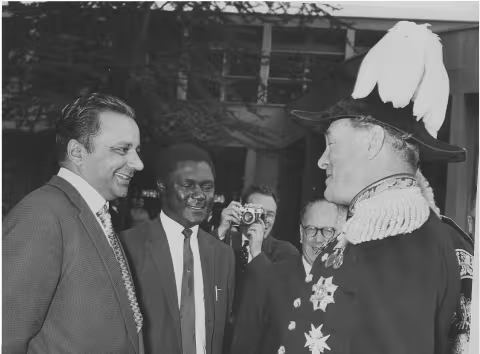
Colonial authorities had largely succeeded in suppressing the Mau Mau insurgency through military operations, detentions and Emergency regulations by the late 1950s.
Yet victory on the battlefield did not resolve the deeper issues that had fuelled the conflict.
The uprising had drawn international attention to conditions in colonial Kenya. Questions about land, political representation and African rights could no longer be dismissed as isolated grievances. The Emergency demonstrated that colonial rule faced growing challenges to its legitimacy, both within Kenya and across a world increasingly moving toward decolonisation.
At the same time, political change was sweeping across Africa and Asia. European empires were facing mounting pressure as independence movements gained strength throughout the colonial world.
In Kenya, the years following the Emergency saw gradual constitutional reforms and increased African participation in political institutions. Restrictions that had once limited political organisation began to ease, allowing new leaders and movements to emerge.
Nationalist demands increasingly shifted from resistance to negotiation.
Former detainees returned to public life, political parties expanded their influence and constitutional discussions became central to debates about Kenya's future. The struggle that had once been fought through protests, arrests and armed resistance was increasingly being carried into conference halls and negotiating tables.
The question was no longer whether Kenya would change but how and when independence would be achieved.
As the final years of colonial rule unfolded, attention turned toward constitutional conferences, emerging political parties and leaders who would guide the country toward self-governance.
The long struggle for land, representation and freedom was approaching its most important milestone. Uhuru (freedom) was now within sight.