
Before Kenya had a name
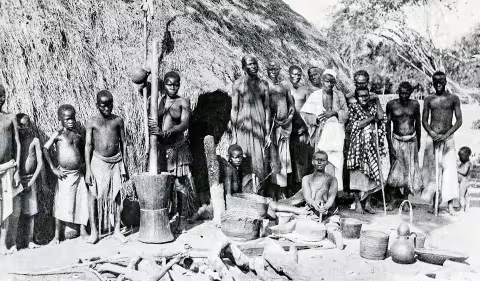
Before the name Kenya appeared on maps, before the colonial borders divided the land, and before modern nations emerged in East Africa, archaeological and historical evidence suggests the region was already alive with human movement, survival and culture.
The forests, plains, lakes and mountains were home to ancestral hunter-gatherer communities who lived harmoniously with nature. They moved with the seasons and survived through hunting, gathering wild fruits, fishing and had a deep environmental awareness. Some of their descendants, including the Ogiek and Sengwer communities, maintained traditions tied closely to forests and ancestral lands.
Over centuries, waves of migration, trade and cultural exchange transformed the land. Groups of people began arriving from different directions, settling across the mountains, forests, lakeshores and plains, creating the rich tapestry of societies that would later become Kenya.
The Bantu-speaking people came from Central and West Africa, bringing with them farming, ironworking and settled agriculture skills. As they spread into different parts of the region, they cultivated crops, established permanent settlements and developed diverse communities that would later include groups such as the Kikuyu, Luhya, Meru, Embu, Kamba, Mijikenda and Kisii.
Nilotic-speaking people also came from areas around the Nile. Some settled around Lake Victoria and western Kenya, while others moved into the Rift Valley and southern plains. They introduced new traditions of pastoralism that shaped livelihoods and social organisation. Communities such as the Luo, Maasai, Turkana, Samburu, Kalenjin and others emerged from these movements and interactions.
Cushitic-speaking communities, who include the Somali, Borana, Oromo and Rendile, arrived from the north and northeast also, becoming part of this evolving story. Skilled in pastoralism and trade, they settled largely in northern and eastern areas, and contributed to cultural and economic life through generations.
The migrations were not isolated journeys. Communities interacted constantly, trading livestock, iron tools, grains, salt and knowledge. They exchanged languages and customs, formed alliances and sometimes competed for resources. Through the encounters, cultures evolved and identities took shape.
So, the story of Kenya did not begin with colonialism. It began much earlier; with these journeys, encounters and communities that laid the foundations of the nation.
By the time European explorers and colonialists arrived, this land was already home to vibrant societies with systems of governance, economies, beliefs and histories stretching back generations. How was the governance system organised?