
Kenya becomes a British colony
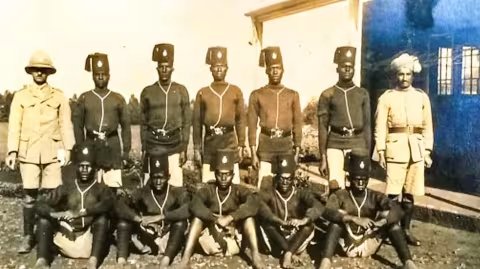
When Kenya officially became a British Crown Colony in 1920, colonial rule entered a new phase. Administration became more structured, settler interests grew stronger and land increasingly became the centre of political and economic power.
To the colonial government, land represented opportunity.
The fertile central highlands and Rift Valley were viewed as ideal for large-scale agriculture and European settlement. Colonial authorities encouraged settlers from Britain and other parts of Europe to establish farms, ranches and commercial estates across the regions.
But for African communities, land meant far more than the economic value. It carried history, identity and memory. It connected generations through ancestry, spirituality and communal belonging. Families farmed, grazed livestock and buried their ancestors on the lands they had occupied for generations. Ownership was often understood collectively through community customs and traditions rather than through individual title deeds recognised by the colonial law.
As settler expansion increased, many African communities were displaced from some of the most fertile lands. Areas reserved for European settlement became known as the “White Highlands,” where African occupation and ownership faced growing restrictions.
Communities pushed out of the areas were often moved into reserves or overcrowded regions with fewer resources and less productive land. The disruptions affected farming patterns, livestock keeping and local economies that had sustained communities for generations.
At the same time, colonial authorities introduced taxes and labour policies that forced many Africans into the colonial economy. To pay taxes or survive economically, increasing numbers sought work on settler farms, railways and in emerging urban centres.
A new social order was taking shape.
European settlers occupied positions of political and economic privilege while Africans faced growing limitations on land ownership, movement and representation. Access to resources and opportunities became increasingly unequal under colonial rule.
Yet even as the colonialists tightened their hold, dissatisfaction among the locals quietly spread.
Farmers who had lost land, workers facing harsh conditions and communities frustrated by exclusion began questioning the legitimacy of the colonial system. Early forms of protest, petitions and political organisation slowly emerged across different parts of the colony.
What began as grievances over land and labor would, in time, evolve into a demand for justice, representation and ultimately self-rule.
The foundations of resistance were beginning to form.