The final chapter of the founding presidency
By the mid 1970s, Kenya had undergone more than a decade of nation-building under President Jomo Kenyatta. The country had achieved political stability, expanded infrastructure, strengthened institutions and pursued economic growth through a mixed economy guided by early development policies.
Yet beneath the surface of national leadership, the question of succession had begun to quietly emerge.
President Kenyatta’s health was gradually declining and his public appearances reduced. This placed a greater responsibility on senior government officials to manage the government’s day-to-day affairs. Within the political establishment, attention was increasingly turning on continuity and stability in the event of transition.
Despite internal debates and political positioning, the guiding principle of the period remained maintaining national unity during a potentially uncertain moment.
On the Tuesday of August 22, 1978, President Jomo Kenyatta breathed his last while asleep at the State House in Mombasa.
His death marked the end of an era.
As the leader who had guided Kenya through independence and led the young nation for 15 years, Kenyatta left behind a sovereign nation but one still navigating the challenges of development, national cohesion and identity.
In accordance with the constitutional dictates, Vice President Daniel arap Moi assumed leadership as acting President, ensuring continuity of government during the transition period.
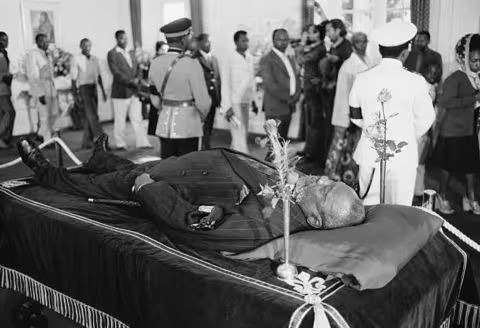
Kenyatta’s body was later airlifted to Nairobi, where the nation gathered to pay him the last respects. A State funeral was held with full honours, drawing leaders, dignitaries and citizens from across the country and beyond.
He was laid to rest at his Gatundu home, in Kiambu, close to the land and community that had long been associated with his life and leadership.
With his burial, Kenya now stood at the threshold of a new political chapter.