Birth of British East Africa Protectorate
By the late 19th Century, European powers were aggressively competing for territory, trade routes and political influence across Africa. What had begun as exploration, missionary activity and commerce soon transformed into a determined race for imperial control.
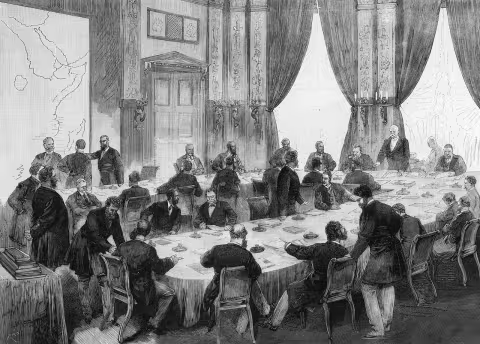
Between 1884 and 1885, representatives of European powers gathered in Berlin, Germany, to determine how territories across Africa would be shared among competing empires. African communities, whose lands and futures were being discussed, had no voice in the conference yet its resolutions would reshape the continent.
Lines were drawn on maps thousands of kilometres away.
The conference accelerated what became the ‘Scramble for Africa’, as European powers moved quickly to establish authority over territories allocated to them. The region that would later become Kenya fell under British influence.
At first, British involvement came through commercial enterprise rather than direct government administration. In 1888, the Imperial British East Africa Company received authority to administer and develop British interests in the region. The company established trade stations, negotiated agreements and attempted to extend influence inland.
Its ambitions, however, proved larger than its resources.
Maintaining control over vast territories, managing trade routes and administering distant lands became expensive and difficult. As challenges grew, the British government increasingly took direct responsibility.
In 1895, the British government established the British East Africa Protectorate, placing the region under formal imperial administration. A new colonial administration began taking shape, introducing systems of governance designed to secure imperial interests and strengthen British control.
For communities living across the region, the changes initially appeared distant. But the protectorate marked the beginning of a new political reality. Foreign administration had moved beyond the coast and entered the interior.
The land of independent kingdoms, councils and communities was now undergoing profound transformation. The structures of colonial rule had begun to take root.